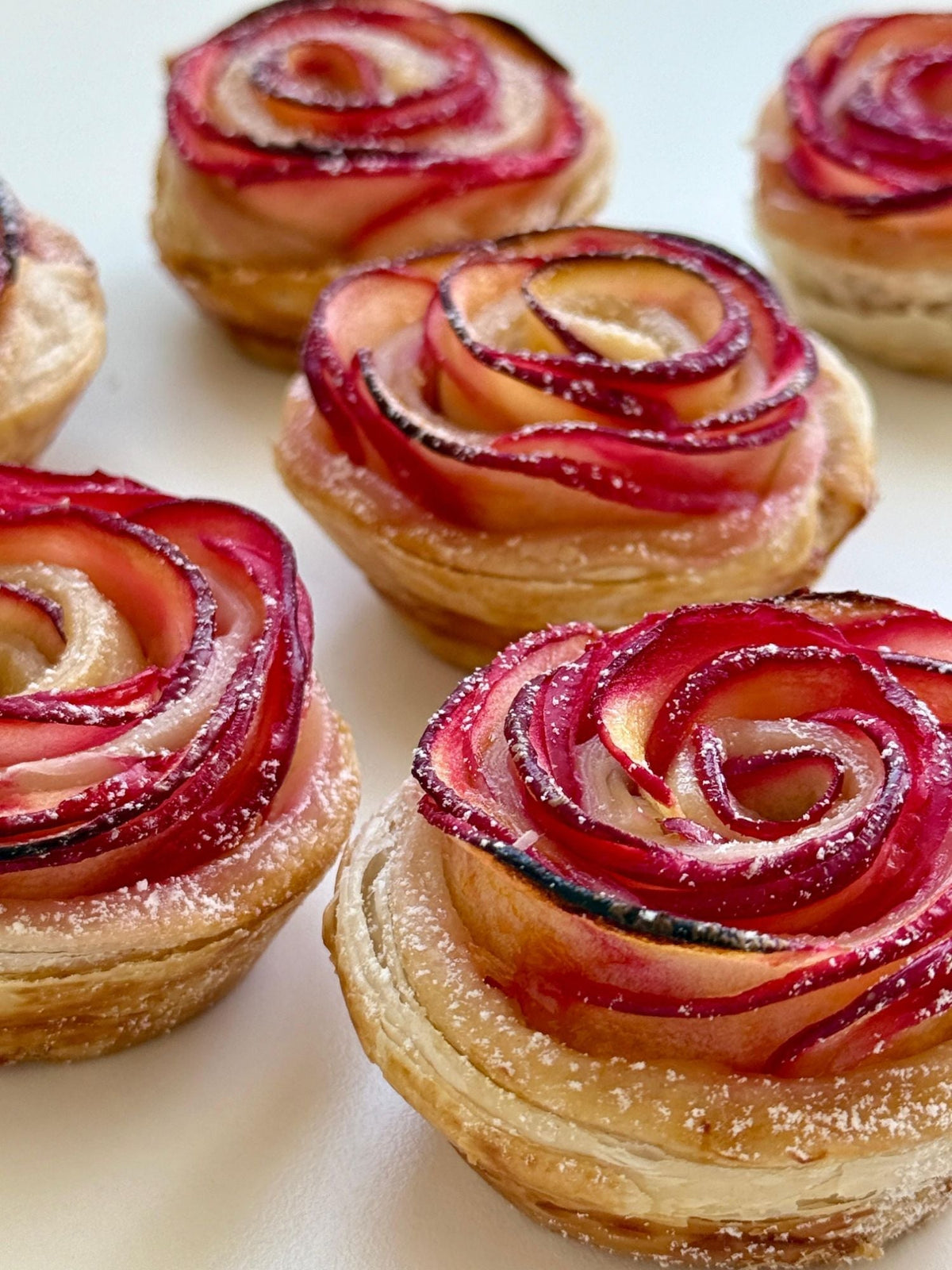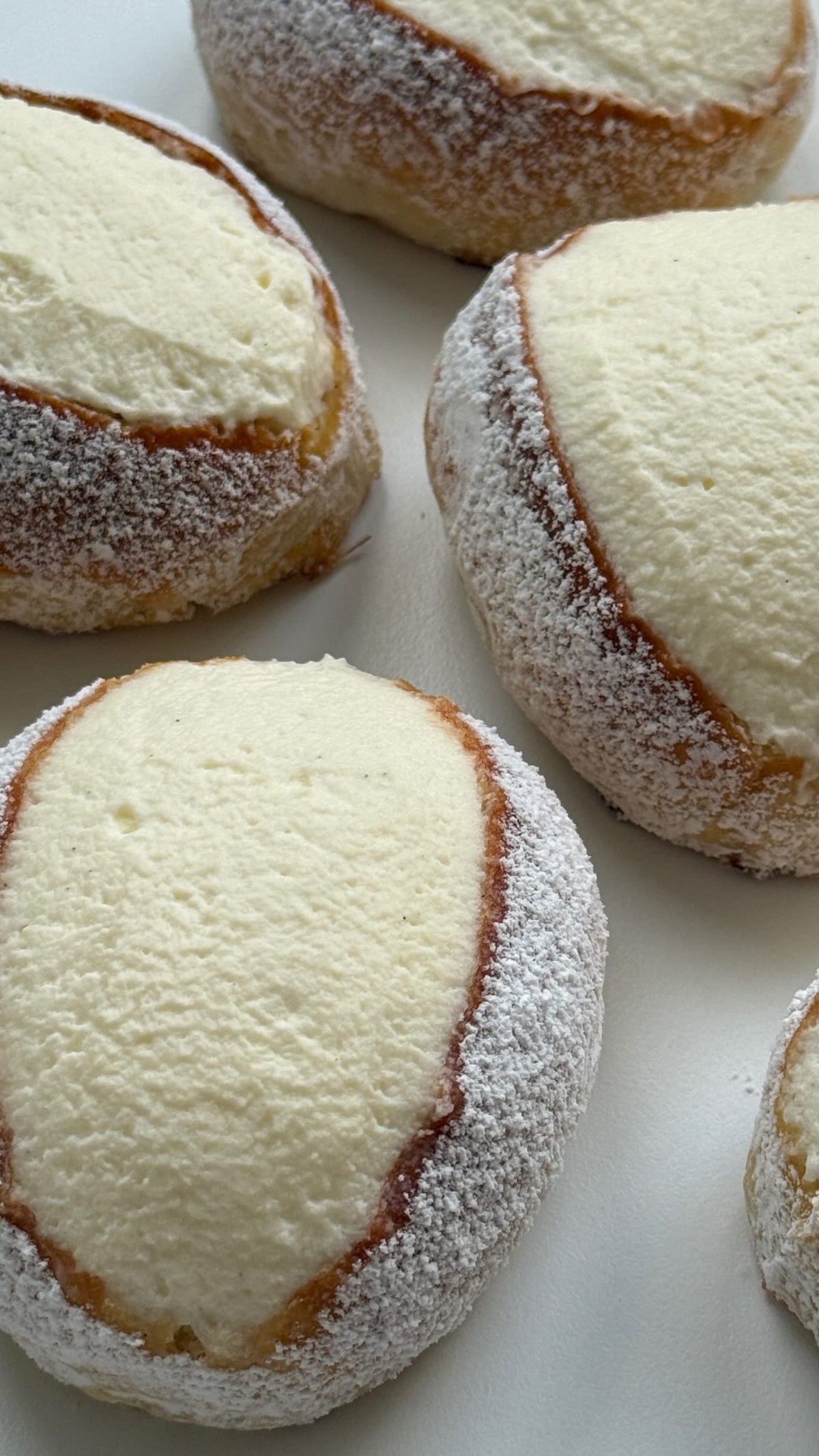


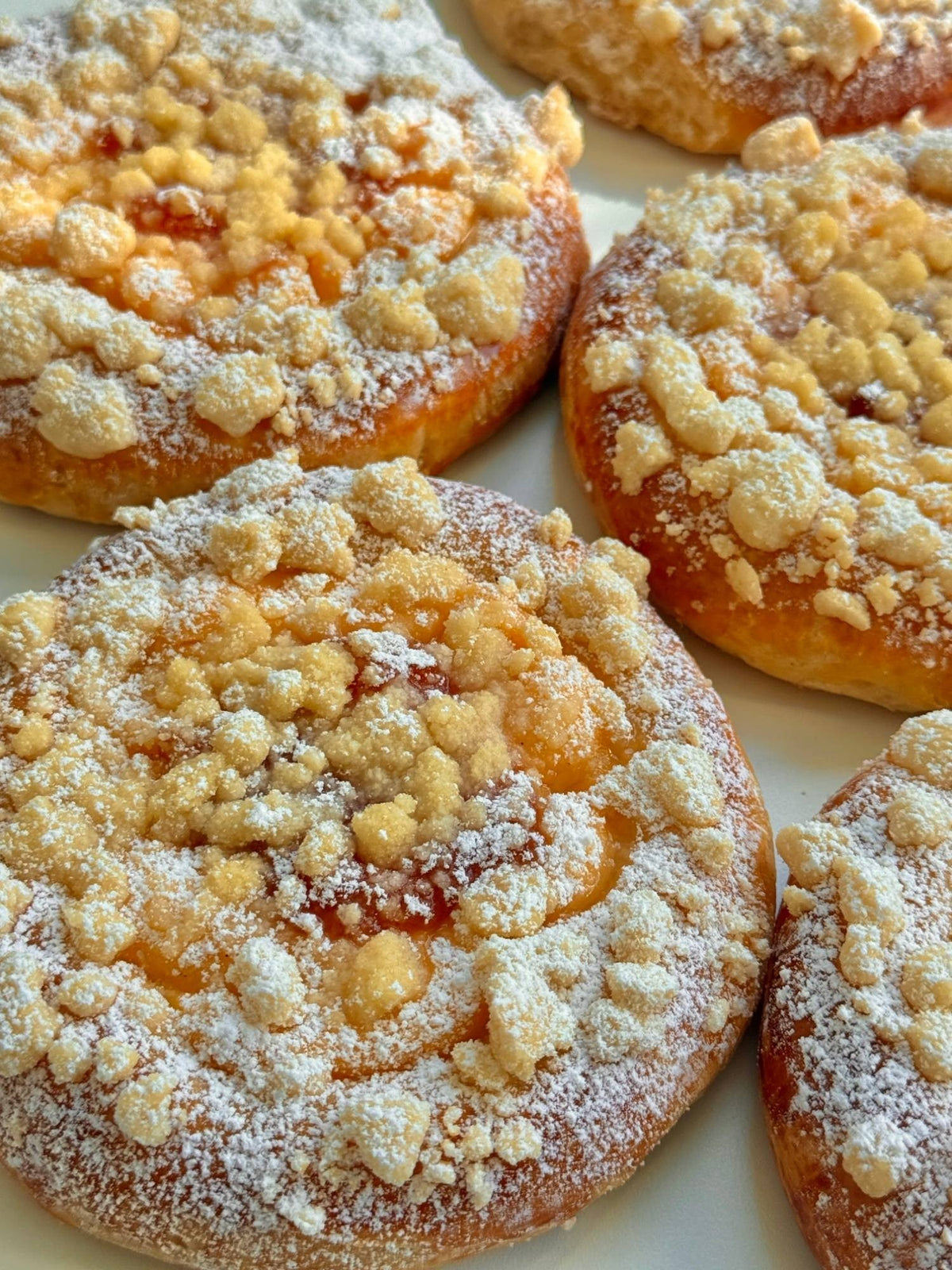
Mandarin Pastry von Food with Style, fertig angerichtet
Pastry

Torta de Tangerina

Aproveite a combinação perfeita de massa folhada crocante, delicado creme de baunilha e tangerinas suculentas com a nossa Torta de Tangerina

Compartilhar
Cozimento 20 minutos

Ingredientes

  • Para o creme de confeiteiro de baunilha (receita-base)
  • Para a cobertura

Modo de preparo

  1. 1
    Preaqueça o forno a 190°C (375°F).
  2. 2
    Corte anéis da massa folhada. O tamanho dos anéis pode ser ajustado como preferir. Em metade dos anéis, corte um furo menor no centro. Umedeça levemente os anéis inteiros com água para que grudem melhor, coloque os anéis menores por cima e pressione de leve. Distribua em uma assadeira forrada com papel-manteiga.
  3. 3
    Pincele com a mistura de gema e leite e asse por cerca de 20 minutos, até dourar. Retire do forno e deixe esfriar completamente.
  4. 4
    Aqueça o leite em uma panela. Em uma tigela, misture um pouco do leite com as gemas, o açúcar, o amido de milho e o sal. Despeje o leite quente aos poucos sobre a mistura de gemas, mexendo sem parar. Volte tudo para a panela e deixe engrossar em fogo médio, mexendo sempre. Junte o extrato de baunilha e incorpore a manteiga. Cubra e deixe esfriar completamente.
  5. 5
    Recheie as massas já frias com o creme de baunilha e finalize com as tangerinas.
  6. 6
    Polvilhe com açúcar de confeiteiro e aproveite! Dica: este creme de confeiteiro é uma receita-base, então com certeza vai sobrar creme! Você pode usá-lo para preparar deliciosas sobremesas em camadas no copinho ou para rechear outras massas.

Video

Mandarin Pastry Questions

The recipe deliberately has you mix the egg yolks, sugar, cornstarch and salt with a small amount of milk first, then pour the hot milk in slowly while stirring - skipping either step is what scrambles the yolks. Keep whisking constantly as the cream thickens on the heat, especially around the edges and base of the pan where the cornstarch sets first. If lumps still appear, push the finished cream through a fine sieve while it is hot and stir in the teaspoon of butter afterwards.

Yes, but peel the segments carefully and remove as much white pith and membrane as you can, since fresh segments are firmer and more acidic than canned. The recipe stresses that canned mandarins must be well drained, and the same logic applies to fresh fruit: pat the segments dry so the juice does not soak into the pastry base. Add the fruit only right before serving so the puff pastry stays crisp.

Yes - the pastry rings and the cream both work well made in advance, and the recipe already requires the baked rings to cool completely before filling. Store the cooled rings airtight at room temperature and keep the pastry cream covered in the fridge with cling film pressed directly onto the surface so no skin forms. Whisk the chilled cream smooth again before piping, then assemble, top with mandarins and dust with powdered sugar just before serving.

Filled pastries need to go in the fridge because of the milk-and-egg-yolk cream, but the puff pastry softens quickly once the cream touches it. Plan to eat them the same day they are assembled, and treat them as best within a few hours. If you want leftovers to stay good, store the rings, the cream and the drained mandarins separately and put them together portion by portion.

The three big ones are filling the rings while they are still warm, which melts the cream and steams the pastry soft; using mandarins that were not drained properly, which makes everything soggy; and dusting with powdered sugar too early, so it dissolves into the fruit before serving. Also watch the oven near the end of the roughly 20 minutes - puff pastry goes from golden brown to dark fast. Finally, do not panic about leftover cream: the recipe states it is a base recipe and is meant to yield more than you need.

delicioso, testado e pronto para inspirar
Explore 400+ Receitas Saborosas