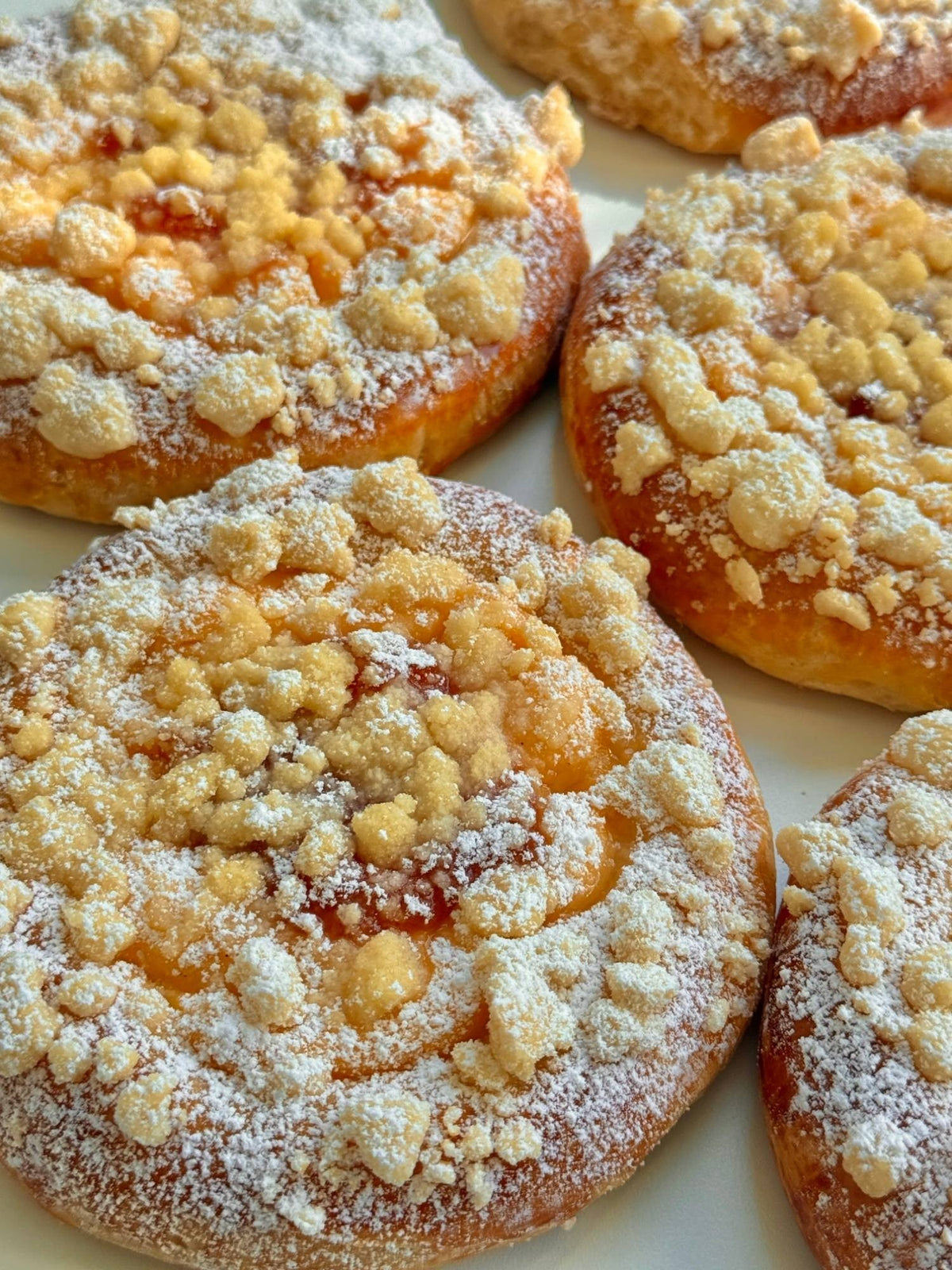
Şöbiyet Tatlısı von Food with Style, fertig angerichtet
Pastry

Şöbiyet

Crocante por fora, cremoso por dentro - o Şöbiyet é uma sobremesa turca muito querida, que une a delicada massa filo a um recheio...

Compartilhar
Cozimento 40 minutos

Ingredientes

  • Para a calda
  • Para o recheio

Modo de preparo

  1. 1
    Leve o açúcar e a água para ferver. Deixe em fogo baixo por 5 minutos, acrescente o suco de limão e deixe cozinhar por mais 15 minutos. Deixe a calda esfriar completamente.
  2. 2
    Misture o leite e a sêmola em uma panela e cozinhe em fogo médio, mexendo sem parar até engrossar. Tire do fogo, junte o extrato de baunilha e misture bem. Transfira para um refratário de vidro, cubra com filme plástico e deixe esfriar.
  3. 3
    Derreta a manteiga e deixe descansar até que os sólidos do leite se depositem no fundo. Use apenas a manteiga clarificada.
  4. 4
    Desenrole a massa de baklava e pincele cada folha com manteiga - ao todo, 13-15 camadas. Use apenas a parte límpida da manteiga, da superfície.
  5. 5
    Corte as camadas empilhadas em quadrados de 8 × 8 cm (3 × 3 inch).
  6. 6
    Coloque cerca de 1 tsp do recheio de sêmola e ½ tsp de pistache moído no centro de cada quadrado. Dobre formando um triângulo, pressionando levemente apenas a ponta e deixando as laterais abertas.
  7. 7
    Disponha os triângulos em uma assadeira, levemente sobrepostos, de modo que a ponta de cada triângulo fique coberta. Isso ajuda a manter o formato durante o forno.
  8. 8
    Pincele o restante da manteiga sobre os triângulos.
  9. 9
    Asse em forno preaquecido a 180°C (356°F) por cerca de 40-45 minutos, até dourar.
  10. 10
    Deixe esfriar um pouco (cerca de 1 minuto) e despeje a calda gelada bem devagar por cima. Deixe absorver por pelo menos 4-5 horas, de preferência de um dia para o outro, para a melhor textura. Assim eles ficam úmidos por dentro e continuam crocantes.
  11. 11
    Finalize com pistache moído na hora de servir.

Video

Şöbiyet Tatlısı Questions

The most common cause is pouring warm syrup over hot pastry. The recipe has you cool the syrup completely while the pastry bakes, so the cold syrup meets the hot triangles and is absorbed without steaming the layers limp. Also make sure you used only the clarified butter from the top of the melted butter - the milky solids at the bottom hold water and soften the phyllo.

Fine semolina is what gives the filling its firm, sliceable body after cooking with the 300 g of milk, so a swap changes the texture. Coarse semolina works but needs a little longer cooking and stirring to soften fully, and the filling will be less smooth. Starch-based thickeners set softer and tend to run out of the triangles during the 40-45 minute bake, so semolina is the safer choice.

Keep them at room temperature in a loosely covered container so the phyllo stays crisp - an airtight box traps the moisture from the syrup and softens the pastry. Refrigeration is the bigger problem: the clarified butter in the 13-15 layers firms up cold and the pastry turns hard and dull. If you want them warm again, a few minutes in a low oven revives the crispness.

The syrup is the ideal make-ahead component, since it has to cool completely anyway and only gets better with a long rest. The semolina filling can also be cooked in advance and kept covered so it doesn't form a skin - bring it back to a spreadable consistency before filling. The buttered, filled triangles are best assembled and baked the same day, because phyllo dries out and cracks when it sits shaped and unbaked.

Two steps in the recipe prevent this, and skipping either causes gaping. First, press only the tip of the folded triangle so the pastry stays puffed but sealed at the point. Second, arrange the triangles on the tray slightly overlapping so each tip is covered by the next piece, which weighs it down and holds the shape through the full bake. Overfilling past about 1 tsp of semolina cream and ½ tsp of pistachios also forces the fold open.

delicioso, testado e pronto para inspirar
Explore 400+ Receitas Saborosas