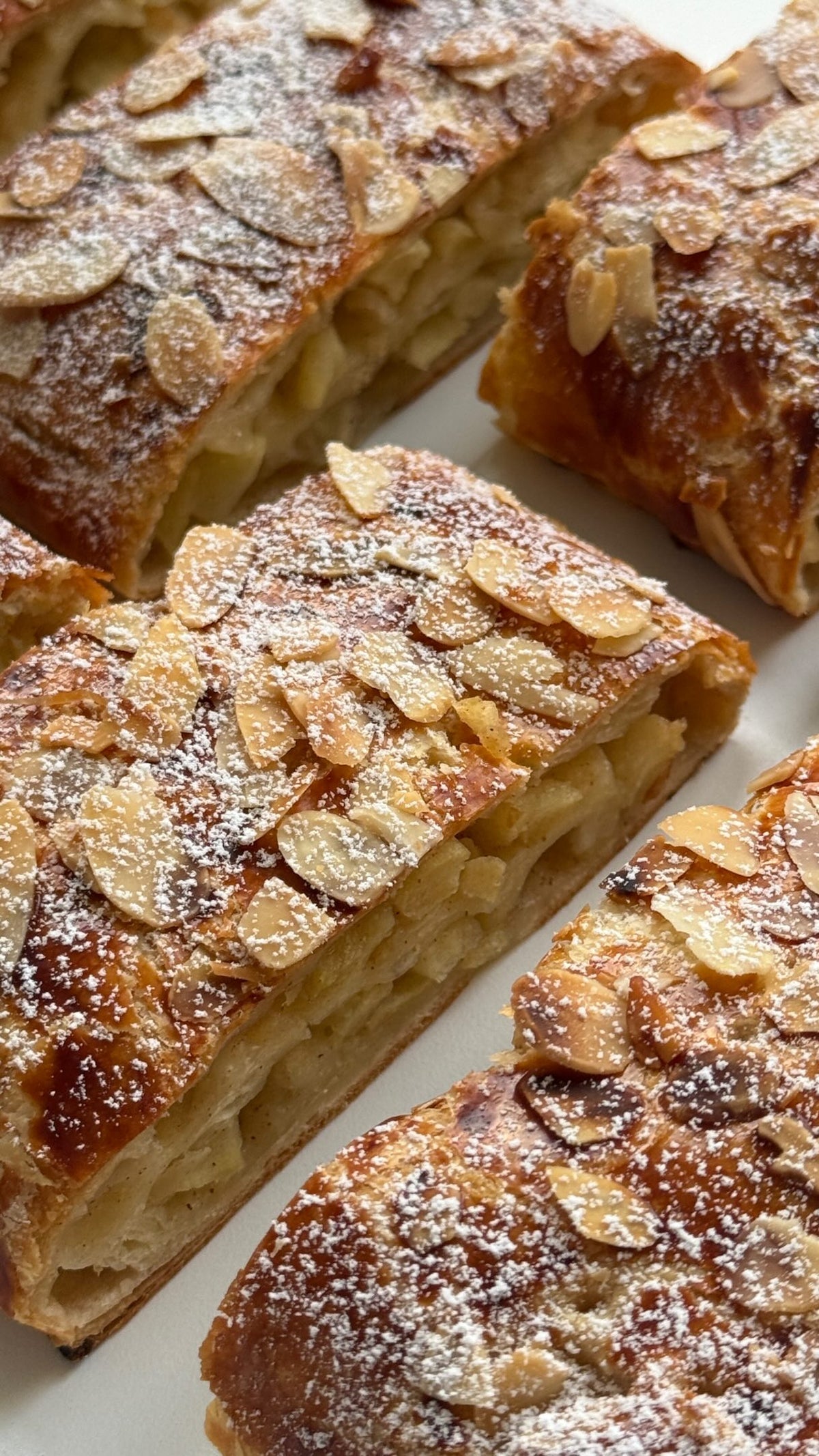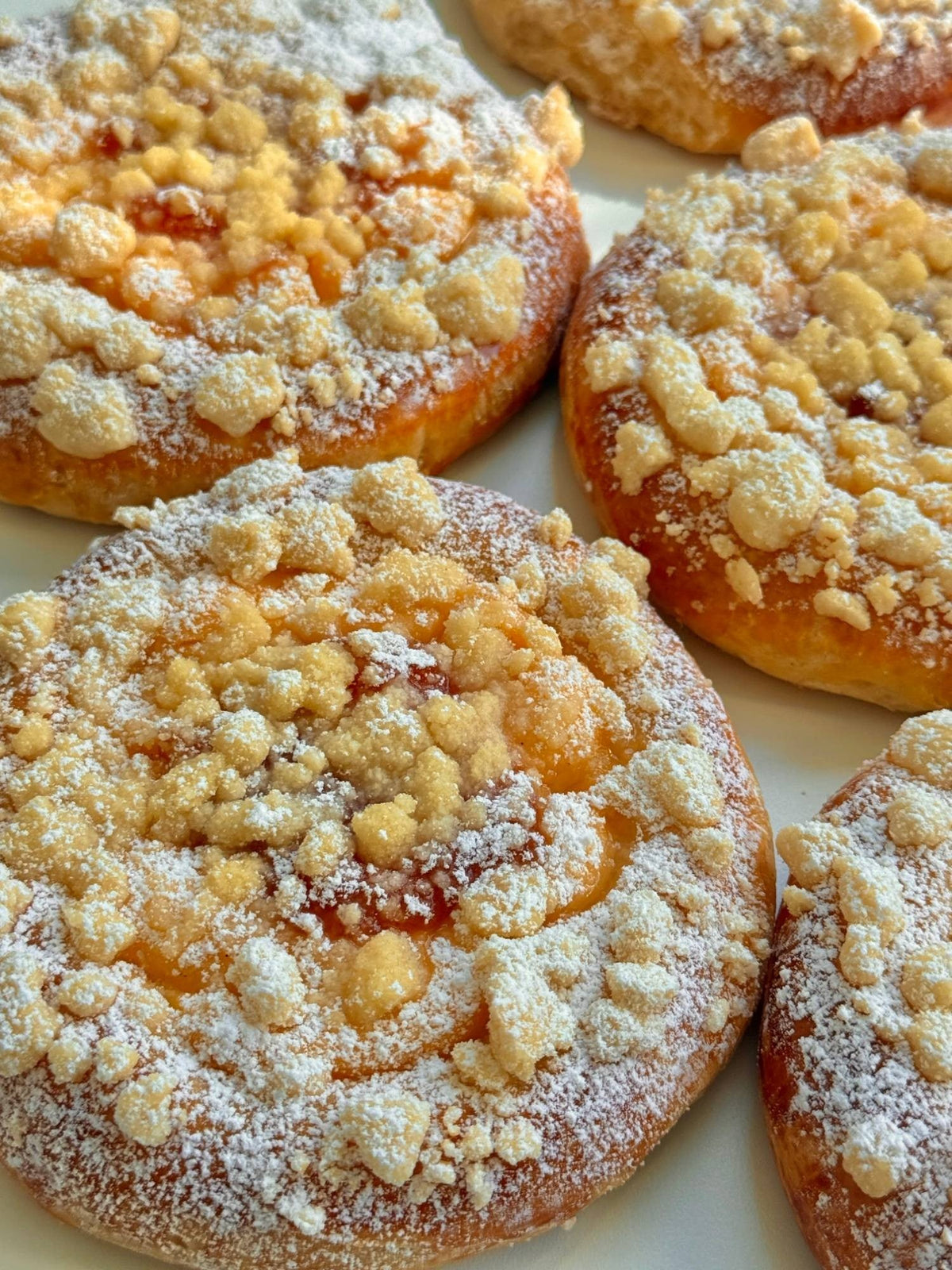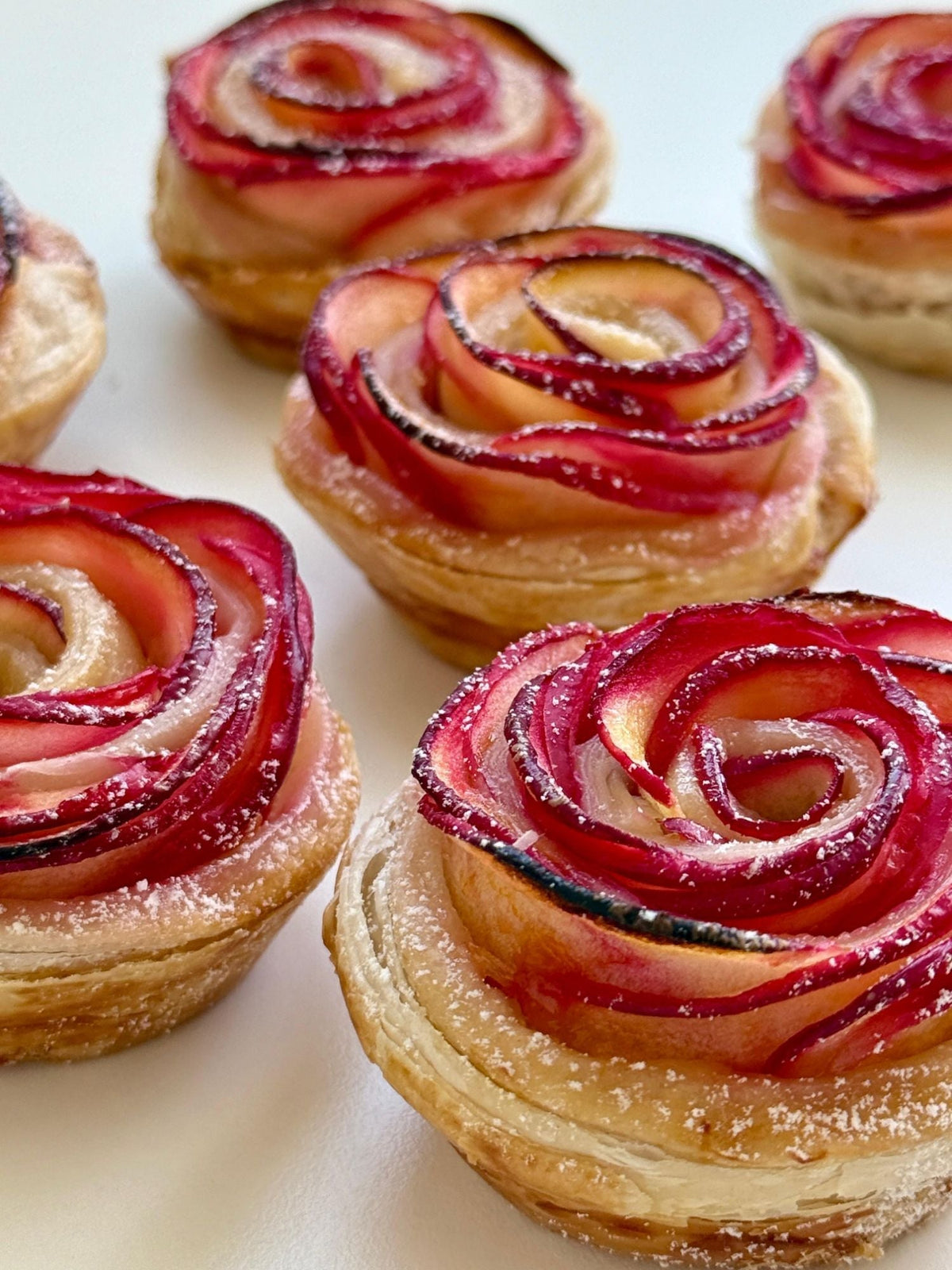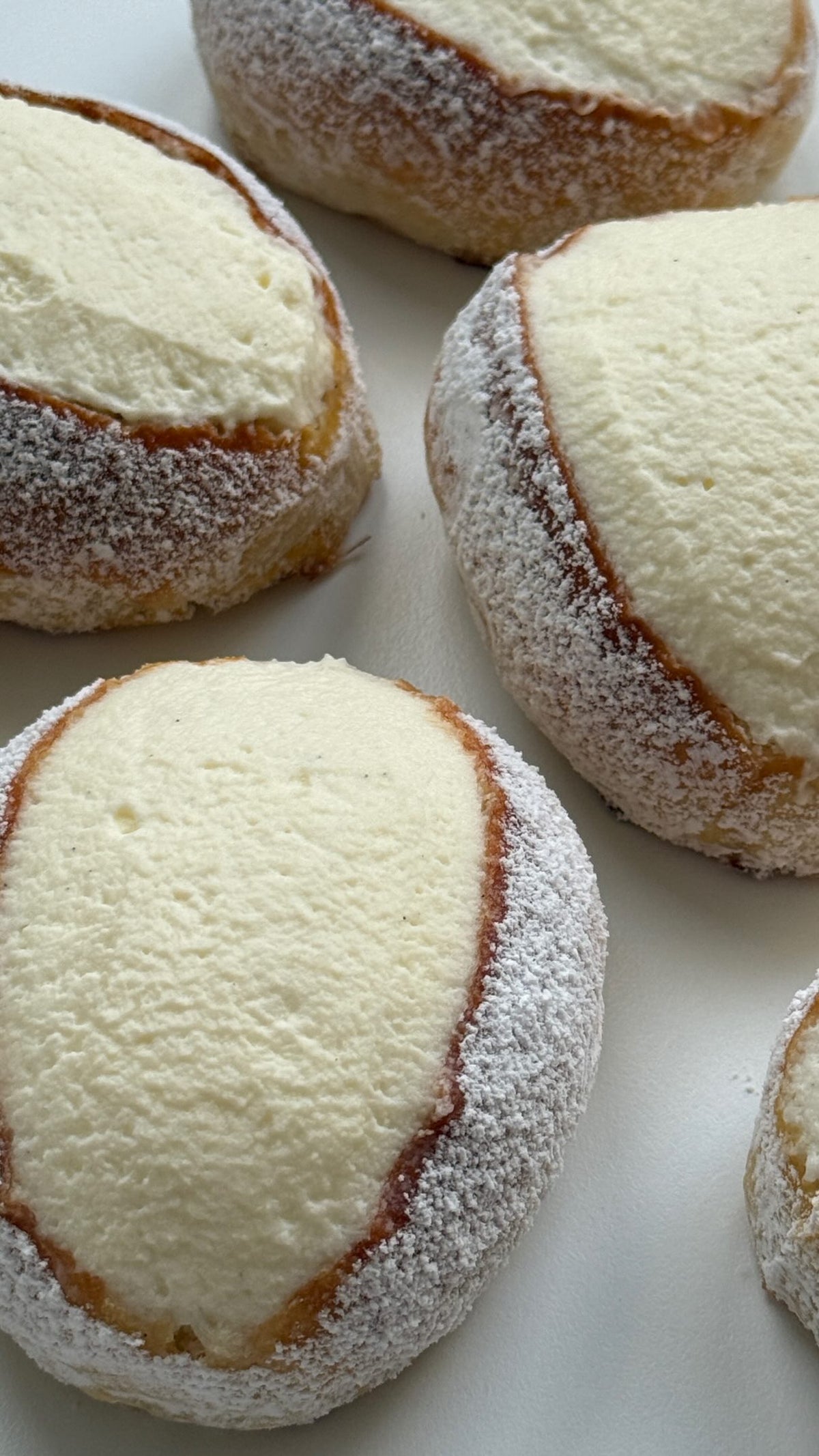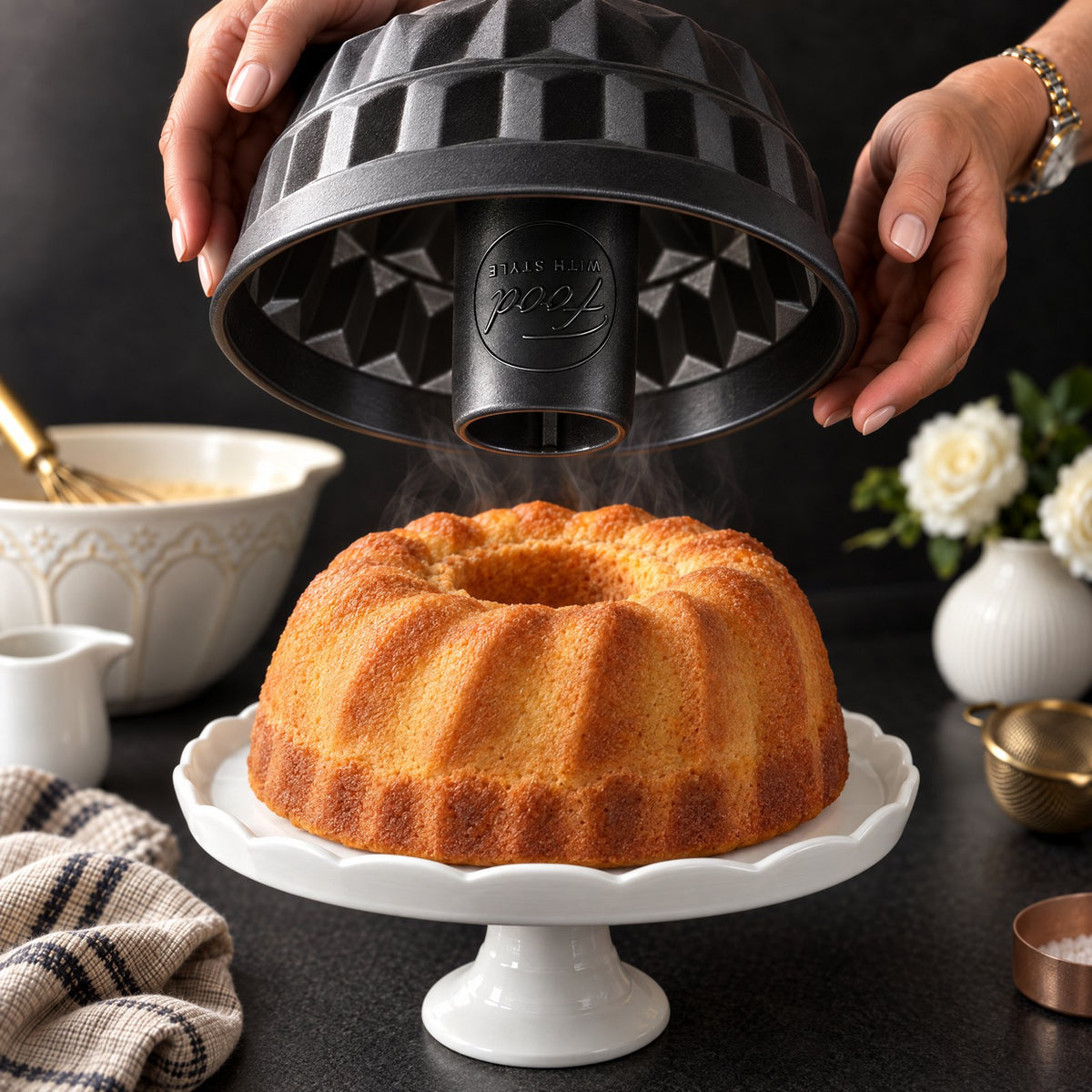



Vanilla Sugar Knots von Food with Style, fertig angerichtet
Brioche

Nós de Baunilha com Açúcar

Esses nós de baunilha fofinhos são perfeitos para uma tarde aconchegante ou como um docinho para qualquer hora do dia. Ideais para quem ama...

Compartilhar
Preparo 1 hora
Cozimento 15 minutos

Ingredientes

  • Para o recheio de baunilha
  • Para pincelar
  • Para finalizar

Modo de preparo

  1. 1
    Coloque a farinha em uma tigela e faça um buraco no centro. Adicione o fermento biológico seco, 1 tsp de açúcar e 2-3 tbsp do leite morno no buraco. Misture levemente e deixe descansar por cerca de 10 minutos, até começar a borbulhar.
  2. 2
    Acrescente o restante do leite, o açúcar, o sal, a manteiga em ponto de pomada e o ovo. Sove até obter uma massa lisa que desgrude das laterais da tigela. Cubra e deixe crescer em local morno por cerca de 1 hora ou até dobrar de volume.
  3. 3
    Para o recheio, misture a manteiga em ponto de pomada com o extrato de baunilha e o açúcar comum até ficar homogêneo.
  4. 4
    Depois que a massa crescer, abra em um retângulo grande sobre uma superfície enfarinhada. Espalhe o recheio de manteiga com baunilha por toda a massa.
  5. 5
    Dobre a massa: leve um lado até o centro e depois dobre o outro lado por cima. Corte em tiras iguais.
  6. 6
    Corte cada tira no sentido do comprimento em três partes, sem cortar até o fim. Trance e torça formando os nós.
  7. 7
    Coloque os nós em uma forma de muffin untada ou em uma assadeira forrada com papel-manteiga. Deixe crescer novamente por 20-30 minutos. Enquanto isso, preaqueça o forno a 180°C (350°F).
  8. 8
    Polvilhe com açúcar em grãos.
  9. 9
    Asse por 15-18 minutos, até dourar levemente. Pincele os nós com a manteiga derretida e deixe amornar antes de servir.

Video

Vanilla Sugar Knots Questions

The most common cause is milk that was too hot, which kills the yeast, so keep it lukewarm rather than steaming. A cold kitchen is the other culprit: this dough needs a genuinely warm spot to rise, and a cold egg straight from the fridge slows things down further, which is why the recipe calls for a room-temperature egg. If the pre-ferment in the well doesn't get foamy after resting, start over with fresh yeast rather than kneading on.

Yes - swap the 3.5 g of dry yeast for about 10 g of fresh yeast, crumbled into the well with the sugar and lukewarm milk the same way. Plant-based milk works too; just warm it to lukewarm as you would dairy milk. You can also replace the vanilla extract in the filling with the seeds of a vanilla bean or vanilla sugar, though with vanilla sugar you may want to cut back the 30 g of sugar slightly.

These are at their best the day they're baked, since the butter filling and soft crumb dry out quickly. Keep leftovers in an airtight container at room temperature for a day or two - not the fridge, which makes yeast pastries stale faster. To revive them, warm them briefly in a 180°C (350°F) oven; freezing the baked knots and reheating from frozen also works well.

Yes - after kneading, let the dough rise slowly in the fridge overnight instead of in a warm place, then bring it back to room temperature before rolling it out. You can also mix the vanilla butter filling a day ahead, but let it soften again so it spreads evenly over the dough. Shaped knots can go into the muffin tin and do their second 20-30 minute rise while the oven preheats to 180°C (350°F).

Filling escapes when the butter mixture is too soft or spread too thickly right up to the edges - leave a small border bare so the folded dough can seal. Rolling the rectangle too thin is the other issue: the strips then tear as you braid and twist them, and the filling runs out. Baking in a greased muffin tin, as the recipe suggests, contains any leakage and keeps the knots tall rather than spreading flat.

delicioso, testado e pronto para inspirar
Explore 400+ Receitas Saborosas