










Quantidade
Unidades
Preparo
1 hora
Cozimento
10 minutos
Ingredientes
- Para o Pão de Ló
- Para o Creme de Confeiteiro
- Para Polvilhar
Modo de preparo
-
1
Preaqueça o forno a 180 °C / 350 °F (calor superior e inferior). Forre uma assadeira (30 × 40 cm / 12 × 16 in) com papel-manteiga.

-
2
Coloque os ovos e o sal em uma tigela e bata por 1 minuto. Acrescente o açúcar aos poucos e continue batendo por 5 minutos, até a mistura ficar clara e aerada. Misture a baunilha.

-
3
Misture a farinha, o amido de milho e o fermento. Peneire sobre a mistura de ovos e incorpore delicadamente até obter uma massa lisa e fofa.

-
4
Espalhe a massa na assadeira e asse por 10-12 minutos, até dourar. Deixe amornar e corte o pão de ló ao meio, no sentido do comprimento, formando duas camadas iguais.

-
5
Aqueça 300 ml (1¼ cups) de leite com a baunilha. Em uma tigela, bata as gemas, o açúcar, o amido de milho e os 100 ml (⅖ cup) de leite restantes. Adicione o leite quente aos poucos, volte tudo à panela e cozinhe até engrossar. Cubra com filme plástico em contato com o creme e deixe esfriar completamente.

-
6
Bata a manteiga macia até ficar cremosa e acrescente o creme frio, colher por colher, até ficar homogêneo. Transfira para um saco de confeitar.

-
7
Distribua o creme sobre a primeira camada de pão de ló, cubra com a segunda camada e pressione levemente.

-
8
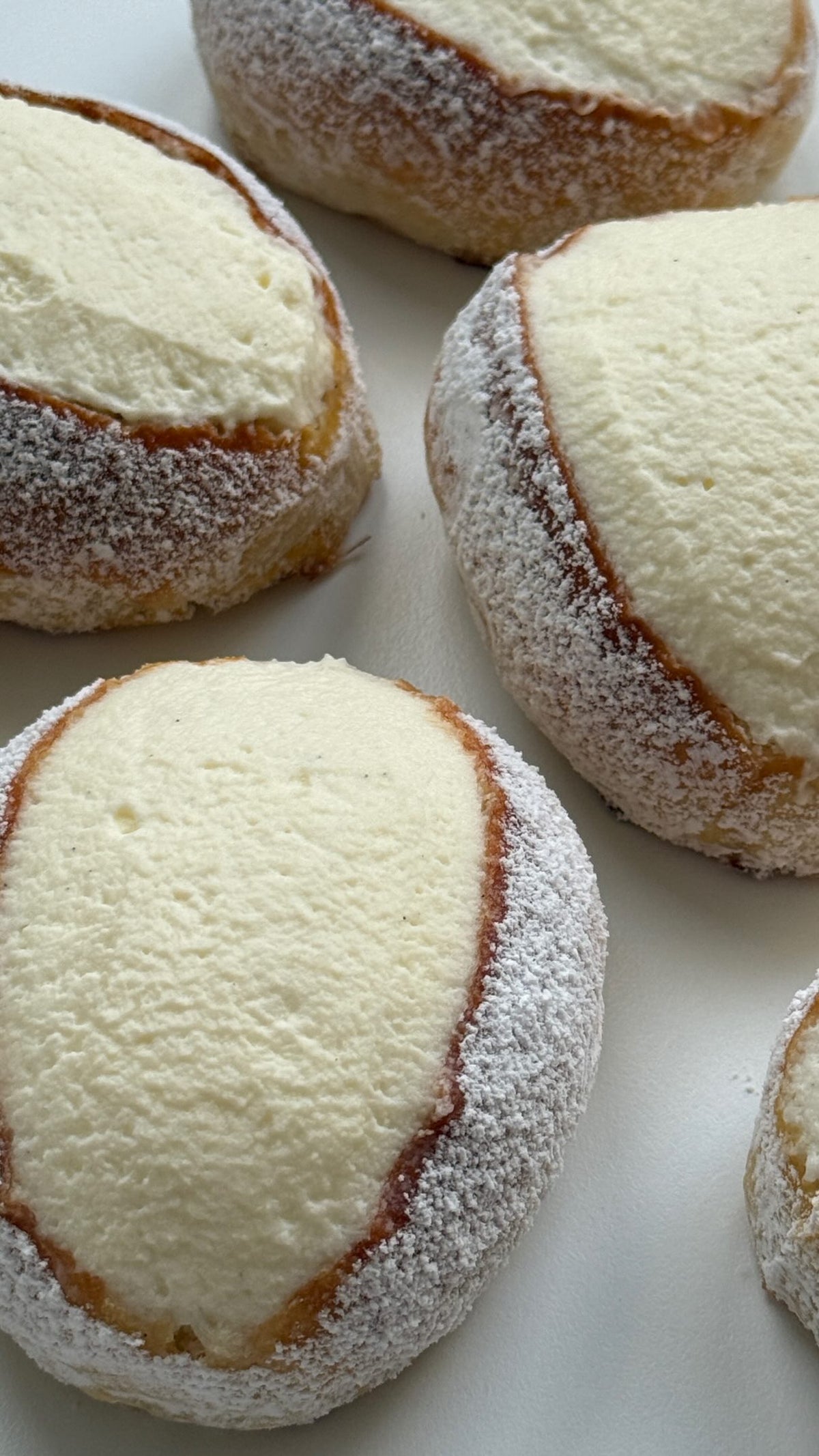
Polvilhe açúcar de confeiteiro, corte em fatias e leve à geladeira por pelo menos 1 hora antes de servir. Leve, cremoso e perfeitamente equilibrado - fatias de confeitaria elegantes de se apaixonar

Video

Food with Style Baking Club
Faça passo a passo com vídeo
Módulo do curso: Massa de bolo amanteigado
- Curso de confeitaria com 9 módulos e 34 videoaulas
- Chat 1:1 com a Baking Chef da Food with Style
- Chat da Community e e-book com 100 receitas
A partir de 14,90 € por mês, cancele mês a mês
FAQ
Perguntas sobre Vanilla Patisserie Slices
delicioso, testado e pronto para inspirar