








Hoeveelheid
Eenheden
Voorbereiding
1 uur
Baktijd
10 minuten
Ingrediënten
- Voor de biscuit
- Voor de banketbakkersroom
- Om te bestuiven
Bereiding
-
1
Verwarm de oven voor op 180 °C / 350 °F (boven- en onderwarmte). Bekleed een bakplaat (30 × 40 cm / 12 × 16 in) met bakpapier.

-
2
Klop de eieren met het zout 1 minuut in een kom. Voeg de suiker beetje bij beetje toe en klop nog 5 minuten door tot een bleek, luchtig mengsel. Roer de vanille erdoor.

-
3
Meng de bloem, maizena en bakpoeder. Zeef dit boven het eiermengsel en spatel het er voorzichtig door tot een glad en luchtig beslag.

-
4
Strijk het beslag uit over de bakplaat en bak de biscuit in 10-12 minuten goudbruin. Laat iets afkoelen en snijd de biscuit in de lengte in twee gelijke lappen.

-
5
Verwarm 300 ml (1¼ cups) melk met de vanille. Klop in een kom de eidooiers, suiker, maizena en de resterende 100 ml (⅖ cup) melk door elkaar. Schenk de hete melk er langzaam bij, giet alles terug in de pan en kook al roerend tot een dikke pudding. Dek af met plasticfolie direct op de room en laat volledig afkoelen.

-
6
Klop de zachte boter romig en voeg de afgekoelde pudding lepel voor lepel toe tot een gladde crème. Doe de crème in een spuitzak.

-
7
Spuit de crème op de eerste biscuitlaag, leg de tweede laag erop en druk licht aan.

-
8
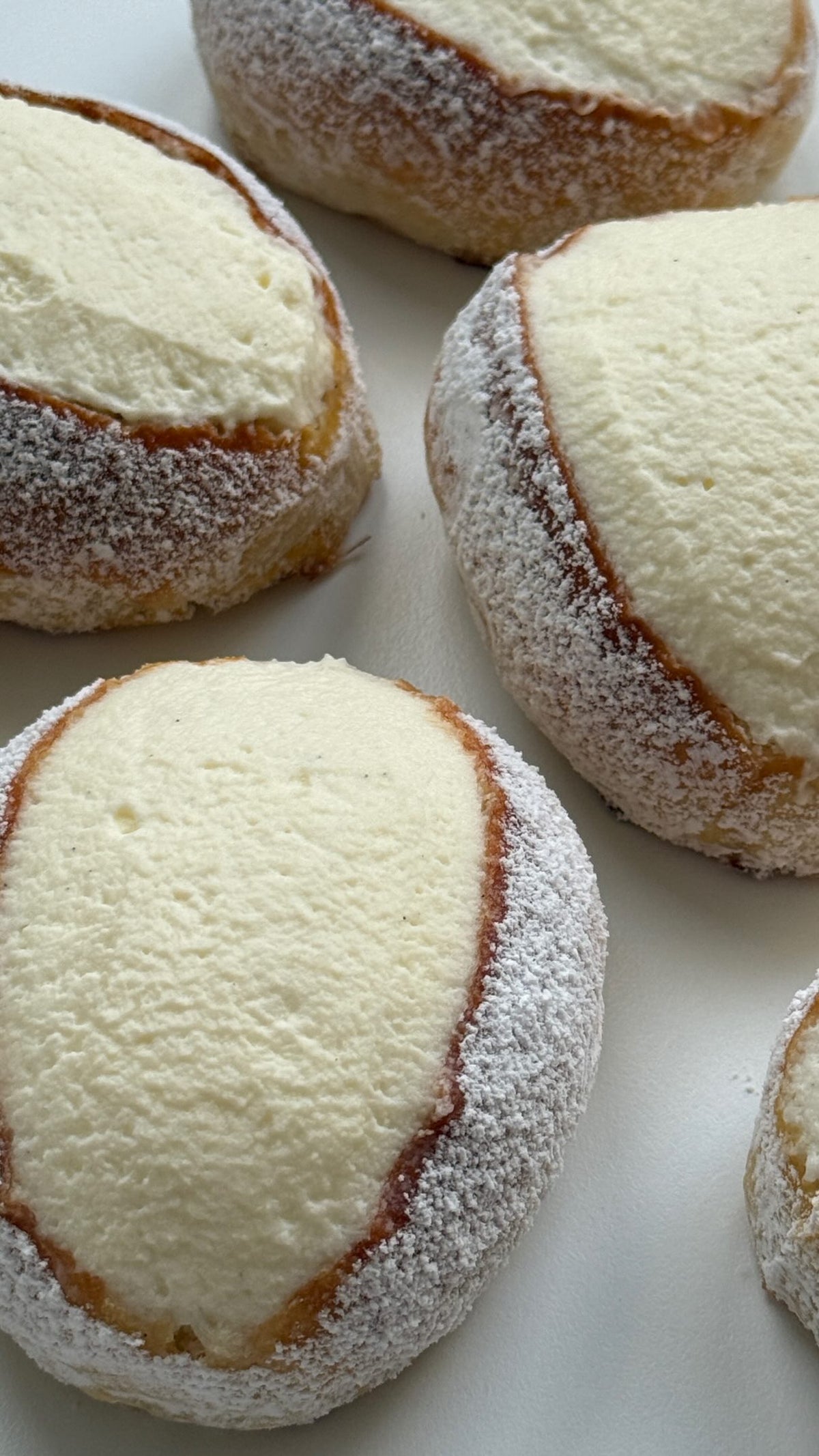
Bestuif met poedersuiker, snijd in plakken en laat minstens 1 uur opstijven in de koelkast voor het serveren. Licht, romig en perfect in balans - elegante gebakjes om verliefd op te worden

Video

Food with Style Baking Club
Bak het stap voor stap met video
Bijpassende cursusmodule: Cakebeslag
- Bakcursus met 9 modules en 34 videolessen
- 1-op-1-chat met de Food with Style Baking Chef
- Communitychat en e-book met 100 recepten
Vanaf 14,90 € per maand, maandelijks opzegbaar
FAQ
Vragen over Vanilla Patisserie Slices
heerlijk, getest en klaar om te inspireren