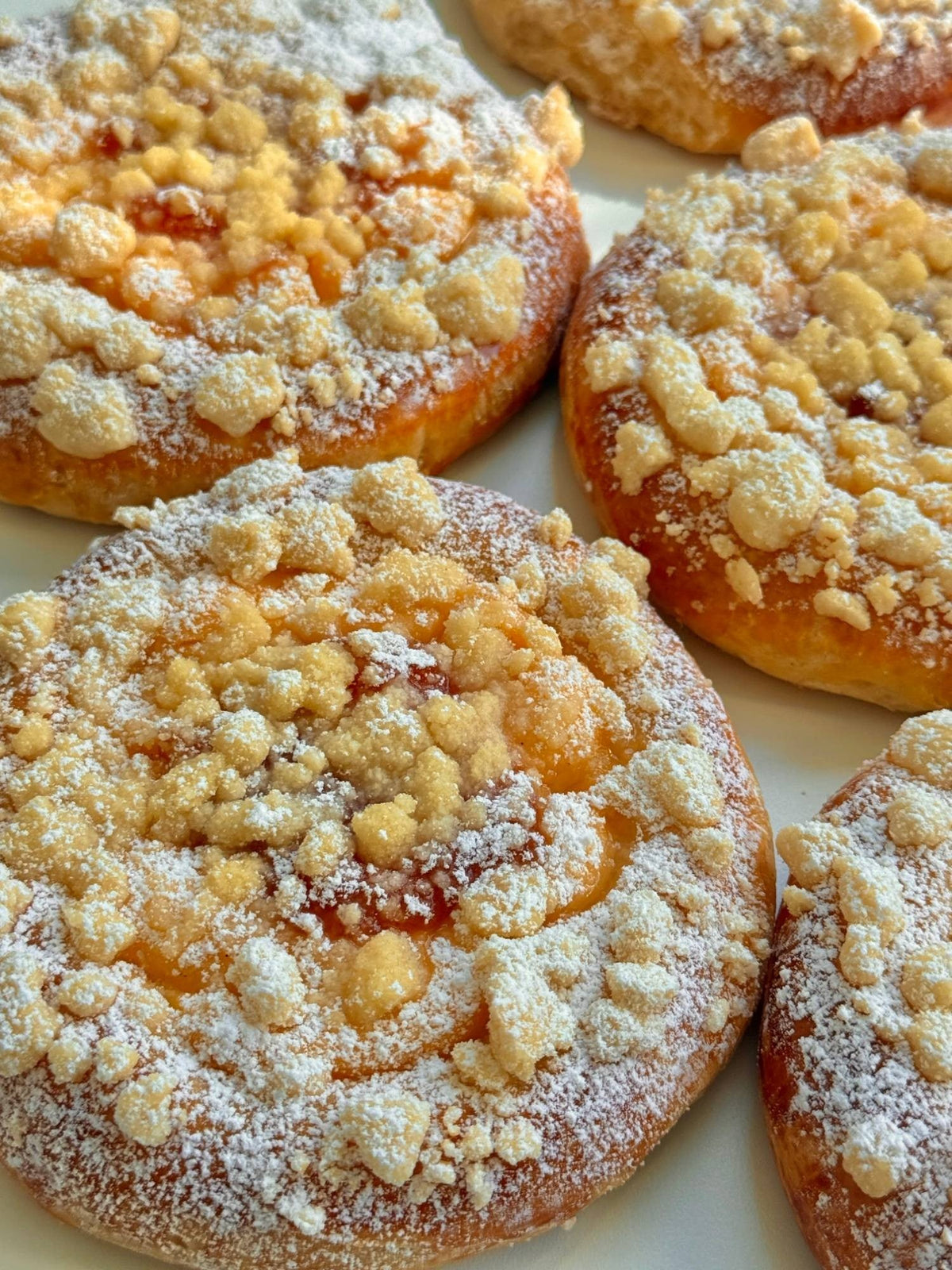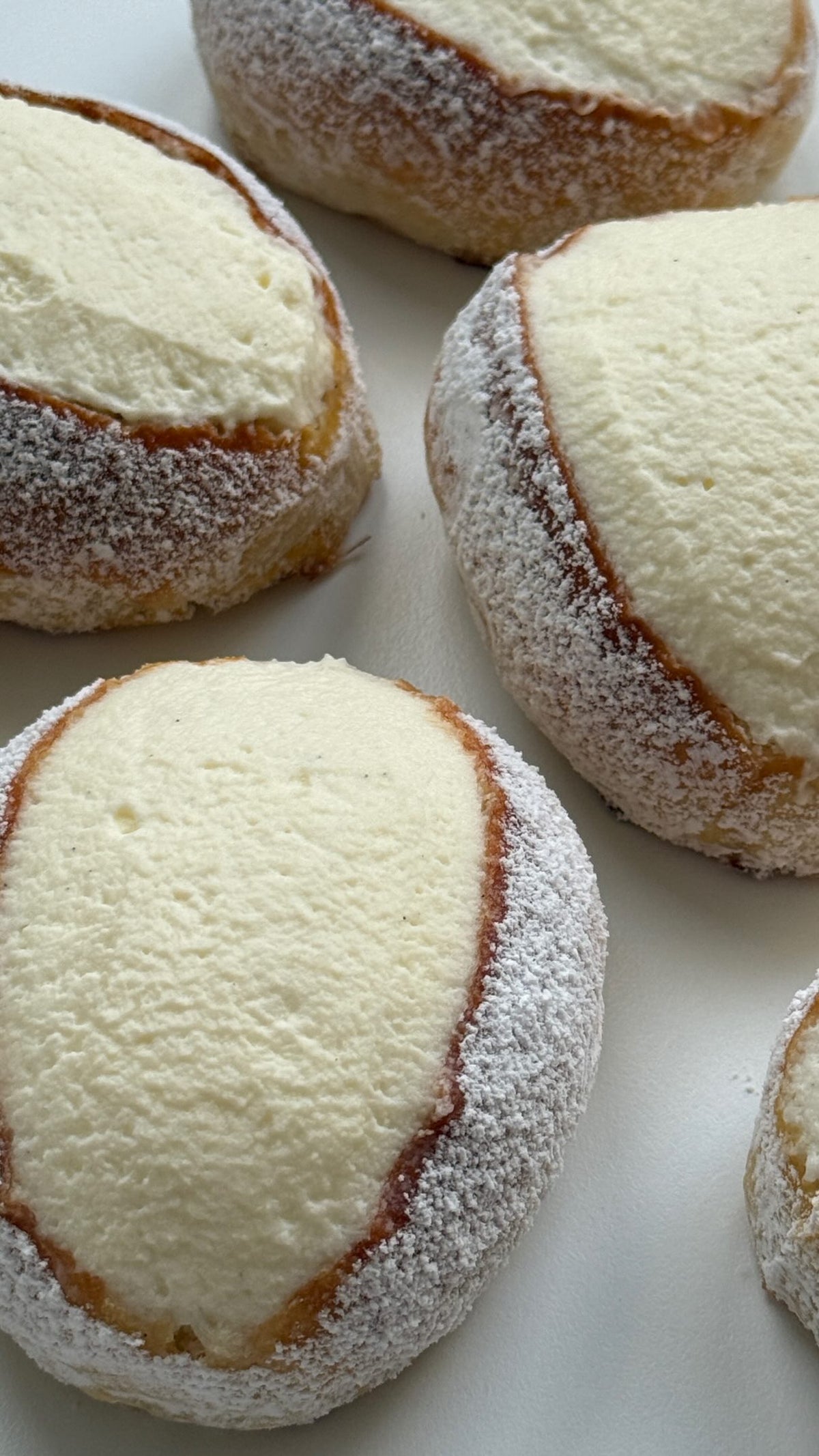


Vanilla Sugar Knots von Food with Style, fertig angerichtet
Brioche

Vanilijevi čvorići sa šećerom

Ovi pahuljasti vanilijevi čvorići savršeni su za ugodno poslijepodne ili kao slatki zalogaj u bilo koje doba dana. Idealni za ljubitelje vanilije!

Podijeli
Priprema 1 sat
Pečenje 15 minuta

Sastojci

  • Za vanilijev nadjev
  • Za premazivanje
  • Za posipanje

Priprema

  1. 1
    Brašno stavite u zdjelu i u sredini napravite udubinu. U udubinu ulijte suhi kvasac, 1 tsp šećera i 2-3 tbsp mlakog mlijeka. Lagano promiješajte i ostavite da odstoji oko 10 minuta, dok kvasac ne počne pjenušati.
  2. 2
    Dodajte preostalo mlijeko, šećer, sol, omekšali maslac i jaje. Umijesite glatko tijesto koje se odvaja od stijenki zdjele. Pokrijte i ostavite da se diže na toplom mjestu oko 1 sat, odnosno dok se ne udvostruči.
  3. 3
    Za nadjev omekšali maslac izmiksajte s ekstraktom vanilije i šećerom dok ne dobijete glatku smjesu.
  4. 4
    Kad se tijesto diglo, razvaljajte ga na pobrašnjenoj podlozi u veliki pravokutnik. Vanilijev nadjev ravnomjerno premažite po tijestu.
  5. 5
    Preklopite tijesto: jednu stranu preklopite prema sredini, a zatim preko nje preklopite drugu stranu. Narežite na jednake trake.
  6. 6
    Svaku traku uzdužno zarežite na tri dijela, ali ne do kraja. Ispletite ih u pletenicu i zamotajte u čvoriće.
  7. 7
    Čvoriće stavite u namašćeni kalup za muffine ili na lim obložen papirom za pečenje. Ostavite da se ponovno dižu 20-30 minuta. U međuvremenu zagrijte pećnicu na 180°C (350°F).
  8. 8
    Pospite šećerom u zrncima.
  9. 9
    Pecite 15-18 minuta, dok lagano ne porumene. Čvoriće premažite otopljenim maslacem i ostavite da se malo prohlade prije posluživanja.

Video

Vanilla Sugar Knots Questions

The most common cause is milk that was too hot, which kills the yeast, so keep it lukewarm rather than steaming. A cold kitchen is the other culprit: this dough needs a genuinely warm spot to rise, and a cold egg straight from the fridge slows things down further, which is why the recipe calls for a room-temperature egg. If the pre-ferment in the well doesn't get foamy after resting, start over with fresh yeast rather than kneading on.

Yes - swap the 3.5 g of dry yeast for about 10 g of fresh yeast, crumbled into the well with the sugar and lukewarm milk the same way. Plant-based milk works too; just warm it to lukewarm as you would dairy milk. You can also replace the vanilla extract in the filling with the seeds of a vanilla bean or vanilla sugar, though with vanilla sugar you may want to cut back the 30 g of sugar slightly.

These are at their best the day they're baked, since the butter filling and soft crumb dry out quickly. Keep leftovers in an airtight container at room temperature for a day or two - not the fridge, which makes yeast pastries stale faster. To revive them, warm them briefly in a 180°C (350°F) oven; freezing the baked knots and reheating from frozen also works well.

Yes - after kneading, let the dough rise slowly in the fridge overnight instead of in a warm place, then bring it back to room temperature before rolling it out. You can also mix the vanilla butter filling a day ahead, but let it soften again so it spreads evenly over the dough. Shaped knots can go into the muffin tin and do their second 20-30 minute rise while the oven preheats to 180°C (350°F).

Filling escapes when the butter mixture is too soft or spread too thickly right up to the edges - leave a small border bare so the folded dough can seal. Rolling the rectangle too thin is the other issue: the strips then tear as you braid and twist them, and the filling runs out. Baking in a greased muffin tin, as the recipe suggests, contains any leakage and keeps the knots tall rather than spreading flat.

ukusni, testirani i spremni za inspiraciju

Istražite 400+ Ukusnih Recepata