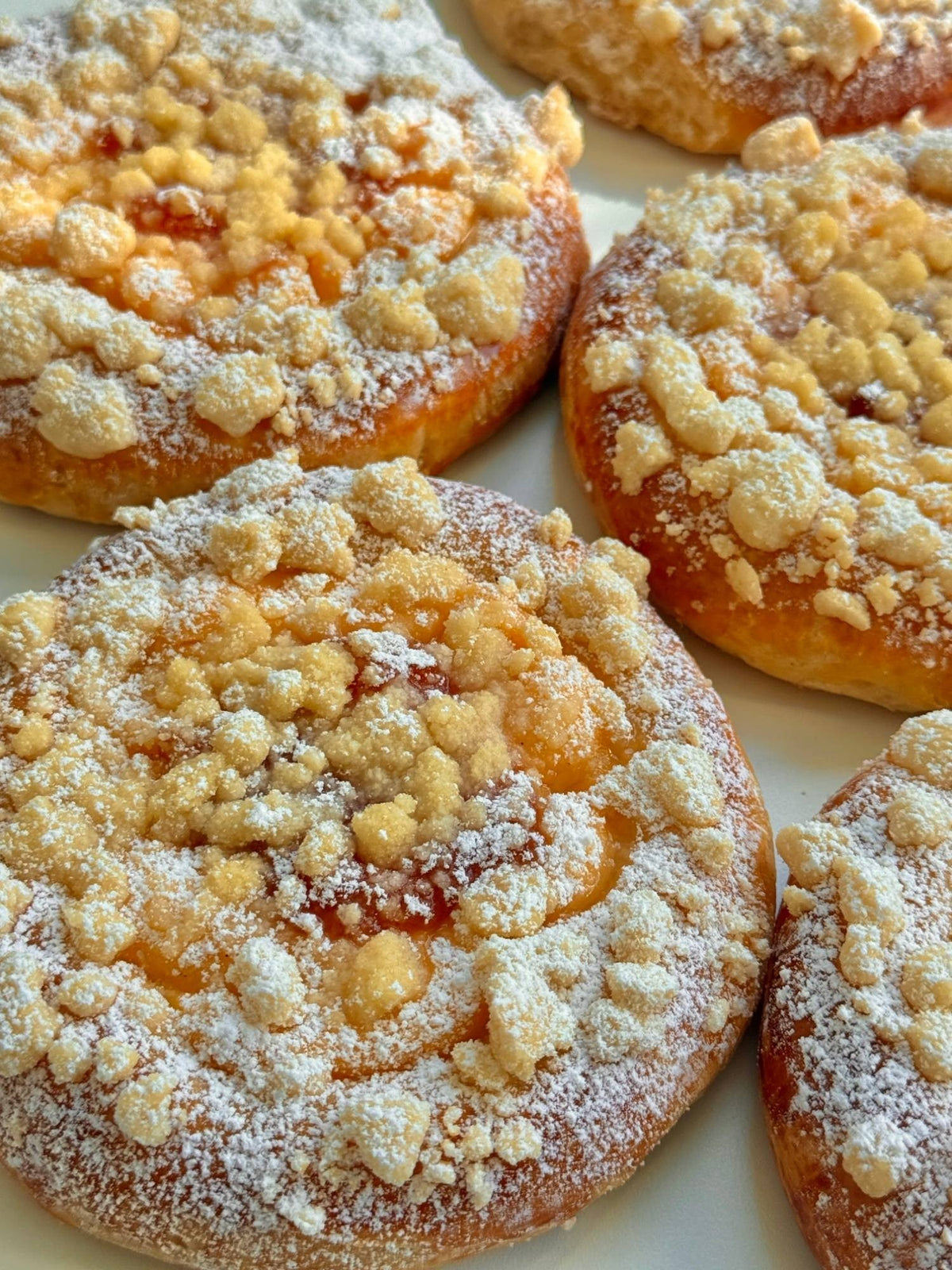
Franzbrötchen von Food with Style, fertig angerichtet
Pastry

Franzbrötchen

Ovi Franzbrötchen su nebeski mekani i mirišu neodoljivo. Savršeni za sve koji vole nešto slatko!

Podijeli
Porcije
6 komada
Priprema 1 sat
Pečenje 15 minuta

Sastojci

  • Za tijesto
  • Za nadjev

Priprema

  1. 1
    Brašno prosijte u zdjelu i u sredini napravite udubljenje. U udubljenje stavite kvasac, 1 tsp šećera i 2-3 tbsp mlakog mlijeka. Lagano promiješajte i ostavite 10 minuta da se zapjeni.
  2. 2
    U zdjelu dodajte preostalo mlijeko, šećer, jaje i sol. Mijesite dok ne dobijete glatko tijesto. Dodajte meki maslac u komadićima i nastavite mijesiti dok tijesto ne postane elastično. Pokrijte i ostavite na toplom mjestu da se diže oko 1 sat ili dok se ne udvostruči.
  3. 3
    U drugoj zdjeli pomiješajte smeđi šećer, cimet i meki maslac dok ne dobijete kremu za mazanje.
  4. 4
    Tijesto razvaljajte na lagano pobrašnjenoj podlozi u pravokutnik veličine oko 20 x 30 cm (8 x 12 inches).
  5. 5
    Smjesu od maslaca, šećera i cimeta ravnomjerno namažite po tijestu.
  6. 6
    Tijesto čvrsto smotajte s duže strane i narežite na komade široke oko 5 cm ( 2 inches).
  7. 7
    Komade stavite presjekom prema dolje na lim obložen papirom za pečenje. Drvenim štapićem čvrsto pritisnite sredinu svakog komada kako biste dobili tradicionalni oblik Franzbrötchena.
  8. 8
    Pokrijte i ostavite da se diže još 30 minuta.
  9. 9
    Pećnicu zagrijte na 180°C (350°F), grijanje gore/dolje (160°C s ventilatorom). Franzbrötchen pecite 15-18 minuta dok ne porumene.
  10. 10
    Tople Franzbrötchen premažite otopljenim maslacem i ostavite da se hlade pokriveni krpom. Po želji pospite cimet-šećerom ili šećerom u prahu.

Video

Franzbrötchen Questions

After stirring the yeast with 1 tsp sugar and 2-3 tbsp lukewarm milk in the well, let it sit for 10 minutes as the recipe directs. You should see foam or bubbles on the surface - that means the yeast is alive and the dough will rise. If the mixture stays flat and smooth after 10 minutes, discard it and start again with fresh yeast, since the whole dough depends on this step.

Yes. The recipe already starts the yeast in lukewarm milk with a little sugar, so active dry yeast works in the same amount and simply needs the full 10 minutes to foam. Fresh yeast also works - crumble it into the milk in the well and stir until dissolved. Whichever you use, keep the milk lukewarm, not hot, or you will kill the yeast.

This usually happens when the butter in the filling is too soft or the dough is rolled too loosely. Mix the brown sugar, cinnamon, and butter into a spreadable paste rather than a runny one, and spread it evenly so no thick pockets form. Roll the dough tightly from the long side, and always bake on parchment paper as the recipe says - some caramel escaping is normal and lifts right off the paper.

Yes. Knead the dough through the butter stage, then cover it and let it rise slowly in the fridge overnight instead of at room temperature. The next morning, let it come back to room temperature before rolling it into the 20 x 30 cm rectangle, otherwise the cold dough will crack and the butter filling won't spread. Then continue with shaping, the 30-minute rise, and baking as written.

Let them cool completely, then keep them in an airtight container at room temperature - the butter in both the dough and the filling keeps them tender for a couple of days. To refresh them, warm them briefly in the oven at the same 180°C (350°F) until the filling softens again. They also freeze well once cooled; thaw and reheat the same way.

ukusni, testirani i spremni za inspiraciju

Istražite 400+ Ukusnih Recepata