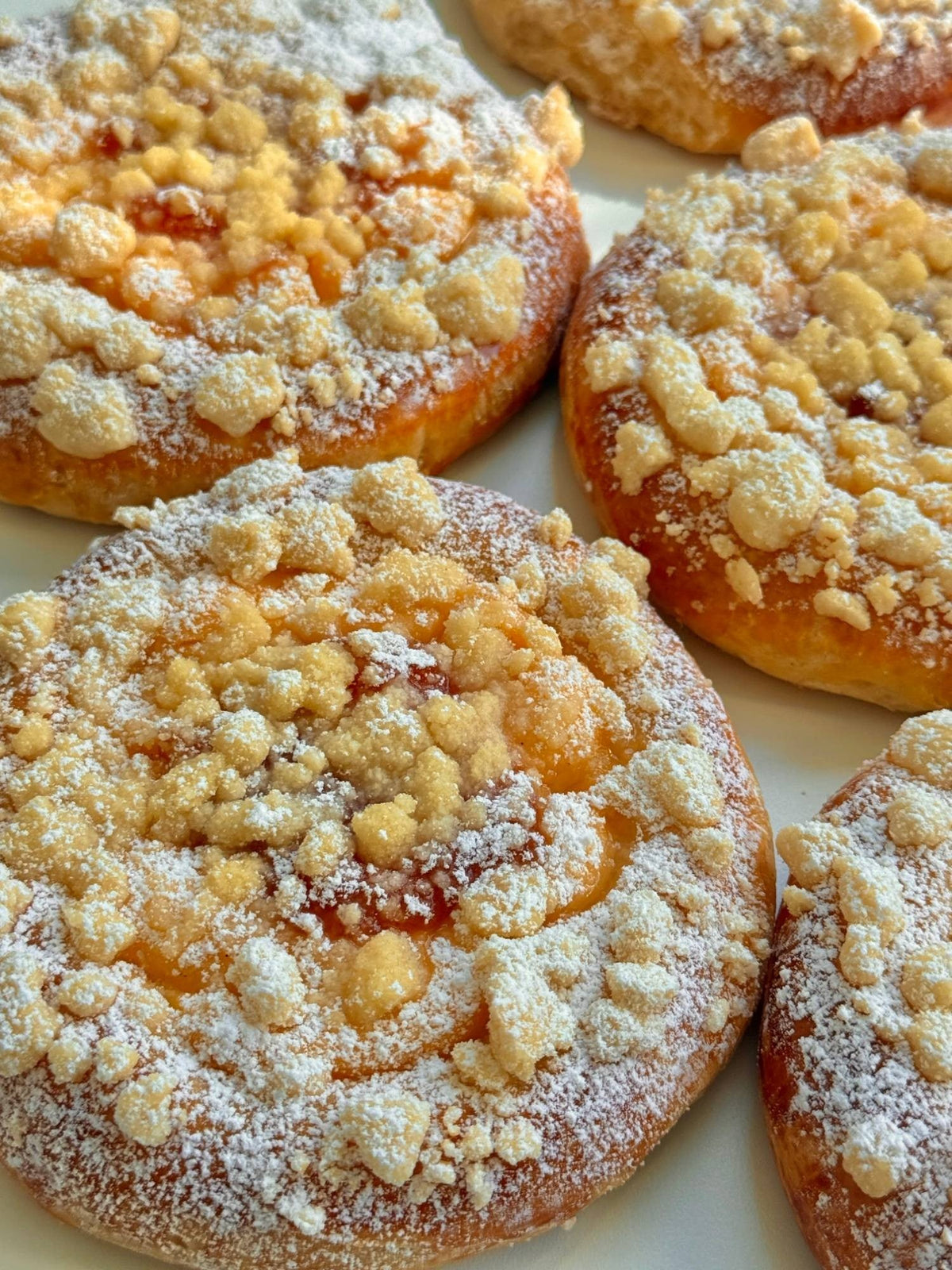
Vanilla Pastry von Food with Style, fertig angerichtet
Pastry

Vanilkové pečivo

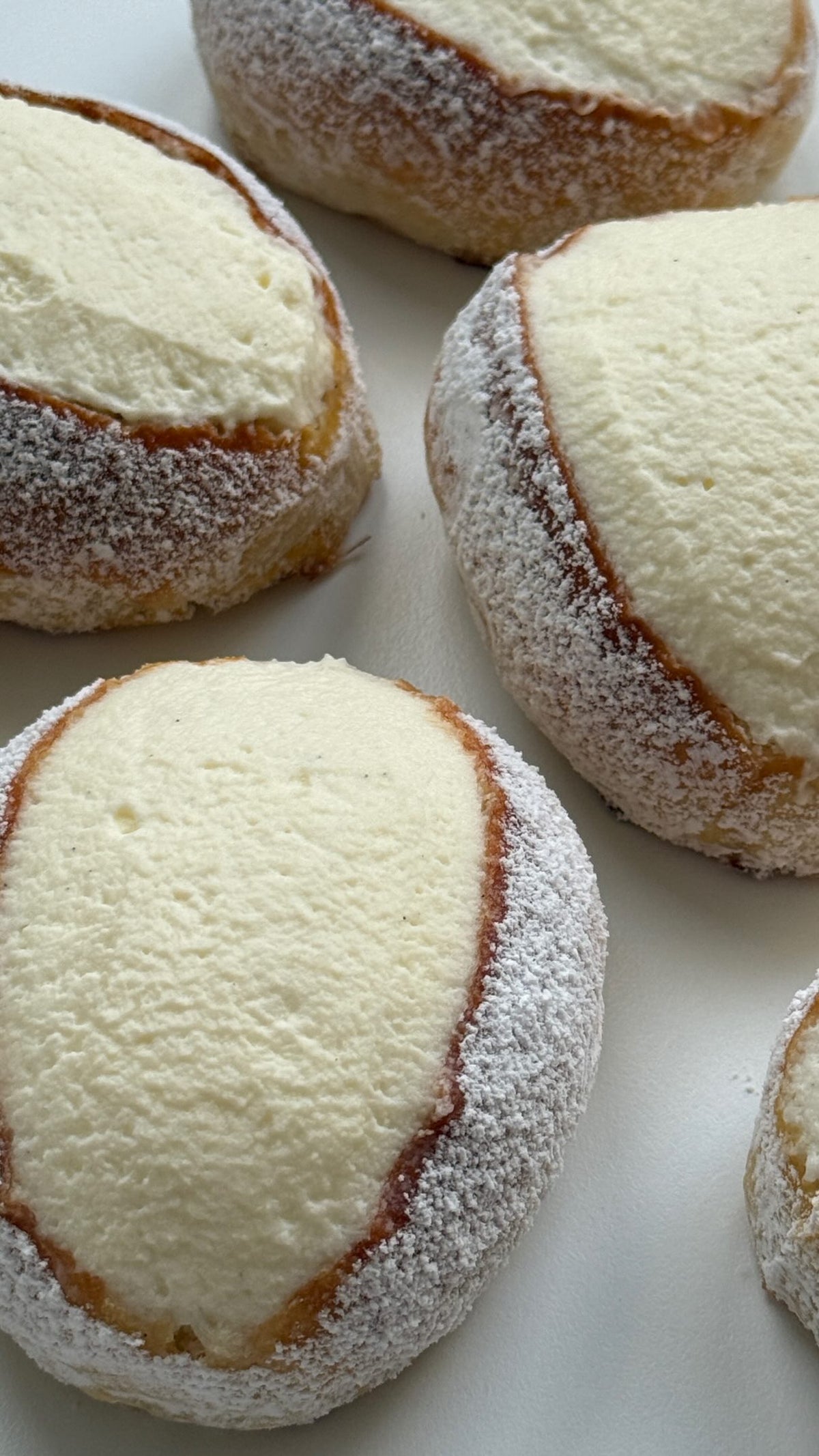
Měkké, nadýchané kynuté pečivo plněné jemným vanilkovým pudinkovým krémem. Nádherné pečení, které chutná naprosto božsky, ať už teplé, nebo studené.

Sdílet
Porce
10 kusů
Pečení 18 minut

Suroviny

  • Na potření a dozdobení

Postup

  1. 1
    Mouku prosejte do mísy a uprostřed udělejte důlek. Přidejte droždí, 1 tsp cukru a trochu vlažného mléka. Nechte 8-10 minut vzejít, dokud kvásek nezpění.
  2. 2
    Přidejte zbylý cukr, vejce, mléko, sůl a vanilku. Vypracujte hladké těsto, poté zapracujte máslo a hněťte 8-10 minut, dokud není měkké, pružné a lehce lesklé.
  3. 3
    Zakryjte a nechte 60-90 minut kynout, dokud těsto nezdvojnásobí objem.
  4. 4
    Mléko s vanilkou zahřejte (nevařte). Žloutky, cukr a škrob rozšlehejte, vmíchejte horké mléko a vraťte zpět do hrnce.
  5. 5
    Za stálého míchání vařte, dokud krém nezhoustne do pudinkové konzistence. Přelijte do misky, přikryjte fólií přímo na povrch a nechte úplně vychladnout.
  6. 6
    Vychladlý krém prošlehejte dohladka a přendejte do cukrářského sáčku s kulatou špičkou.
  7. 7
    Těsto rozdělte asi na 10 dílů (50 g), z každého vytvarujte kuličku, rozválejte na kolečko a doprostřed lehce otiskněte malé vykrajovátko.
  8. 8
    Vnější část nakrájejte na tenké proužky, střed nechte celistvý.
  9. 9
    Doprostřed nastříkejte nízký kroužek vanilkového krému a proužky opatrně přeložte ke středu tak, aby se mírně překrývaly.
  10. 10
    Doprostřed vložte borůvku, zakryjte a nechte 20-30 minut odpočívat.
  11. 11
    Rozšlehejte žloutek s mlékem, pečivo potřete a pečte při 180 °C / 350 °F 18-22 minut dozlatova. Nechte krátce vychladnout a poprašte moučkovým cukrem. Měkké, jemné kynuté pečivo s lahodnou vanilkovou náplní - nadýchané, elegantní a prostě neodolatelné.

Video

Vanilla Pastry Questions

The vanilla cream is ideal for making ahead, since it has to cool completely anyway before it can be whisked smooth and piped. Cook it a day in advance, cover it directly on the surface so no skin forms, and chill it. The yeast dough is best shaped and baked the same day, but you can slow the 60-90 minute rise by letting it proof in the fridge and bringing it back to room temperature before dividing.

No, if nothing happens within the 8-10 minutes the yeast is either dead or the milk was too hot. The milk should be lukewarm, not hot, because heat above body temperature kills active dry yeast. Start that step again with fresh yeast and properly lukewarm milk, otherwise the dough will never double.

Yes, the 60 g soft butter can be swapped for a firm plant-based block butter, and both the 110 ml dough milk and the 250 ml milk for the cream can be replaced with a neutral, full-fat plant milk such as oat or soy. Keep the substitute butter genuinely soft, since it has to be kneaded into the already-smooth dough. The pastry cream still sets, because the thickening comes from the 25 g cornstarch and the 2 egg yolks, not the milk fat.

Lumps usually mean the hot milk went into the yolk mixture too fast, or the cream was not stirred constantly while cooking - pour the hot milk in gradually while whisking, and keep stirring the whole time in the saucepan. A runny cream means it did not cook long enough; the cornstarch needs to come up to a boil to thicken fully into a pudding-like consistency. If lumps appear anyway, pass the finished cream through a sieve before covering and cooling it.

Because they contain an egg-yolk-based cream, store them covered in the fridge rather than at room temperature. They taste best on the day they are baked, when the yeast dough is still soft. Let them sit out briefly before serving so the dough loses its chill, and dust with the powdered sugar only just before serving so it does not dissolve.

lahodné, testované a připravené inspirovat

Prozkoumejte 400+ Chutných Pokrmů