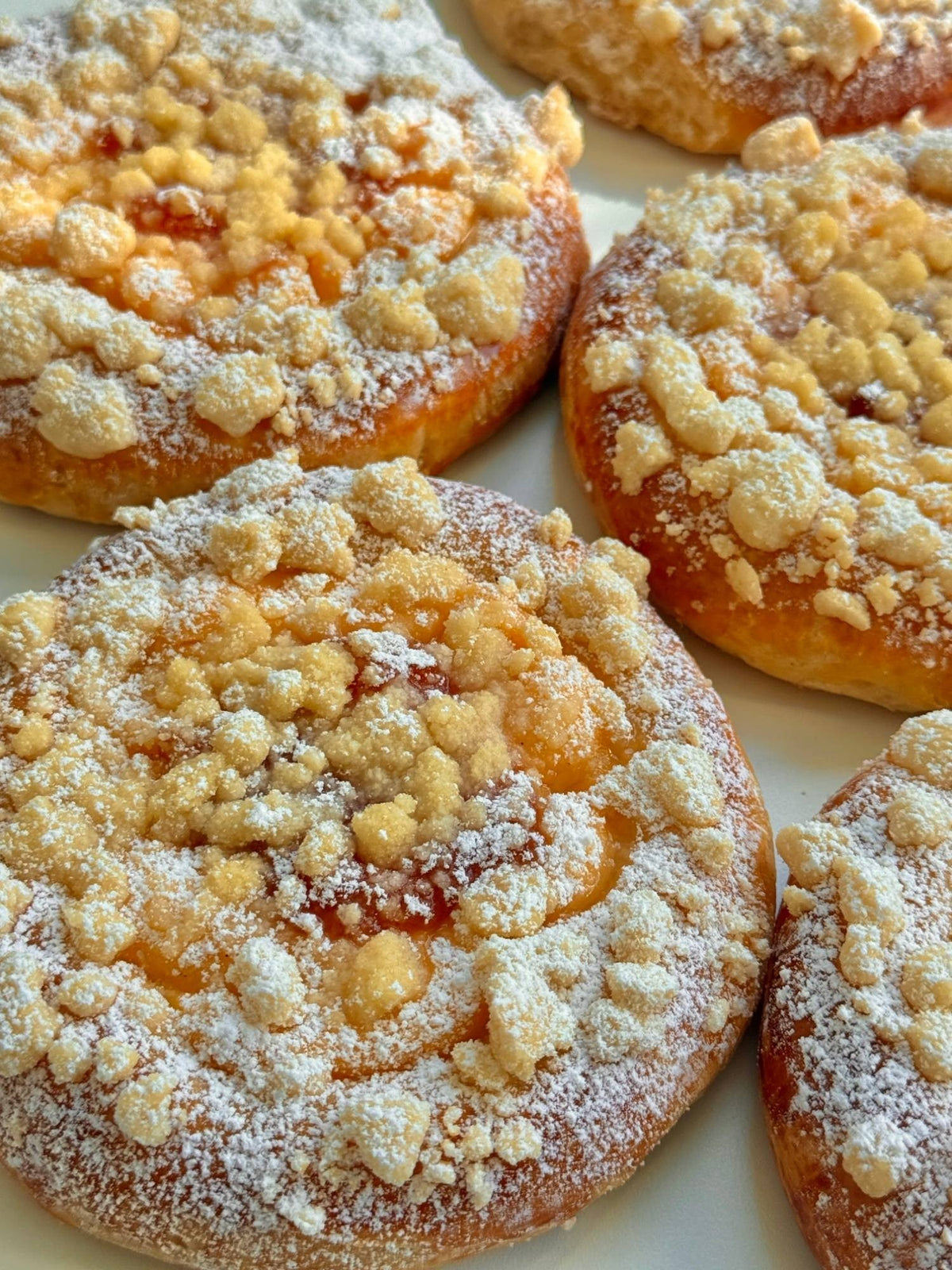
Franzbrötchen von Food with Style, fertig angerichtet
Pastry

Franzbrötchen

Tyto Franzbrötchen jsou nebesky měkké a voní naprosto neodolatelně. Ideální pro každého, kdo miluje sladké mlsání!

Sdílet
Porce
6 kusů
Příprava 1 hodina
Pečení 15 minut

Suroviny

  • Na těsto
  • Na náplň

Postup

  1. 1
    Mouku prosejte do mísy a uprostřed udělejte důlek. Do důlku dejte droždí, 1 tsp cukru a 2-3 tbsp vlažného mléka. Lehce promíchejte a nechte 10 minut stát, dokud kvásek nezpění.
  2. 2
    Do mísy přidejte zbylé mléko, cukr, vejce a sůl. Vypracujte hladké těsto. Po kouscích zapracujte měkké máslo a hněťte dál, dokud těsto nebude pružné. Zakryjte a nechte na teplém místě asi 1 hodinu kynout, dokud nezdvojnásobí objem.
  3. 3
    V druhé misce smíchejte třtinový cukr, skořici a měkké máslo do roztíratelné pasty.
  4. 4
    Těsto rozválejte na lehce pomoučeném pracovní ploše na obdélník o rozměrech asi 20 x 30 cm (8 x 12 inches).
  5. 5
    Skořicovo-cukrovou máslovou směs rovnoměrně rozetřete po těstě.
  6. 6
    Těsto pevně srolujte od delší strany a nakrájejte na díly široké asi 5 cm ( 2 inches).
  7. 7
    Díly položte řezem dolů na plech vyložený pečicím papírem. Vařečkou pevně zatlačte doprostřed každého dílu, aby vznikl typický tvar Franzbrötchen.
  8. 8
    Zakryjte a nechte dalších 30 minut kynout.
  9. 9
    Troubu předehřejte na 180°C (350°F) horní a spodní ohřev (160°C horkovzduch). Franzbrötchen pečte 15-18 minut dozlatova.
  10. 10
    Teplé Franzbrötchen potřete rozpuštěným máslem a nechte vychladnout pod utěrkou. Podle chuti posypte skořicovým cukrem nebo moučkovým cukrem.

Video

Franzbrötchen Questions

After stirring the yeast with 1 tsp sugar and 2-3 tbsp lukewarm milk in the well, let it sit for 10 minutes as the recipe directs. You should see foam or bubbles on the surface - that means the yeast is alive and the dough will rise. If the mixture stays flat and smooth after 10 minutes, discard it and start again with fresh yeast, since the whole dough depends on this step.

Yes. The recipe already starts the yeast in lukewarm milk with a little sugar, so active dry yeast works in the same amount and simply needs the full 10 minutes to foam. Fresh yeast also works - crumble it into the milk in the well and stir until dissolved. Whichever you use, keep the milk lukewarm, not hot, or you will kill the yeast.

This usually happens when the butter in the filling is too soft or the dough is rolled too loosely. Mix the brown sugar, cinnamon, and butter into a spreadable paste rather than a runny one, and spread it evenly so no thick pockets form. Roll the dough tightly from the long side, and always bake on parchment paper as the recipe says - some caramel escaping is normal and lifts right off the paper.

Yes. Knead the dough through the butter stage, then cover it and let it rise slowly in the fridge overnight instead of at room temperature. The next morning, let it come back to room temperature before rolling it into the 20 x 30 cm rectangle, otherwise the cold dough will crack and the butter filling won't spread. Then continue with shaping, the 30-minute rise, and baking as written.

Let them cool completely, then keep them in an airtight container at room temperature - the butter in both the dough and the filling keeps them tender for a couple of days. To refresh them, warm them briefly in the oven at the same 180°C (350°F) until the filling softens again. They also freeze well once cooled; thaw and reheat the same way.

lahodné, testované a připravené inspirovat

Prozkoumejte 400+ Chutných Pokrmů