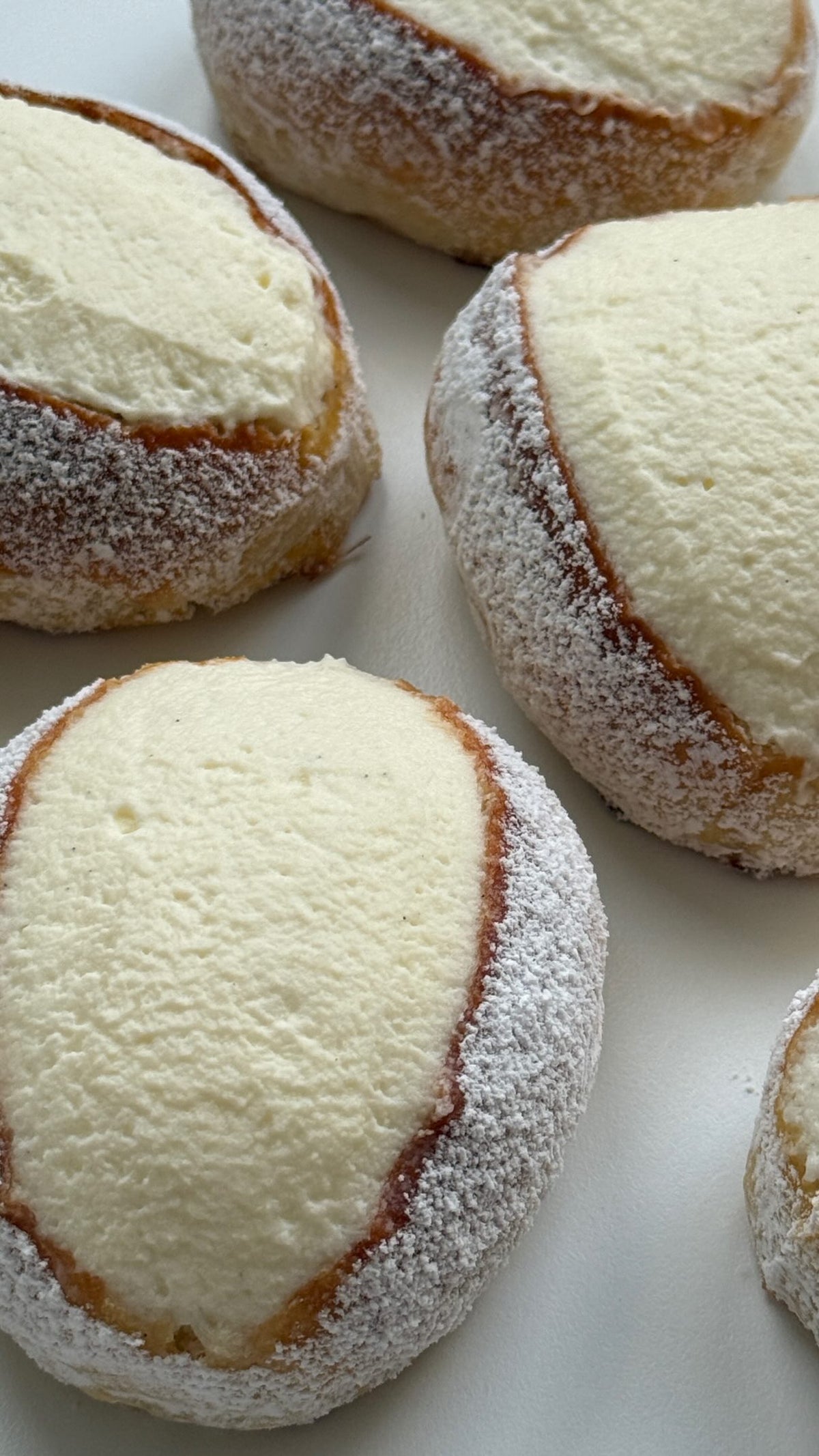
Brioche Parisienne von Food with Style, fertig angerichtet
Brioche

Brioche Parisienne

Brioche Parisienne (brioche à tête), skvost francouzského pečení, si získala oblibu díky vláčné máslové střídce a elegantnímu tvaru. Ideální na luxusní snídani nebo sváteční...

Sdílet
Pečení 20 minut

Suroviny

Postup

  1. 1
    Mouku prosejte do mísy a uprostřed udělejte důlek. Do důlku dejte sušené droždí, přidejte lžičku cukru a vlažné mléko. Zamíchejte a nechte chvíli vzejít kvásek.
  2. 2
    Do důlku přidejte vejce a vše propracujte v hladké těsto.
  3. 3
    Postupně vmíchejte změklé máslo a zpracovávejte, dokud těsto nebude hladké a pružné.
  4. 4
    Těsto zakryjte a nechte při pokojové teplotě asi 1 hodinu kynout, dokud nezdvojnásobí objem.
  5. 5
    Těsto rozdělte na 45 stejných dílků, každý o váze asi 12 g. Každou brioche vytvarujte tak, že do vymazané formy na muffiny položíte jako základ 4 kuličky těsta a doprostřed přidáte ještě jednu kuličku, aby vznikl tvar připomínající květinu.
  6. 6
    Vytvarované brioche nechte zakryté kynout dalších 45 minut.
  7. 7
    Brioche potřete žloutkem a pečte v předehřáté troubě na 180°C (350°F) (klasický ohřev) 20-25 minut dozlatova.
  8. 8
    Upečené brioche potřete trochou rozpuštěného másla a nechte vychladnout. Teplé i studené jsou skvělé! Dobrou chuť!

Video

Brioche Parisienne Questions

A brioche dough with 100 g butter to 250 g flour is meant to feel slack and tacky, so don't panic and don't rescue it with extra flour. Add the softened butter gradually as the recipe says, kneading each addition in fully before the next, and keep going until the dough turns smooth and elastic. If it still smears, chill it for 20-30 minutes and knead again - cold butter firms up and the dough pulls together.

Yes - the 3 g of dry yeast can be replaced with about 9 g of fresh yeast, crumbled into the well with the teaspoon of sugar and the lukewarm milk exactly as described. For the 2 tablespoons of milk, any plant drink works since the amount is small and the richness comes from the eggs and butter. The butter itself is harder to substitute: it carries the flavour and the tender crumb, so a firm block-style vegan butter is the only swap worth making.

Keep them at room temperature in a bread box or a paper bag rather than the fridge, which dries an egg-and-butter dough out fast. They're at their best on baking day, so for anything beyond that freeze them once fully cooled and warm them straight from frozen in a 180°C (350°F) oven for a few minutes. The brush of melted butter after baking also helps keep the crust soft.

Yes, and it's the friendliest way to bake these for breakfast. Instead of the 1-hour rise at room temperature, cover the kneaded dough and let it rise slowly in the fridge overnight - the cold dough is also far easier to divide into the 45 small 12 g pieces and roll smooth. Next morning, shape the brioches in the greased muffin tin, let them do their second rise of about 45 minutes (a little longer if the dough is still cold), then brush with egg yolk and bake.

The classic culprit is a top ball that's just resting on the base instead of being anchored into it - press it down firmly into the centre of the four base balls so it sits in a proper dip. Also brush the egg yolk carefully over the top rather than letting it pool where the ball meets the base, since egg wash running into that seam works like glue in the wrong place and can push the head sideways. Finally, don't overproof the second rise: after roughly 45 minutes the shaped brioches should still feel springy, not slack and puffy.

lahodné, testované a připravené inspirovat

Prozkoumejte 400+ Chutných Pokrmů