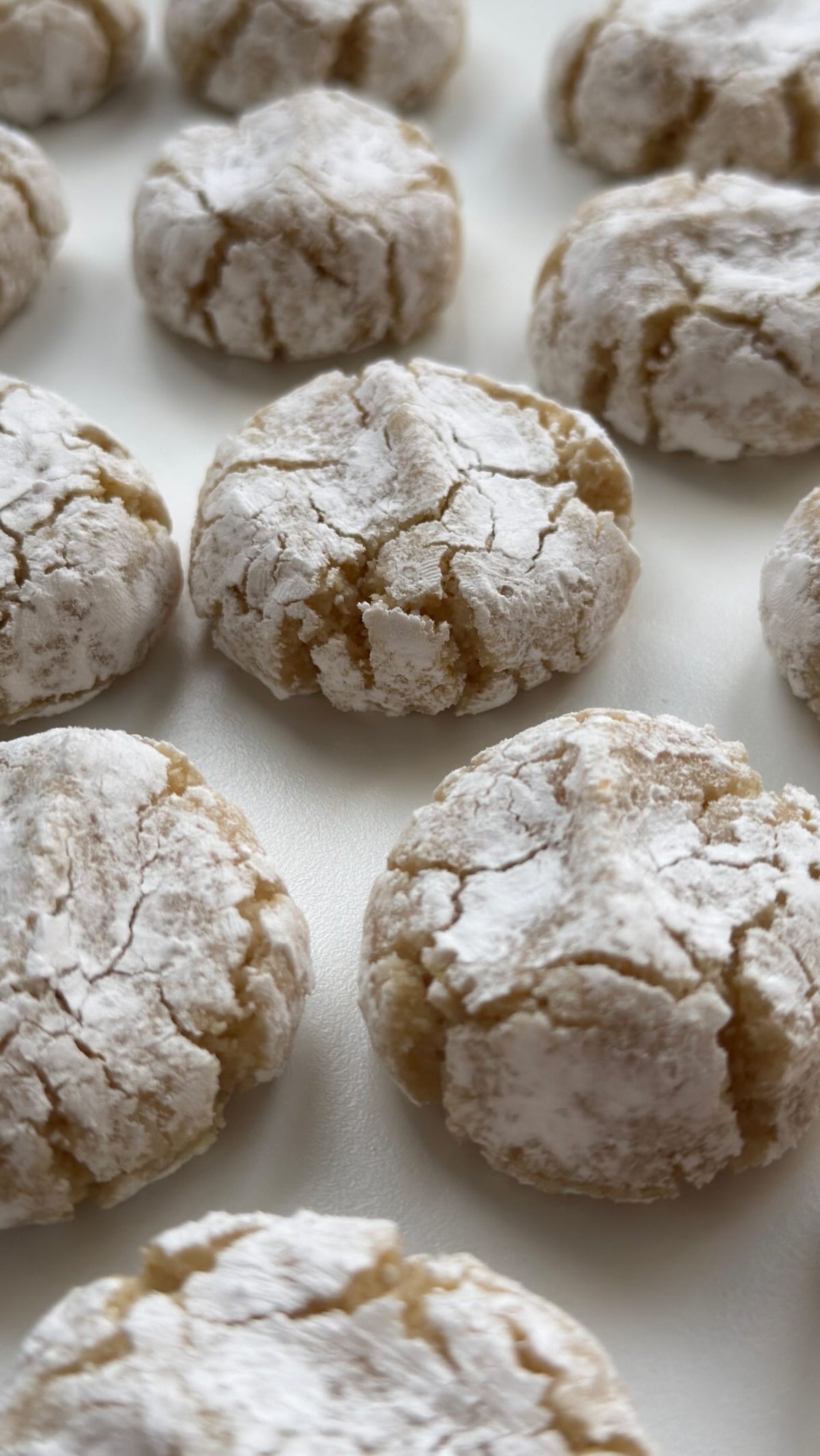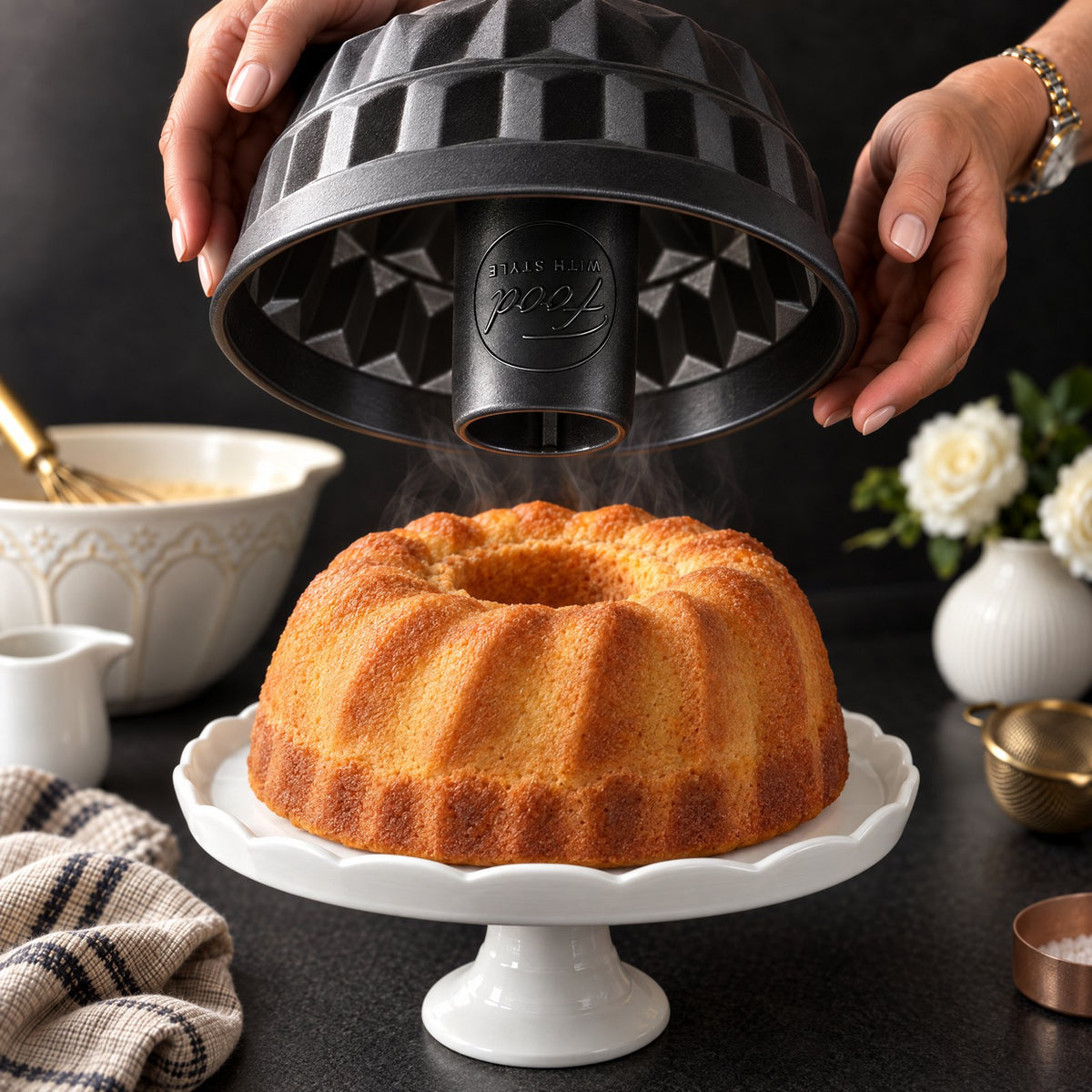


Vanillekipferl von Food with Style, fertig angerichtet
Pastry

Vanillekipferl

Delikatne, eleganckie kruche rogaliki waniliowe, które rozpływają się w ustach, z klasycznym aromatem wanilii. (wychodzi ok. 18-24 ciastek)

Udostępnij
Porcje
18 ciastek
Pieczenie 12 minut

Składniki

  • Do obtoczenia / oprószenia

Przygotowanie

  1. 1
    Wymieszaj mąkę, cukier puder, zmielone migdały, sól i wanilię. Dodaj zimne masło i szybko zagnieć gładkie ciasto. Ważne: pracuj sprawnie, żeby ciasto się nie ogrzało.
  2. 2
    Uformuj z ciasta długi wałek, szczelnie owiń folią spożywczą i włóż do lodówki na około 60 minut.
  3. 3
    Rozgrzej piekarnik do 170 °C / 338 °F (grzanie góra/dół). Blachę wyłóż papierem do pieczenia.
  4. 4
    Schłodzony wałek ciasta pokrój na plastry o grubości około 1.5 cm (po ok. 20 g). Każdy kawałek zroluj w kulkę, potem w krótki wałeczek i delikatnie zegnij końce w dół, formując klasyczne rogaliki.
  5. 5
    Jeśli ciasto podczas formowania zrobi się zbyt miękkie, schłodź uformowane rogaliki jeszcze przez 15-20 minut, żeby lepiej trzymały kształt podczas pieczenia.
  6. 6
    Piecz 12-15 minut. Ciastka powinny pozostać jasne, z ledwo zarumienionymi końcami.
  7. 7
    Wyjmij z piekarnika, odstaw na chwilę i jeszcze ciepłe (ale nie gorące) delikatnie obtocz w cukrze pudrze z cukrem waniliowym albo lekko oprósz.
  8. 8
    Odstaw do całkowitego wystudzenia - dopiero wtedy staną się idealnie kruche i nie będą się kruszyć. Idealne na święta, jako pomysł na prezent albo po prostu do filiżanki kawy.

Video

Vanillekipferl Questions

Ground blanched almonds make up 70 g of the dough and carry a lot of its tenderness, so they need a like-for-like replacement rather than just more flour. Finely ground hazelnuts or walnuts work well and simply shift the flavour; for a nut-free version, use the same weight of very finely ground blanched almonds' stand-in such as ground sunflower seeds. Keep the grind fine, because coarse pieces make the thin crescent tips break when you bend them.

Store them in an airtight tin at room temperature once they have cooled completely - the recipe stresses that they only become tender and stable after full cooling, and packing them warm traps steam and softens them. Layer them between parchment, since the crescents are fragile and the powdered-sugar coating rubs off easily. Many bakers find the texture improves after a day or two in the tin, and you can dust with a little extra powdered sugar before serving.

Yes - the dough is already shaped into a log and wrapped in plastic wrap for its 60-minute chill, so you can simply leave it in the fridge longer and bake the next day. If it has firmed up too much to slice cleanly, let it sit at room temperature for a few minutes before cutting your 1.5 cm slices. The wrapped log also freezes well; thaw it in the fridge until it is just sliceable.

The dough is very short: 100 g butter against 140 g flour and 70 g almonds, with no egg or liquid to bind it. Crumbliness usually means it simply needs another minute of quick kneading so the cold butter cubes distribute - press it firmly together rather than adding water, which would toughen it. If it still refuses to hold, your butter may be too cold straight from the fridge; let the cubes stand a few minutes, but keep working swiftly so the butter does not warm through.

Spreading means the butter was too warm when the cookies went in, which is why the recipe calls for chilling the formed crescents another 15-20 minutes if the dough softens while shaping. Roll each piece into a ball first, then a short log, and bend the ends downward so the crescent is even in thickness - thin, overworked tips brown fast and break. At 170 °C / 338 °F for 12-15 minutes the cookies should stay pale with just a hint of colour at the tips, so pull them before they take on real colour.

pyszne, sprawdzone i gotowe do inspiracji

Odkryj 400+ Smacznych Przepisów