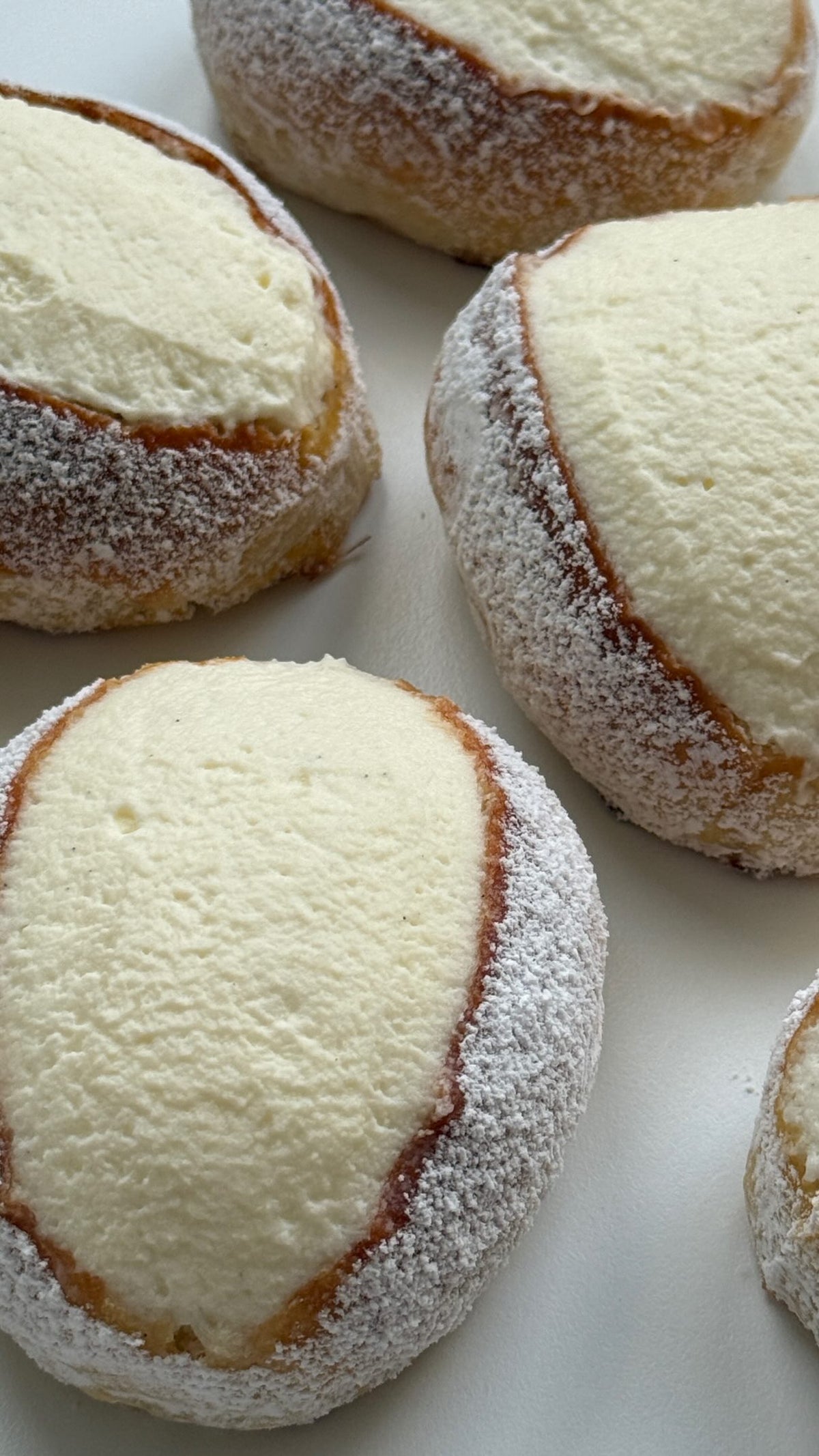


Vanilla Pastry von Food with Style, fertig angerichtet
Pastry

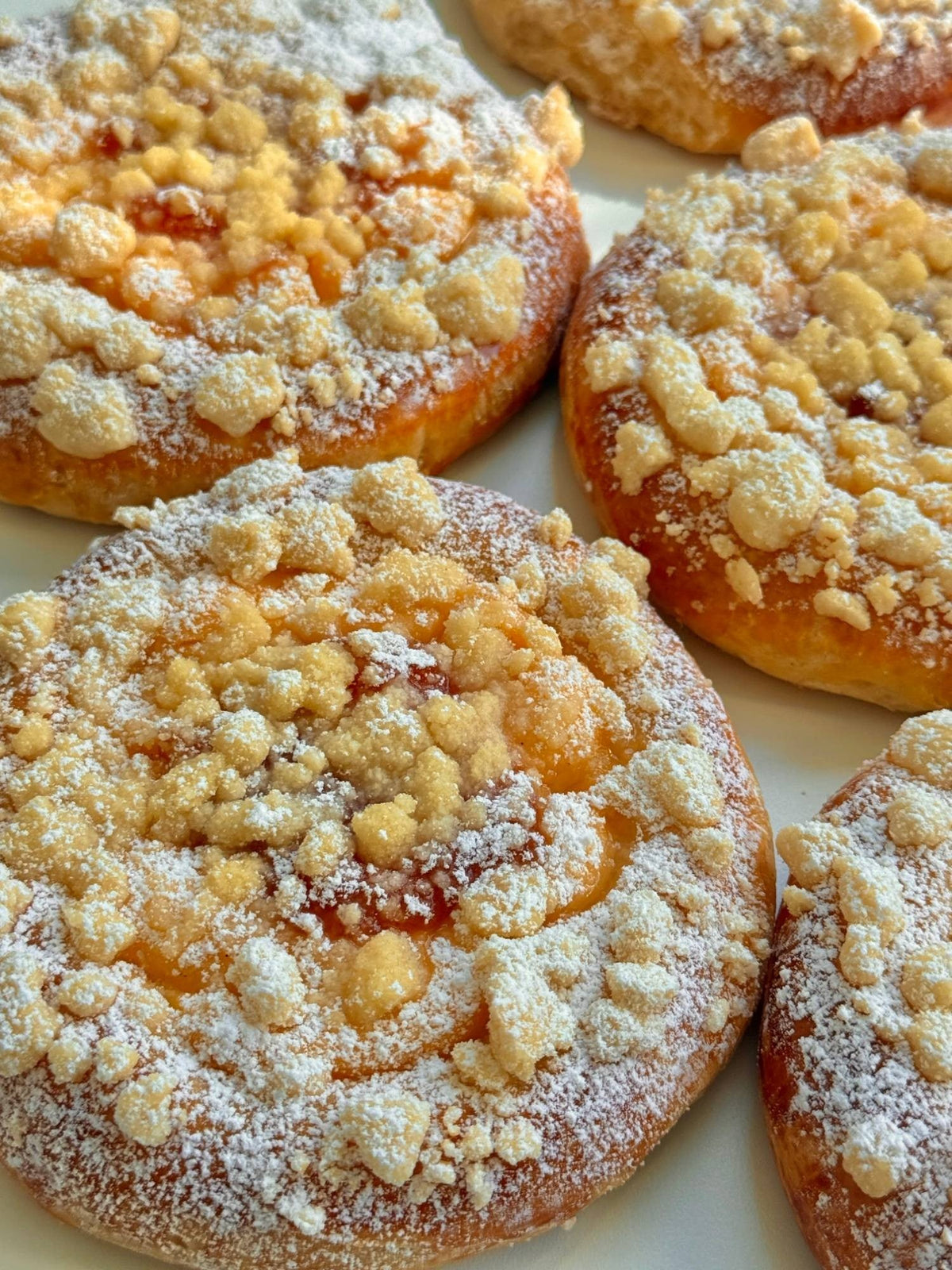
Ciasteczka waniliowe z drożdżowego ciasta

Miękkie, delikatne drożdżówki z subtelnym kremem waniliowym. Piękny wypiek, który smakuje wprost niebiańsko - na ciepło i na zimno.

Udostępnij
Porcje
10 sztuk
Pieczenie 18 minut

Składniki

  • Do smarowania i wykończenia

Przygotowanie

  1. 1
    Mąkę przesiej do miski i zrób w niej dołek. Wsyp drożdże, 1 tsp cukru i wlej odrobinę letniego mleka. Odstaw na 8-10 minut, aż zaczyn się spieni.
  2. 2
    Dodaj resztę cukru, jajko, mleko, sól i wanilię. Zagnieć gładkie ciasto, następnie wmieszaj masło i wyrabiaj 8-10 minut, aż ciasto będzie miękkie, elastyczne i lekko lśniące.
  3. 3
    Przykryj i odstaw do wyrośnięcia na 60-90 minut, aż podwoi objętość.
  4. 4
    Mleko podgrzej z wanilią (nie gotuj). Żółtka utrzyj z cukrem i mąką ziemniaczaną, wlej gorące mleko, mieszając rózgą, i przelej wszystko z powrotem do rondla.
  5. 5
    Gotuj, cały czas mieszając, aż masa zgęstnieje jak budyń. Przełóż do miski, przykryj folią bezpośrednio na powierzchni kremu i całkowicie ostudź.
  6. 6
    Zimny krem rozmieszaj rózgą do gładkości i przełóż do rękawa cukierniczego z okrągłą tylką.
  7. 7
    Ciasto podziel na około 10 porcji (po 50 g), uformuj kulki, każdą rozwałkuj na okrągły placek i lekko odciśnij środek małą foremką.
  8. 8
    Zewnętrzną część natnij na cienkie paski, zostawiając środek nienaruszony.
  9. 9
    Na środek wyciśnij niski wianuszek kremu waniliowego, a następnie delikatnie złóż paski do środka, lekko je na siebie zakładając.
  10. 10
    Na środku ułóż borówkę, przykryj i odstaw na 20-30 minut.
  11. 11
    Żółtko rozmieszaj z mlekiem, posmaruj drożdżówki i piecz w 180 °C / 350 °F przez 18-22 minuty na złoty kolor. Lekko przestudź i oprósz cukrem pudrem. Miękkie, delikatne drożdżówki z subtelnym waniliowym nadzieniem - puszyste, eleganckie i po prostu nie do odparcia.

Video

Vanilla Pastry Questions

The vanilla cream is ideal for making ahead, since it has to cool completely anyway before it can be whisked smooth and piped. Cook it a day in advance, cover it directly on the surface so no skin forms, and chill it. The yeast dough is best shaped and baked the same day, but you can slow the 60-90 minute rise by letting it proof in the fridge and bringing it back to room temperature before dividing.

No, if nothing happens within the 8-10 minutes the yeast is either dead or the milk was too hot. The milk should be lukewarm, not hot, because heat above body temperature kills active dry yeast. Start that step again with fresh yeast and properly lukewarm milk, otherwise the dough will never double.

Yes, the 60 g soft butter can be swapped for a firm plant-based block butter, and both the 110 ml dough milk and the 250 ml milk for the cream can be replaced with a neutral, full-fat plant milk such as oat or soy. Keep the substitute butter genuinely soft, since it has to be kneaded into the already-smooth dough. The pastry cream still sets, because the thickening comes from the 25 g cornstarch and the 2 egg yolks, not the milk fat.

Lumps usually mean the hot milk went into the yolk mixture too fast, or the cream was not stirred constantly while cooking - pour the hot milk in gradually while whisking, and keep stirring the whole time in the saucepan. A runny cream means it did not cook long enough; the cornstarch needs to come up to a boil to thicken fully into a pudding-like consistency. If lumps appear anyway, pass the finished cream through a sieve before covering and cooling it.

Because they contain an egg-yolk-based cream, store them covered in the fridge rather than at room temperature. They taste best on the day they are baked, when the yeast dough is still soft. Let them sit out briefly before serving so the dough loses its chill, and dust with the powdered sugar only just before serving so it does not dissolve.

pyszne, sprawdzone i gotowe do inspiracji

Odkryj 400+ Smacznych Przepisów