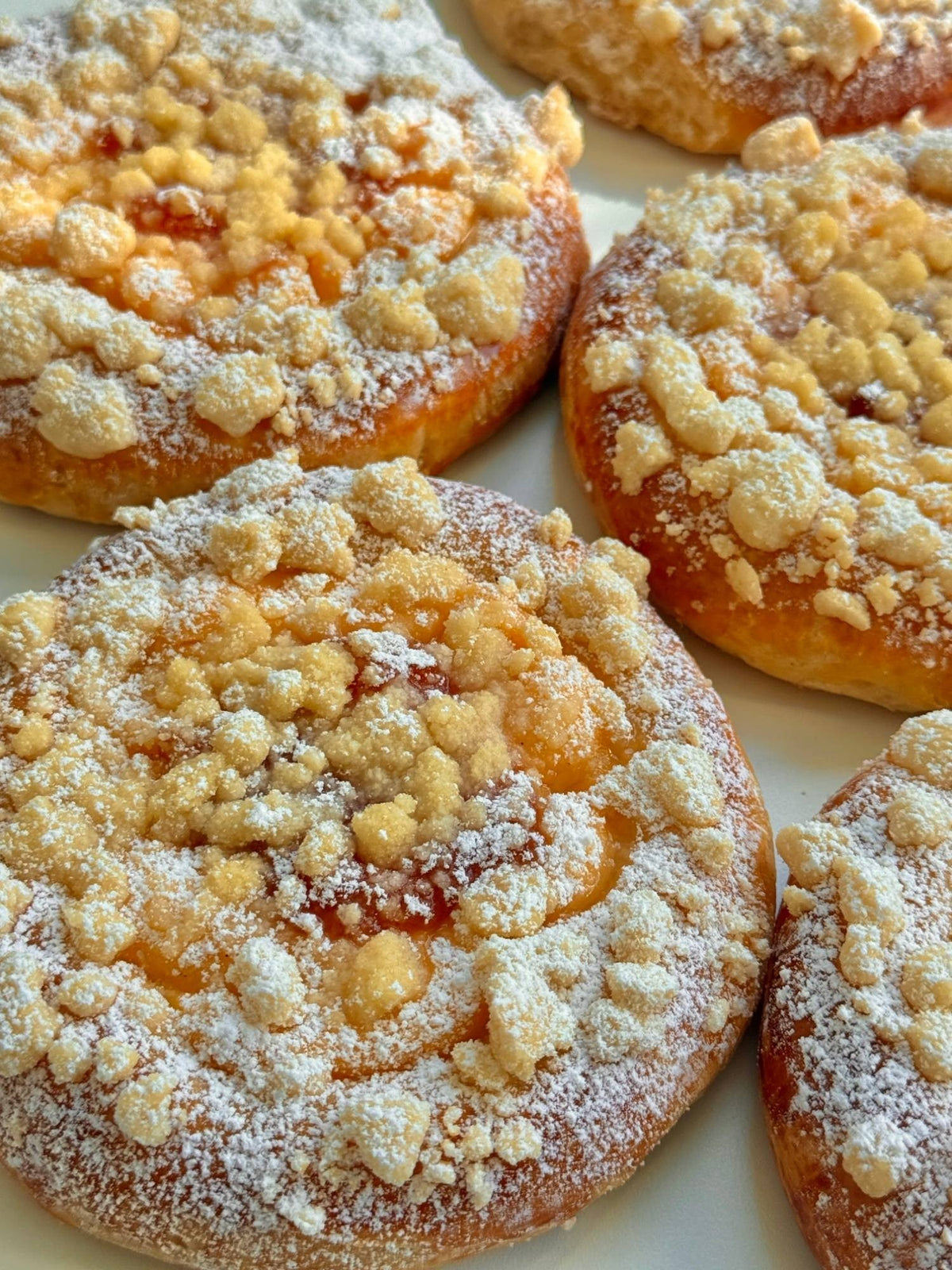

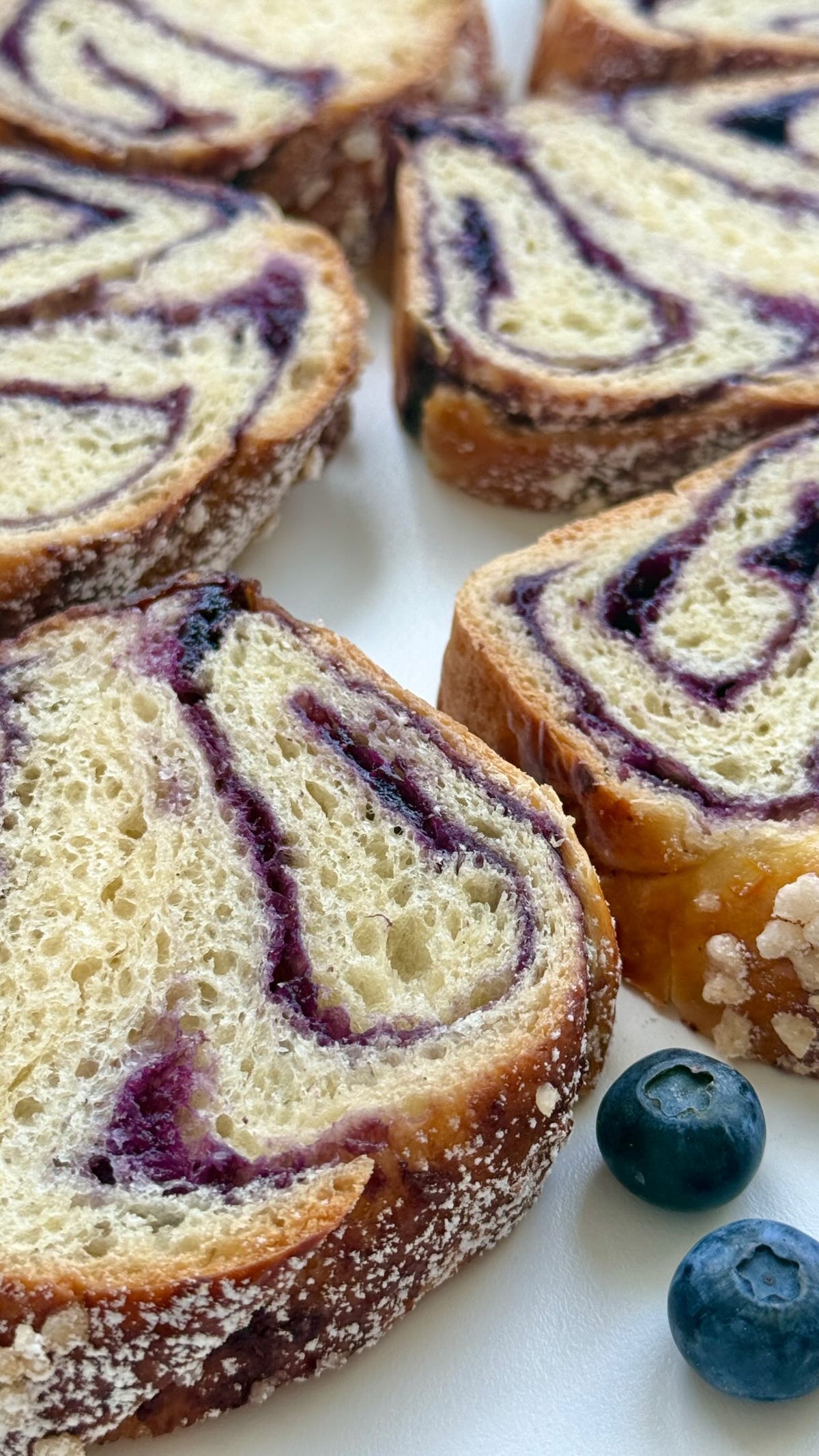
Franzbrötchen von Food with Style, fertig angerichtet
Pastry

Franzbrötchen

Ez a Franzbrötchen mennyeien puha, és ellenállhatatlan illata van. Tökéletes választás mindenkinek, aki szereti az édes finomságokat!

Megosztás
Adag
6 darab
Előkészítés 1 óra
Sütés 15 perc

Hozzávalók

  • A tésztához
  • A töltelékhez

Elkészítés

  1. 1
    Szitáld a lisztet egy tálba, és készíts a közepébe egy mélyedést. Tedd a mélyedésbe az élesztőt, 1 tsp cukrot és 2-3 tbsp langyos tejet. Keverd el óvatosan, és hagyd állni 10 percig, amíg felhabzik.
  2. 2
    Add a tálhoz a maradék tejet, a cukrot, a tojást és a sót. Dagaszd sima tésztává. Add hozzá darabokban a puha vajat, és dagaszd tovább, amíg a tészta rugalmas nem lesz. Takard le, és meleg helyen kelezd kb. 1 órán át, amíg a duplájára nő.
  3. 3
    Egy másik tálban keverd össze a barna cukrot, a fahéjat és a puha vajat, amíg kenhető krémet nem kapsz.
  4. 4
    Nyújtsd ki a tésztát enyhén lisztezett felületen kb. 20 x 30 cm-es (8 x 12 inches) téglalappá.
  5. 5
    Kend el egyenletesen a fahéjas-cukros vajkrémet a tésztán.
  6. 6
    Tekerd fel a tésztát szorosan a hosszabbik oldala felől, majd vágd kb. 5 cm (2 inches) széles darabokra.
  7. 7
    Tedd a darabokat vágott felükkel lefelé sütőpapírral bélelt tepsire. Egy fapálcikával nyomd be erősen mindegyik darab közepét, így alakul ki a Franzbrötchen jellegzetes formája.
  8. 8
    Takard le, és kelezd további 30 percig.
  9. 9
    Melegítsd elő a sütőt 180°C-ra (350°F) alsó-felső sütésre (légkeveréssel 160°C). Süsd a Franzbrötchent 15-18 percig, amíg aranybarna nem lesz.
  10. 10
    Kend meg a még meleg Franzbrötchent olvasztott vajjal, és konyharuha alatt hagyd kihűlni. Ha szeretnéd, szórd meg fahéjas cukorral vagy porcukorral.

Video

Franzbrötchen Questions

After stirring the yeast with 1 tsp sugar and 2-3 tbsp lukewarm milk in the well, let it sit for 10 minutes as the recipe directs. You should see foam or bubbles on the surface - that means the yeast is alive and the dough will rise. If the mixture stays flat and smooth after 10 minutes, discard it and start again with fresh yeast, since the whole dough depends on this step.

Yes. The recipe already starts the yeast in lukewarm milk with a little sugar, so active dry yeast works in the same amount and simply needs the full 10 minutes to foam. Fresh yeast also works - crumble it into the milk in the well and stir until dissolved. Whichever you use, keep the milk lukewarm, not hot, or you will kill the yeast.

This usually happens when the butter in the filling is too soft or the dough is rolled too loosely. Mix the brown sugar, cinnamon, and butter into a spreadable paste rather than a runny one, and spread it evenly so no thick pockets form. Roll the dough tightly from the long side, and always bake on parchment paper as the recipe says - some caramel escaping is normal and lifts right off the paper.

Yes. Knead the dough through the butter stage, then cover it and let it rise slowly in the fridge overnight instead of at room temperature. The next morning, let it come back to room temperature before rolling it into the 20 x 30 cm rectangle, otherwise the cold dough will crack and the butter filling won't spread. Then continue with shaping, the 30-minute rise, and baking as written.

Let them cool completely, then keep them in an airtight container at room temperature - the butter in both the dough and the filling keeps them tender for a couple of days. To refresh them, warm them briefly in the oven at the same 180°C (350°F) until the filling softens again. They also freeze well once cooled; thaw and reheat the same way.

ízletes, kipróbált és inspiráló
Fedezzen fel 400+ Finom Étel