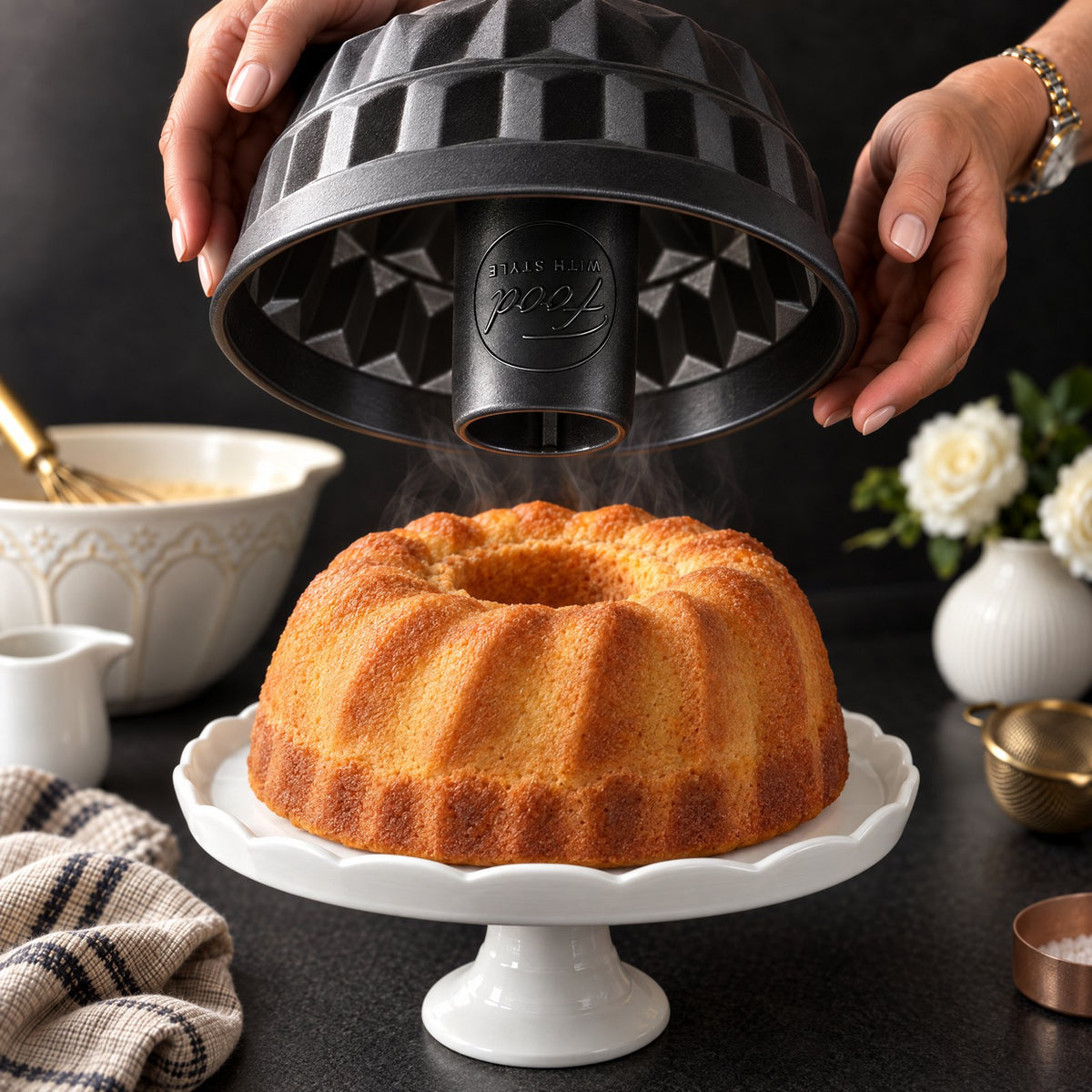

Brioche Parisienne von Food with Style, fertig angerichtet
Brioche

Brioche Parisienne recept

A Brioche Parisienne (Brioche à Tête) a francia pékség egyik ékköve, amelyet puha, vajas állagáért és elegáns formájáért imádunk. Tökéletes választás egy fényűző reggelihez...

Megosztás
Sütés 20 perc

Hozzávalók

Elkészítés

  1. 1
    Szitáld a lisztet egy tálba, és készíts a közepébe egy mélyedést. Tedd a mélyedésbe a szárított élesztőt, add hozzá egy teáskanál cukrot és a langyos tejet. Keverd el, és hagyd rövid ideig felfutni.
  2. 2
    Üsd a tojásokat a mélyedésbe, és dolgozz össze mindent, amíg sima tésztát nem kapsz.
  3. 3
    Fokozatosan dolgozd bele a puha vajat, és gyúrd addig, amíg a tészta sima és rugalmas nem lesz.
  4. 4
    Takard le a tésztát, és hagyd szobahőmérsékleten kb. 1 órát kelni, vagy amíg a duplájára nem nő.
  5. 5
    Oszd a tésztát 45 egyenlő darabra, egyenként kb. 12 g-osra. Egy-egy brioche-hoz tegyél 4 tésztagolyót alapnak a kivajazott muffinforma mélyedésébe, majd a közepére helyezz még egy golyót, hogy virágszerű formát kapj.
  6. 6
    A megformázott brioche-okat letakarva kelezd további 45 percig.
  7. 7
    Kend meg a brioche-okat a tojássárgájával, és süsd 180°C-ra (350°F) előmelegített sütőben (alsó-felső sütés) 20-25 percig, amíg szép aranybarnák nem lesznek.
  8. 8
    Sütés után kend meg a brioche-okat egy kis olvasztott vajjal, és hagyd kihűlni. Melegen vagy hidegen - ezek a brioche-ok igazi csemegék! Jó étvágyat!

Video

Brioche Parisienne Questions

A brioche dough with 100 g butter to 250 g flour is meant to feel slack and tacky, so don't panic and don't rescue it with extra flour. Add the softened butter gradually as the recipe says, kneading each addition in fully before the next, and keep going until the dough turns smooth and elastic. If it still smears, chill it for 20-30 minutes and knead again - cold butter firms up and the dough pulls together.

Yes - the 3 g of dry yeast can be replaced with about 9 g of fresh yeast, crumbled into the well with the teaspoon of sugar and the lukewarm milk exactly as described. For the 2 tablespoons of milk, any plant drink works since the amount is small and the richness comes from the eggs and butter. The butter itself is harder to substitute: it carries the flavour and the tender crumb, so a firm block-style vegan butter is the only swap worth making.

Keep them at room temperature in a bread box or a paper bag rather than the fridge, which dries an egg-and-butter dough out fast. They're at their best on baking day, so for anything beyond that freeze them once fully cooled and warm them straight from frozen in a 180°C (350°F) oven for a few minutes. The brush of melted butter after baking also helps keep the crust soft.

Yes, and it's the friendliest way to bake these for breakfast. Instead of the 1-hour rise at room temperature, cover the kneaded dough and let it rise slowly in the fridge overnight - the cold dough is also far easier to divide into the 45 small 12 g pieces and roll smooth. Next morning, shape the brioches in the greased muffin tin, let them do their second rise of about 45 minutes (a little longer if the dough is still cold), then brush with egg yolk and bake.

The classic culprit is a top ball that's just resting on the base instead of being anchored into it - press it down firmly into the centre of the four base balls so it sits in a proper dip. Also brush the egg yolk carefully over the top rather than letting it pool where the ball meets the base, since egg wash running into that seam works like glue in the wrong place and can push the head sideways. Finally, don't overproof the second rise: after roughly 45 minutes the shaped brioches should still feel springy, not slack and puffy.

ízletes, kipróbált és inspiráló
Fedezzen fel 400+ Finom Étel