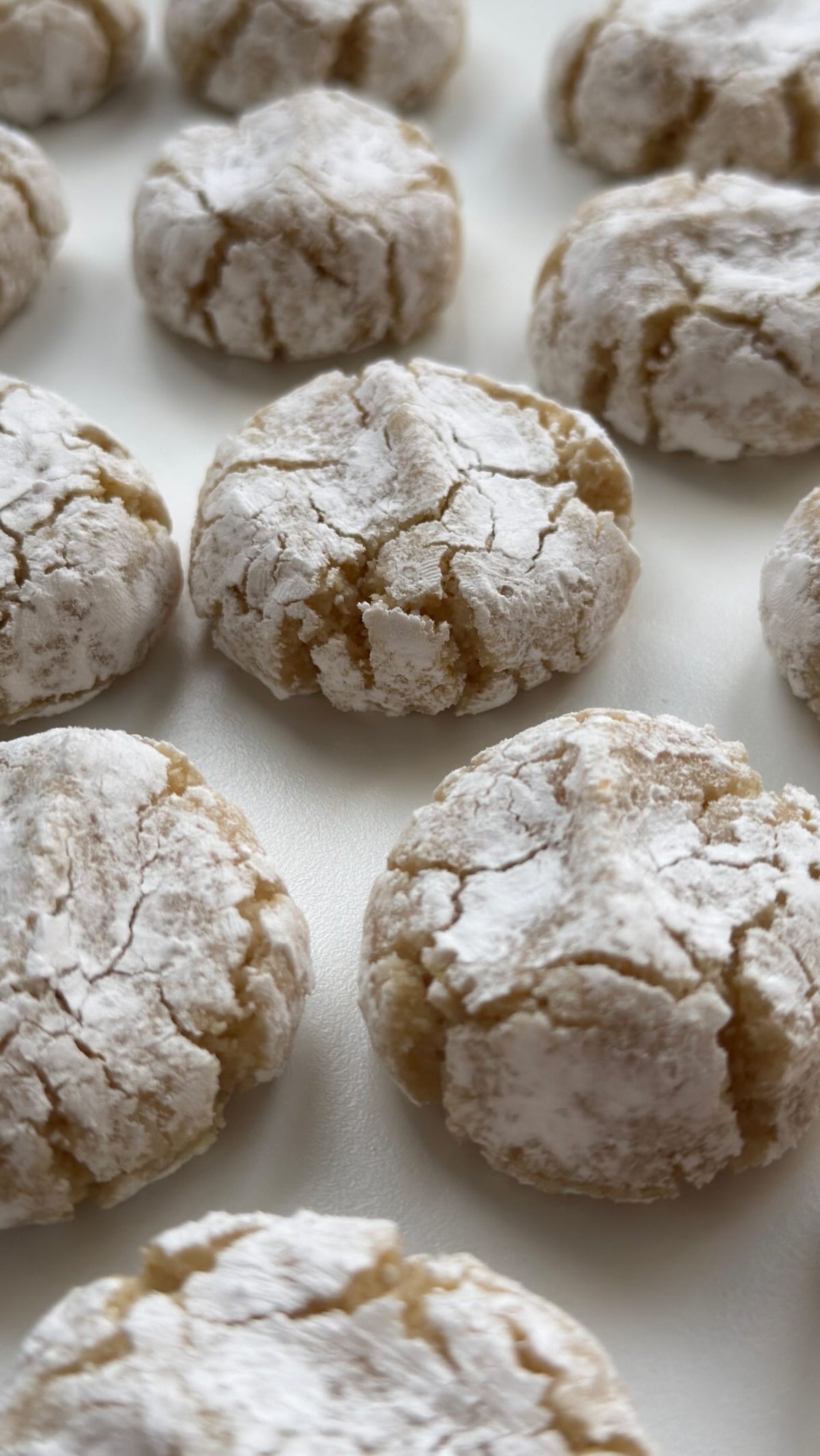
Vanillekipferl von Food with Style, fertig angerichtet
Pastry

Vanillekipferl

Fine, elegante vaniljehorn med mør konsistens og klassisk vaniljearoma. (blir ca. 18-24 småkaker)

Del
Porsjoner
18 kjeks
Steketid 12 minutter

Ingredienser

  • Til pudring

Fremgangsmåte

  1. 1
    Bland mel, melis, malte mandler, salt og vanilje. Ha i det kalde smøret og elt raskt sammen til en glatt deig. Viktig: jobb kjapt så deigen ikke blir varm.
  2. 2
    Trill deigen til en lang pølse, pakk den godt inn i plastfolie og sett den kaldt i ca. 60 minutter.
  3. 3
    Forvarm ovnen til 170 °C / 338 °F (over- og undervarme). Kle et stekebrett med bakepapir.
  4. 4
    Skjær den kalde deigpølsen i skiver på ca. 1.5 cm (ca. 20 g per stykke). Trill hvert stykke til en kule, deretter til en liten pølse, og bøy endene forsiktig nedover så du får de klassiske hornene.
  5. 5
    Blir deigen for myk mens du former, sett de ferdige hornene kaldt i 15-20 minutter til, så holder de fasongen bedre under steking.
  6. 6
    Stek i 12-15 minutter. Småkakene skal holde seg lyse, med bare et snev av farge på tuppene.
  7. 7
    Ta dem ut av ovnen, la dem kjølne litt, og vend dem forsiktig i melis og vaniljesukker mens de fortsatt er lune (men ikke varme) - eller dryss et tynt lag over.
  8. 8
    La dem bli helt kalde - først da blir de skikkelig møre og holder formen. Perfekte til julebordet, som en fin liten gave, eller rett og slett til en kopp kaffe.

Video

Vanillekipferl Questions

Ground blanched almonds make up 70 g of the dough and carry a lot of its tenderness, so they need a like-for-like replacement rather than just more flour. Finely ground hazelnuts or walnuts work well and simply shift the flavour; for a nut-free version, use the same weight of very finely ground blanched almonds' stand-in such as ground sunflower seeds. Keep the grind fine, because coarse pieces make the thin crescent tips break when you bend them.

Store them in an airtight tin at room temperature once they have cooled completely - the recipe stresses that they only become tender and stable after full cooling, and packing them warm traps steam and softens them. Layer them between parchment, since the crescents are fragile and the powdered-sugar coating rubs off easily. Many bakers find the texture improves after a day or two in the tin, and you can dust with a little extra powdered sugar before serving.

Yes - the dough is already shaped into a log and wrapped in plastic wrap for its 60-minute chill, so you can simply leave it in the fridge longer and bake the next day. If it has firmed up too much to slice cleanly, let it sit at room temperature for a few minutes before cutting your 1.5 cm slices. The wrapped log also freezes well; thaw it in the fridge until it is just sliceable.

The dough is very short: 100 g butter against 140 g flour and 70 g almonds, with no egg or liquid to bind it. Crumbliness usually means it simply needs another minute of quick kneading so the cold butter cubes distribute - press it firmly together rather than adding water, which would toughen it. If it still refuses to hold, your butter may be too cold straight from the fridge; let the cubes stand a few minutes, but keep working swiftly so the butter does not warm through.

Spreading means the butter was too warm when the cookies went in, which is why the recipe calls for chilling the formed crescents another 15-20 minutes if the dough softens while shaping. Roll each piece into a ball first, then a short log, and bend the ends downward so the crescent is even in thickness - thin, overworked tips brown fast and break. At 170 °C / 338 °F for 12-15 minutes the cookies should stay pale with just a hint of colour at the tips, so pull them before they take on real colour.

deilig, testet og klar til å inspirere
Utforsk 400+ smakfulle oppskrifter