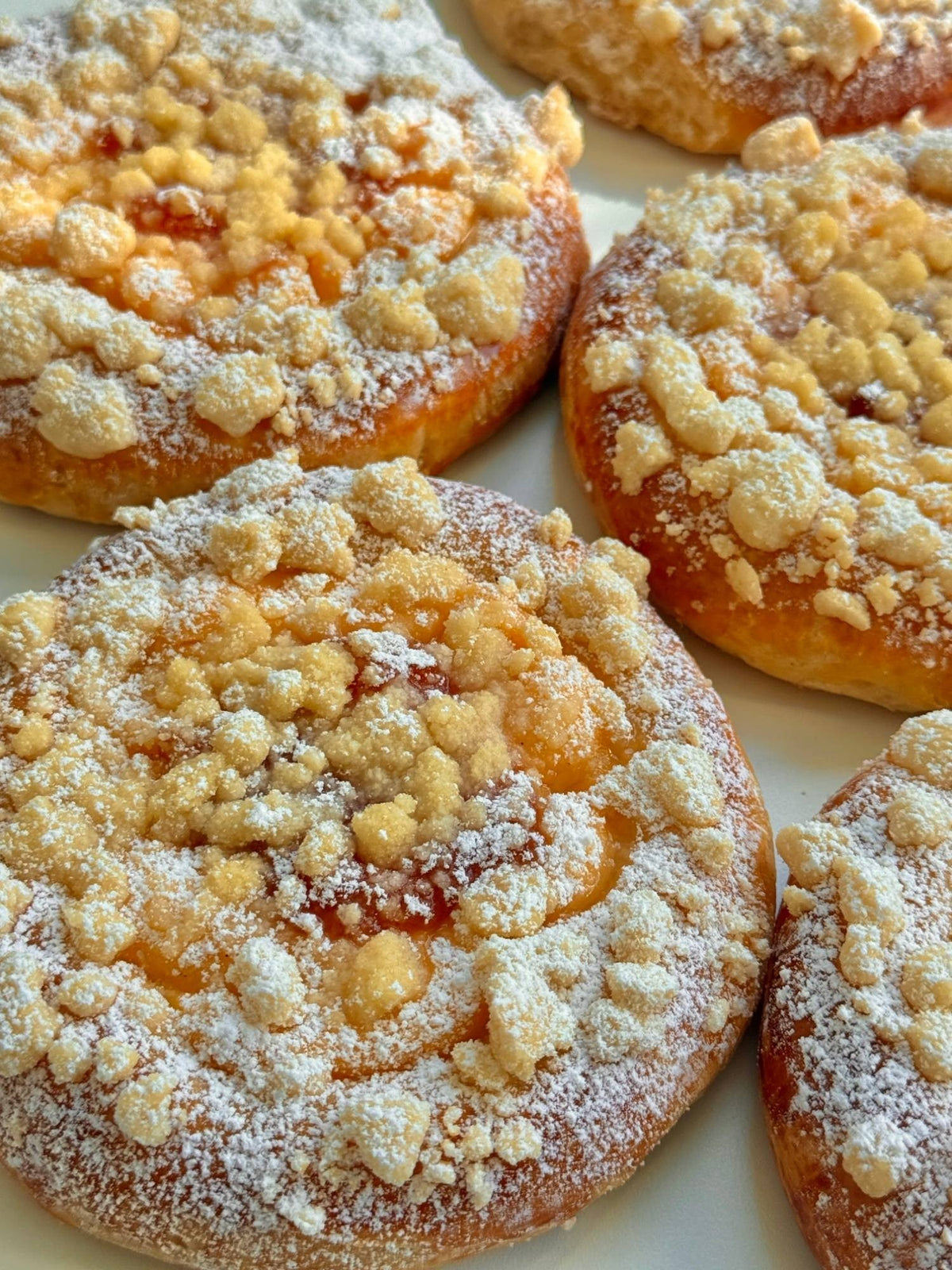
Şöbiyet Tatlısı von Food with Style, fertig angerichtet
Pastry

Şöbiyet

Sprø på utsiden, kremete inni - Şöbiyet er en elsket tyrkisk dessert som kombinerer tynne lag med filodeig med en fyldig semulefyll og et...

Del
Steketid 40 minutter

Ingredienser

  • Til sukkerlaken
  • Til fyllet

Fremgangsmåte

  1. 1
    Kok opp sukker og vann. La det småkoke i 5 minutter, tilsett sitronsaften og la det småkoke i ytterligere 15 minutter. La sukkerlaken bli helt kald.
  2. 2
    Bland melk og semulegryn i en kjele og kok på middels varme under stadig omrøring til det tykner. Ta kjelen av platen, tilsett vaniljeekstrakt og rør godt. Hell blandingen over i en glassbolle, dekk med plastfolie og la den avkjøles.
  3. 3
    Smelt smøret og la det stå til melkerestene har lagt seg på bunnen. Bruk bare det klarnede smøret.
  4. 4
    Rull ut baklavadeigen og pensle hvert lag med smør - til sammen 13-15 lag. Bruk bare det klare smøret fra toppen.
  5. 5
    Skjær lagene i firkanter på 8 × 8 cm (3 × 3 inch).
  6. 6
    Legg omtrent 1 tsp semulefyll og ½ tsp malte pistasjnøtter midt på hver firkant. Brett dem til trekanter og klem bare lett sammen i spissen, slik at sidene forblir åpne.
  7. 7
    Legg trekantene på et stekebrett slik at de overlapper hverandre litt og spissen på hver trekant blir dekket. Da holder de formen bedre under steking.
  8. 8
    Pensle resten av smøret over trekantene.
  9. 9
    Stek dem i forvarmet ovn på 180°C (356°F) i cirka 40-45 minutter til de er gyllenbrune.
  10. 10
    La dem avkjøles litt (cirka 1 minutt), og hell så den kalde sukkerlaken sakte over. La dem trekke i minst 4-5 timer, helst natten over, for best konsistens. Slik holder de seg saftige inni og beholder samtidig den sprø overflaten.
  11. 11
    Dryss over malte pistasjnøtter før servering.

Video

Şöbiyet Tatlısı Questions

The most common cause is pouring warm syrup over hot pastry. The recipe has you cool the syrup completely while the pastry bakes, so the cold syrup meets the hot triangles and is absorbed without steaming the layers limp. Also make sure you used only the clarified butter from the top of the melted butter - the milky solids at the bottom hold water and soften the phyllo.

Fine semolina is what gives the filling its firm, sliceable body after cooking with the 300 g of milk, so a swap changes the texture. Coarse semolina works but needs a little longer cooking and stirring to soften fully, and the filling will be less smooth. Starch-based thickeners set softer and tend to run out of the triangles during the 40-45 minute bake, so semolina is the safer choice.

Keep them at room temperature in a loosely covered container so the phyllo stays crisp - an airtight box traps the moisture from the syrup and softens the pastry. Refrigeration is the bigger problem: the clarified butter in the 13-15 layers firms up cold and the pastry turns hard and dull. If you want them warm again, a few minutes in a low oven revives the crispness.

The syrup is the ideal make-ahead component, since it has to cool completely anyway and only gets better with a long rest. The semolina filling can also be cooked in advance and kept covered so it doesn't form a skin - bring it back to a spreadable consistency before filling. The buttered, filled triangles are best assembled and baked the same day, because phyllo dries out and cracks when it sits shaped and unbaked.

Two steps in the recipe prevent this, and skipping either causes gaping. First, press only the tip of the folded triangle so the pastry stays puffed but sealed at the point. Second, arrange the triangles on the tray slightly overlapping so each tip is covered by the next piece, which weighs it down and holds the shape through the full bake. Overfilling past about 1 tsp of semolina cream and ½ tsp of pistachios also forces the fold open.

deilig, testet og klar til å inspirere
Utforsk 400+ smakfulle oppskrifter