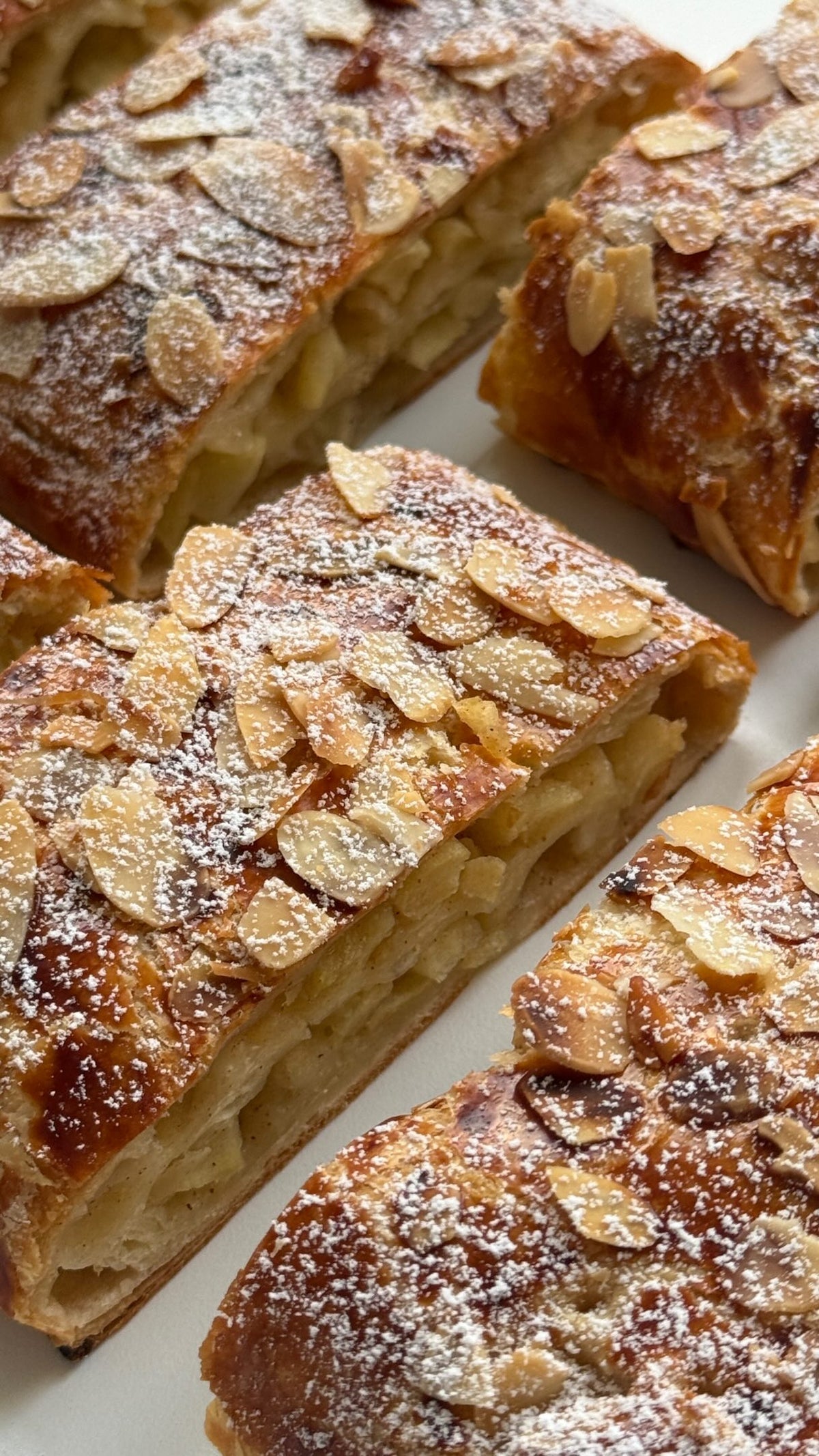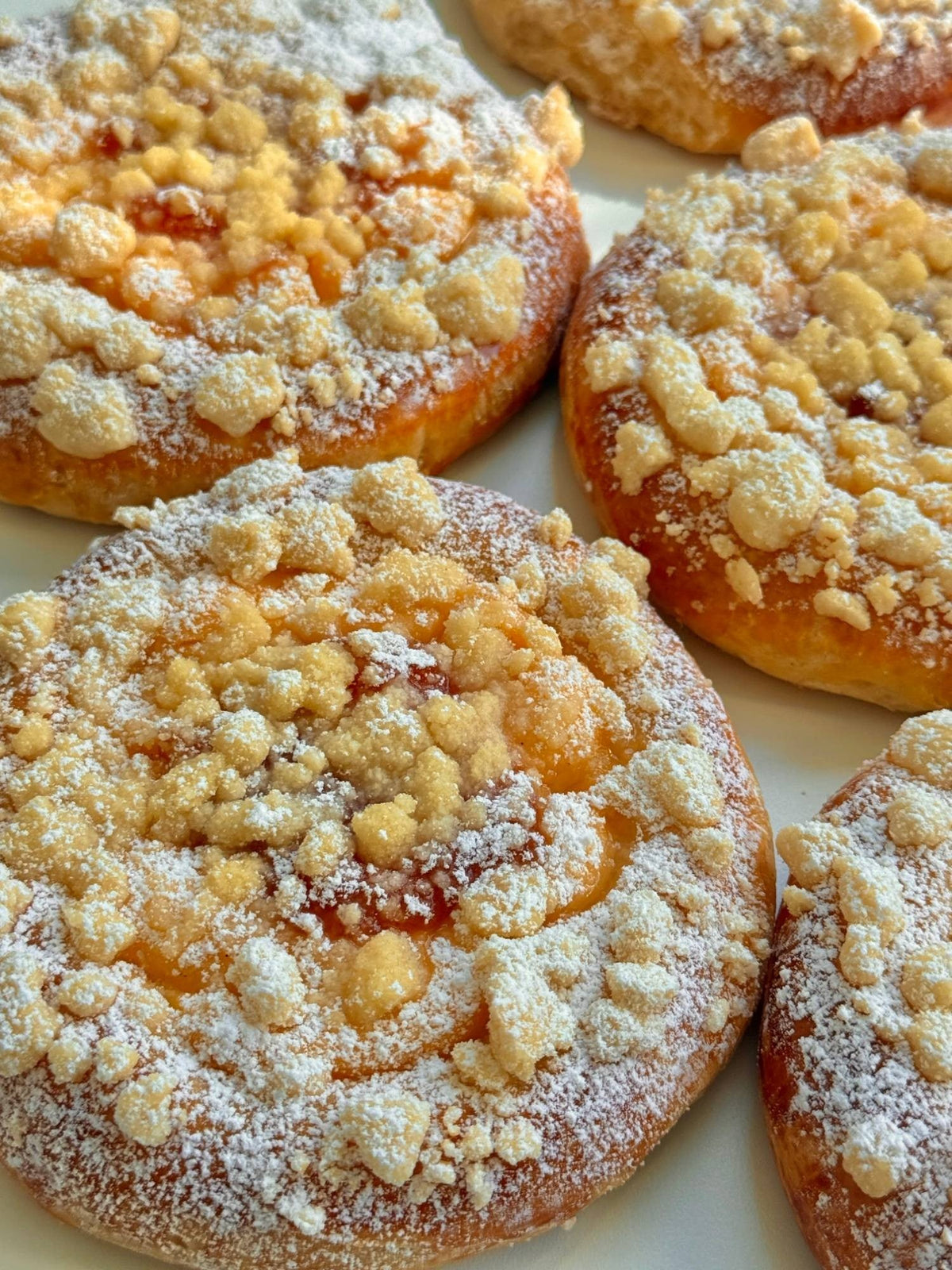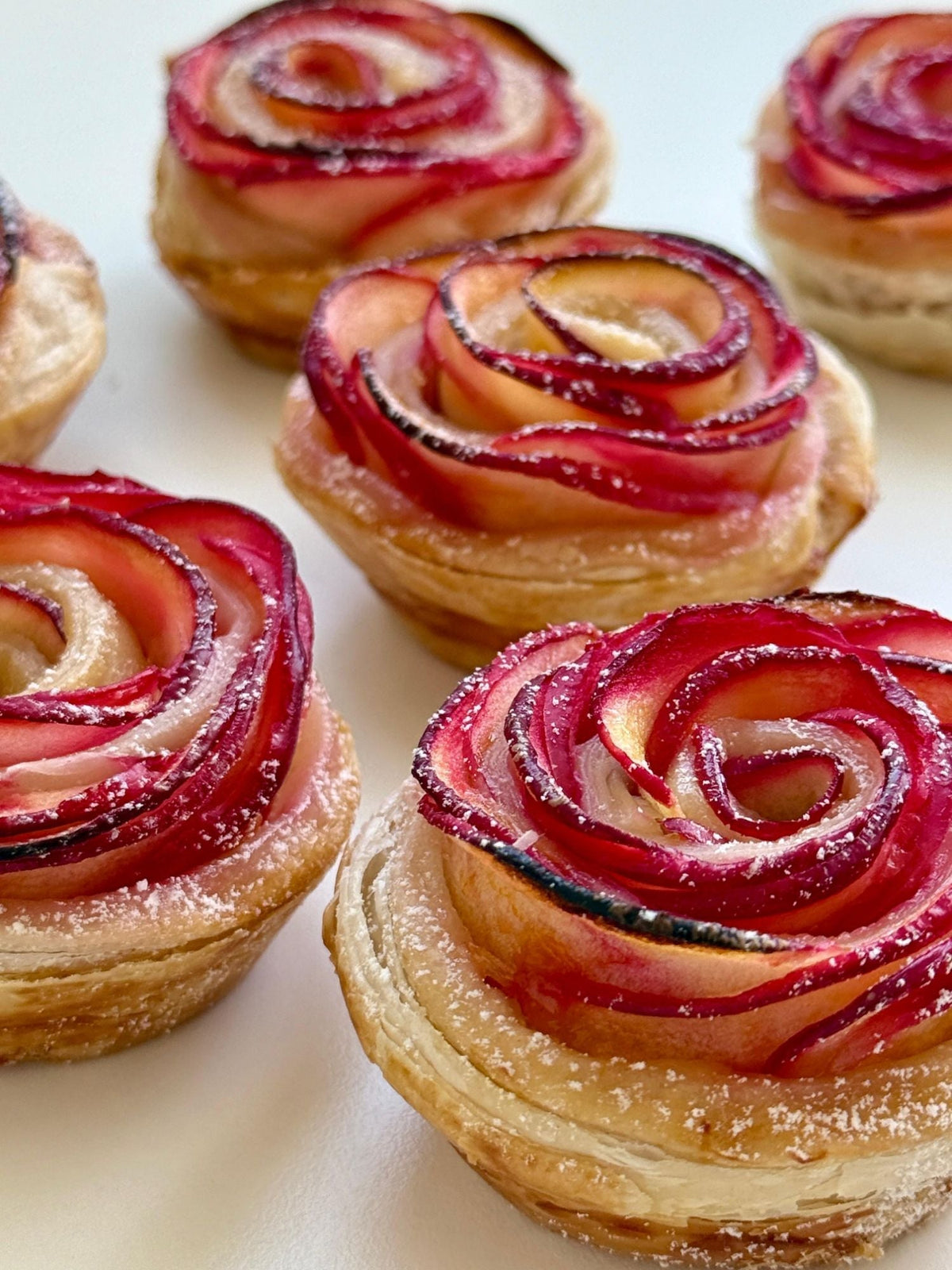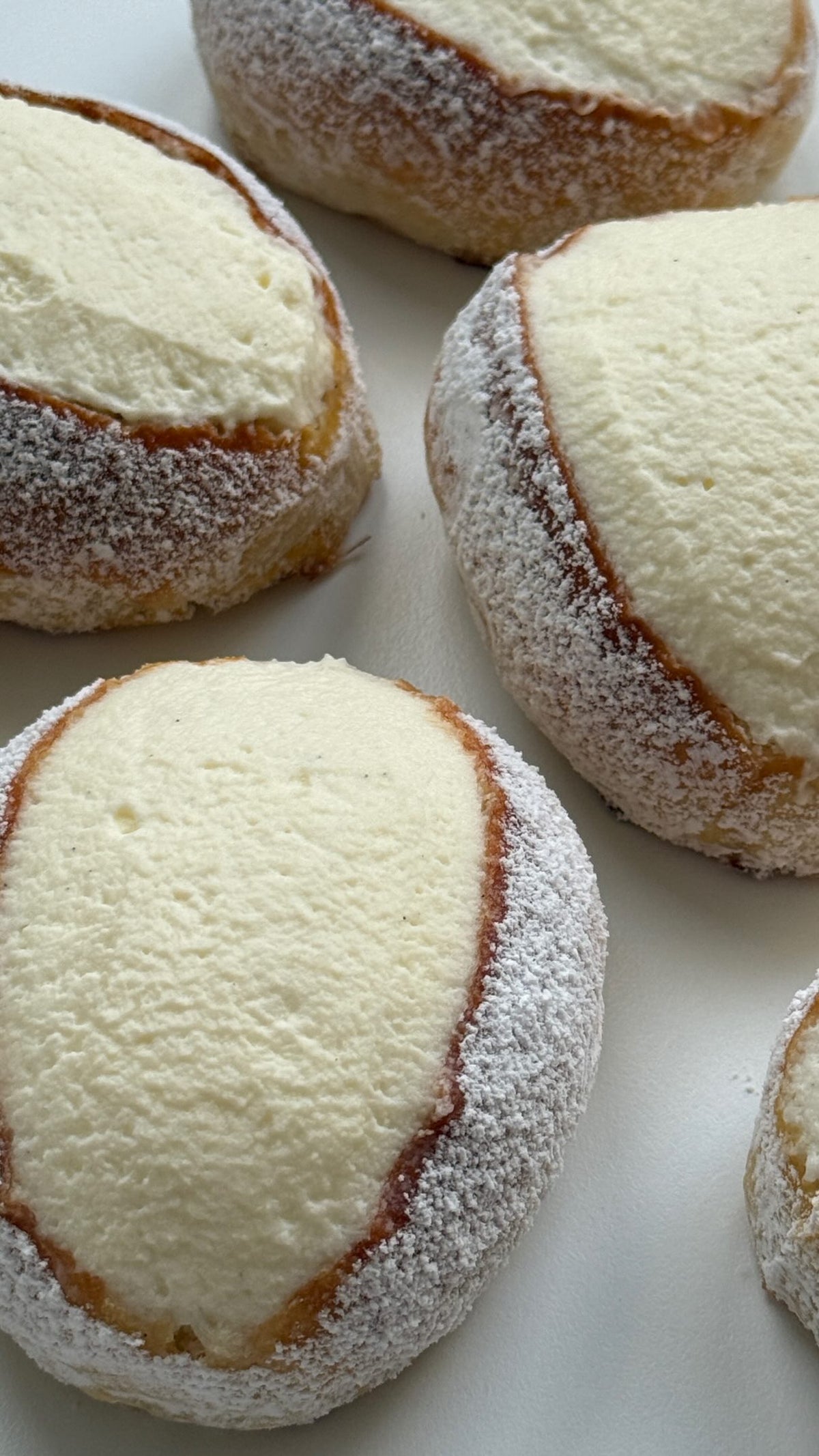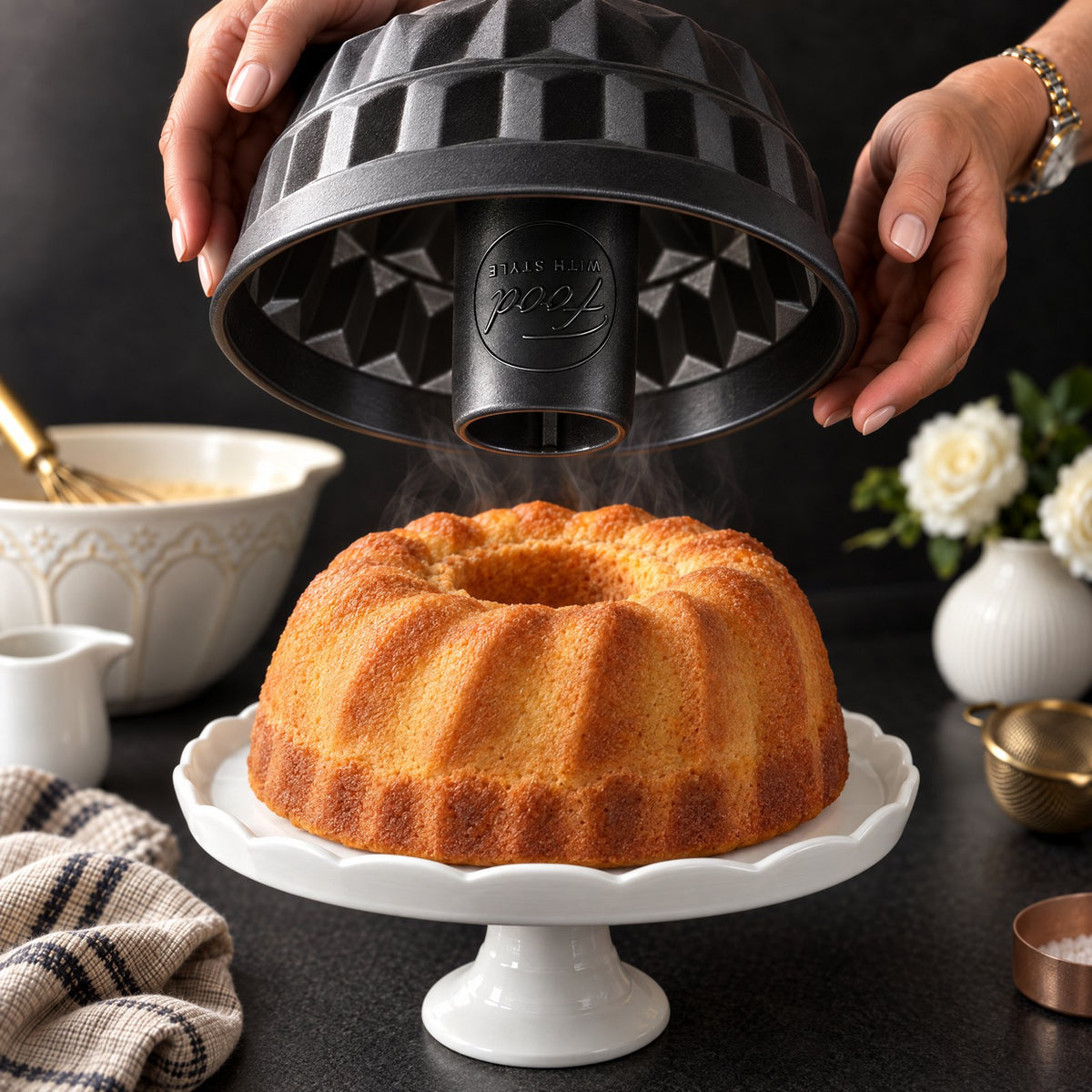

Cevizli Kesme von Food with Style, fertig angerichtet
Pastry

Cevizli Kesme

En klassisk tyrkisk semulepudding akkurat som fra en tradisjonell pastane - saftig, aromatisk og perfekt til Bayram

Del
Steketid 35 minutter

Ingredienser

  • Til sukkerlaken
  • Til deigen
  • Til fyllet

Fremgangsmåte

  1. 1
    Kok opp sukker og vann og la det småkoke i 8-10 minutter. Tilsett sitronsaft og la sukkerlaken bli helt kald.
  2. 2
    Forvarm ovnen til 180°C (350°F), over- og undervarme.
  3. 3
    Rør sammen smeltet smør og sukker, og tilsett deretter melk og vanilje.
  4. 4
    Tilsett semulegrynene og bland til en myk deig som er lett å forme.
  5. 5
    Vei deigen og ta halvparten, og trykk den jevnt ut i formen med lett oljede hender.
  6. 6
    Fordel de hakkede valnøttene jevnt utover.
  7. 7
    Ikke legg resten av deigen på i én stor klump - fordel heller små porsjoner jevnt over hele overflaten. Bruk så lett oljede hender til forsiktig å føye dem sammen og glatte dem ut til et jevnt lag.
  8. 8
    Skjær ruter eller rombeformer i overflaten.
  9. 9
    Stek i 35-40 minutter til kaken er gyllenbrun.
  10. 10
    La den hvile i 10 minutter, og hell så den kalde sukkerlaken jevnt over den varme kaken.
  11. 11
    La den trekke i minst 2-3 timer, slik at all sukkerlaken blir sugd opp.
  12. 12
    Dryss over hakkede valnøtter. En dessert som hører hjemme på ethvert Bayram-bord - tradisjonell, enkel og laget for å nytes med familie og te.

Video

Cevizli Kesme Questions

The most common reason is pouring warm syrup over the bake. The syrup is boiled and then cooled completely for a reason: it should meet the hot squares cold, so the semolina absorbs it slowly instead of sealing up. Also give the dough a few minutes after mixing so the semolina can drink up the butter and milk - if it still feels sandy rather than moldable, it will bake dry.

Coarse semolina works but gives a grainier, more open crumb and drinks more syrup, so expect a wetter, chewier square. Flour is not a good substitute here: with only 90 ml milk and 200 g melted butter, the dough is built around semolina's absorbency and would turn into a stiff shortbread. If coarse is all you have, let the dough rest a little longer before pressing it into the pan.

Keep it at room temperature in a covered tin or under foil, not in the fridge - cold makes the butter firm and dulls the syrup. Syrup-soaked semolina bakes hold well for several days and many people find the flavor better on day two, once the syrup has settled evenly through the layers. Don't cover it while still warm, or condensation will soften the golden top.

Yes - the syrup is the ideal make-ahead step, since it has to cool completely anyway and can be boiled hours earlier or the day before. You can also chop the walnuts, both the 160-180 g for the filling and the topping, ahead of time. The dough itself is best mixed and pressed right before baking, as the melted butter firms up on standing and makes it hard to press evenly.

The top layer. Never lay the second half of the dough on as one sheet - it drags the walnut filling around and tears. Instead place small portions evenly across the surface and press them together with lightly oiled hands, which also keeps the dough from sticking to you. Weighing the dough so both halves are truly equal makes this much easier, and score the squares before baking, not after.

deilig, testet og klar til å inspirere
Utforsk 400+ smakfulle oppskrifter