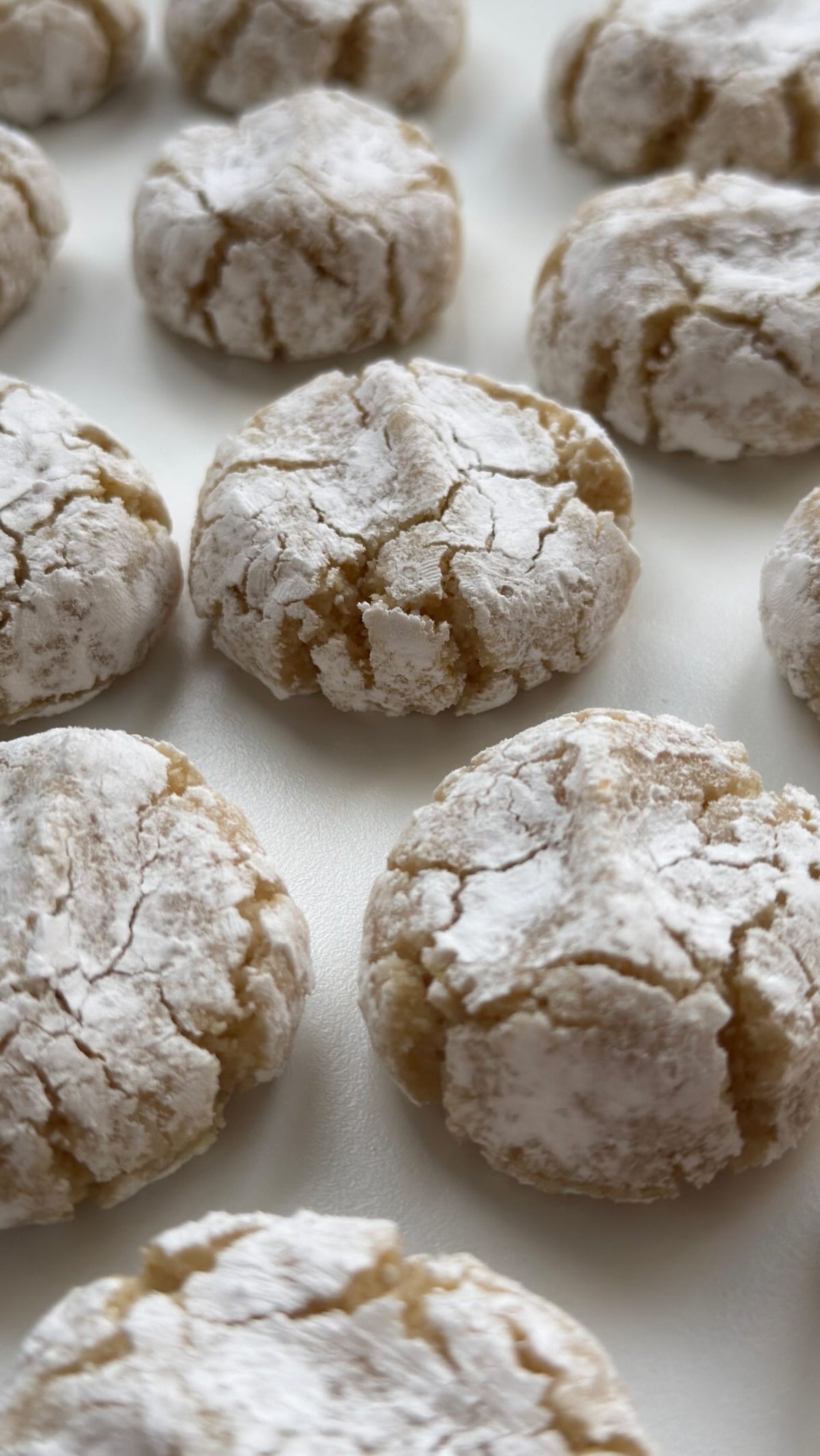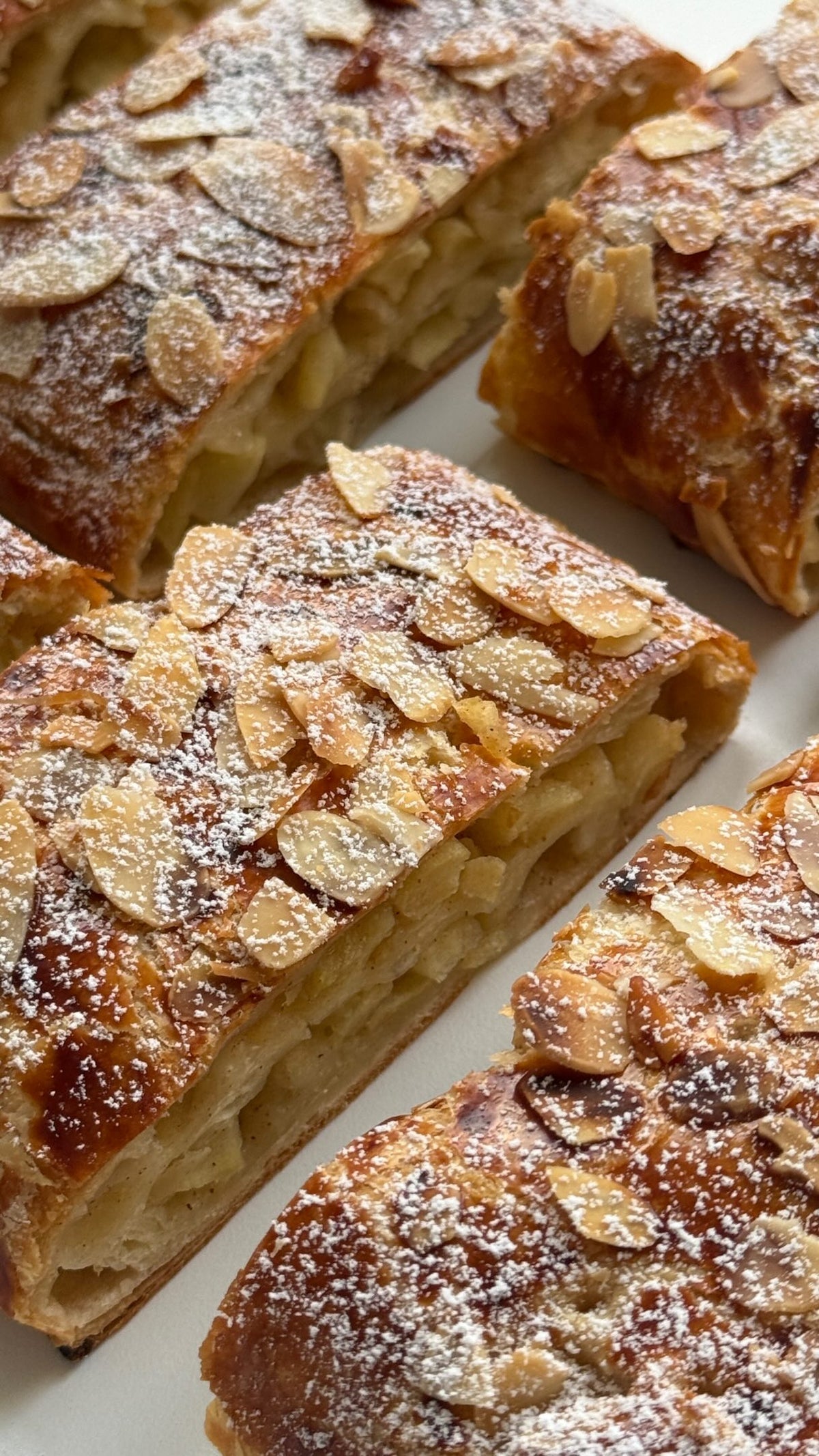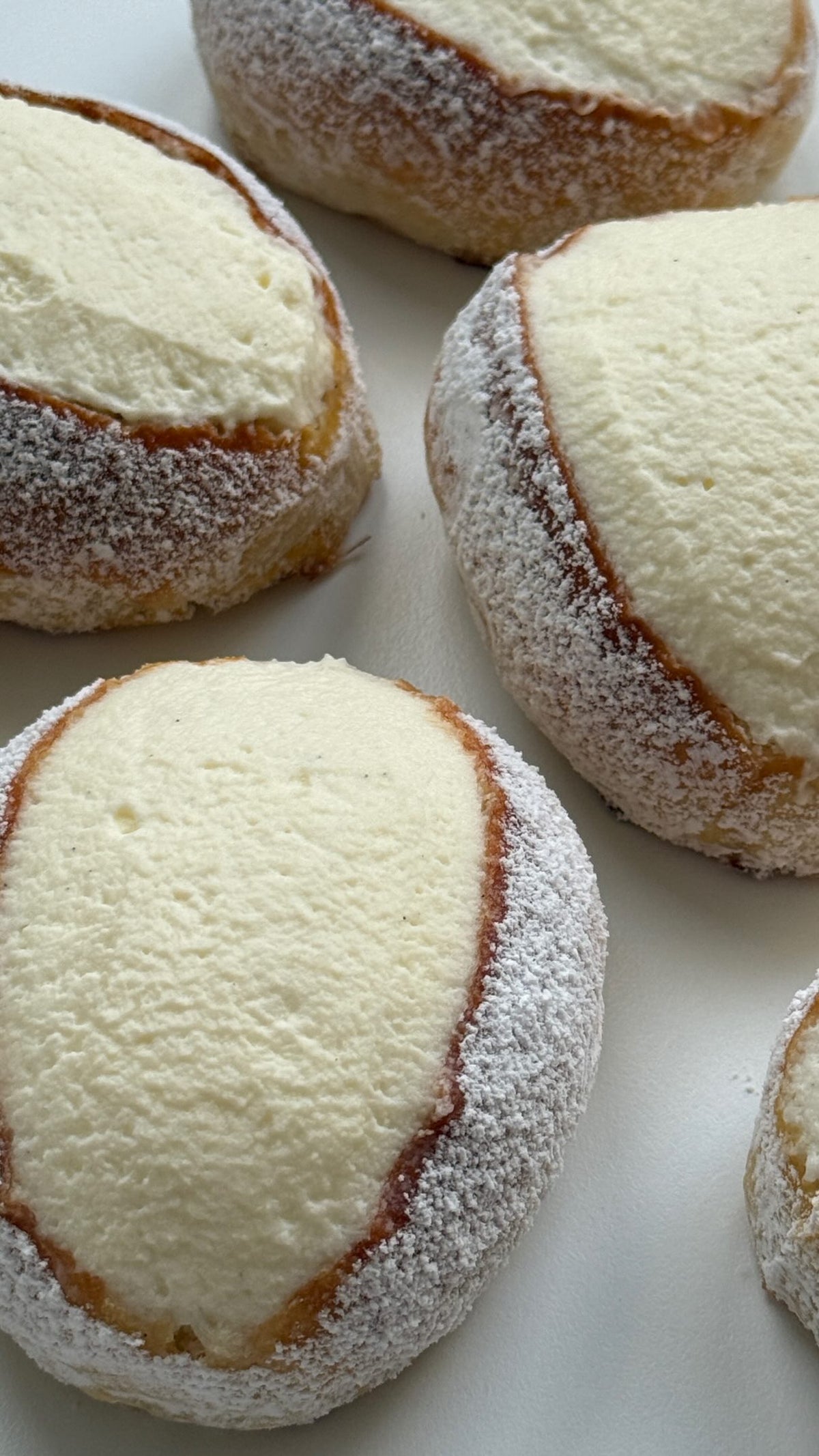

Vanillekipferl von Food with Style, fertig angerichtet
Pastry

Vanillekipferl

Cornulețe fragede și elegante cu vanilie, cu o textură care se topește în gură și aromă clasică de vanilie. (aproximativ 18-24 de fursecuri)

Distribuie
Porții
18 biscuiți
Coacere 12 minute

Ingrediente

  • Pentru tăvălit / pudrat

Preparare

  1. 1
    Amestecă făina, zahărul pudră, migdalele măcinate, sarea și vanilia. Adaugă untul rece și frământă rapid până obții un aluat omogen. Important: lucrează repede, ca aluatul să nu se încălzească.
  2. 2
    Modelează aluatul într-un sul lung, învelește-l strâns în folie alimentară și dă-l la frigider pentru aproximativ 60 de minute.
  3. 3
    Preîncălzește cuptorul la 170 °C / 338 °F (sus/jos). Tapetează o tavă cu hârtie de copt.
  4. 4
    Taie sulul de aluat rece în felii de aproximativ 1.5 cm grosime (aproximativ 20 g fiecare). Rulează fiecare bucată în formă de bilă, apoi într-un sul scurt și îndoaie ușor capetele în jos, ca să obții cornulețele clasice.
  5. 5
    Dacă aluatul se înmoaie prea tare în timpul modelării, mai dă cornulețele formate la rece 15-20 de minute, ca să-și păstreze forma la copt.
  6. 6
    Coace 12-15 minute. Fursecurile trebuie să rămână deschise la culoare, doar cu o urmă de auriu la capete.
  7. 7
    Scoate-le din cuptor, lasă-le să se răcorească puțin și, cât sunt încă calde (dar nu fierbinți), tăvălește-le ușor prin zahăr pudră cu zahăr vanilat sau pudrează-le fin.
  8. 8
    Lasă-le să se răcească complet - abia atunci devin perfect fragede și rezistente. Sunt perfecte pentru sărbători, ca un cadou din suflet sau pur și simplu alături de o cafea.

Video

Vanillekipferl Questions

Ground blanched almonds make up 70 g of the dough and carry a lot of its tenderness, so they need a like-for-like replacement rather than just more flour. Finely ground hazelnuts or walnuts work well and simply shift the flavour; for a nut-free version, use the same weight of very finely ground blanched almonds' stand-in such as ground sunflower seeds. Keep the grind fine, because coarse pieces make the thin crescent tips break when you bend them.

Store them in an airtight tin at room temperature once they have cooled completely - the recipe stresses that they only become tender and stable after full cooling, and packing them warm traps steam and softens them. Layer them between parchment, since the crescents are fragile and the powdered-sugar coating rubs off easily. Many bakers find the texture improves after a day or two in the tin, and you can dust with a little extra powdered sugar before serving.

Yes - the dough is already shaped into a log and wrapped in plastic wrap for its 60-minute chill, so you can simply leave it in the fridge longer and bake the next day. If it has firmed up too much to slice cleanly, let it sit at room temperature for a few minutes before cutting your 1.5 cm slices. The wrapped log also freezes well; thaw it in the fridge until it is just sliceable.

The dough is very short: 100 g butter against 140 g flour and 70 g almonds, with no egg or liquid to bind it. Crumbliness usually means it simply needs another minute of quick kneading so the cold butter cubes distribute - press it firmly together rather than adding water, which would toughen it. If it still refuses to hold, your butter may be too cold straight from the fridge; let the cubes stand a few minutes, but keep working swiftly so the butter does not warm through.

Spreading means the butter was too warm when the cookies went in, which is why the recipe calls for chilling the formed crescents another 15-20 minutes if the dough softens while shaping. Roll each piece into a ball first, then a short log, and bend the ends downward so the crescent is even in thickness - thin, overworked tips brown fast and break. At 170 °C / 338 °F for 12-15 minutes the cookies should stay pale with just a hint of colour at the tips, so pull them before they take on real colour.

delicios, testat și gata să inspire

Explorează peste 400 de Rețete Delicioase