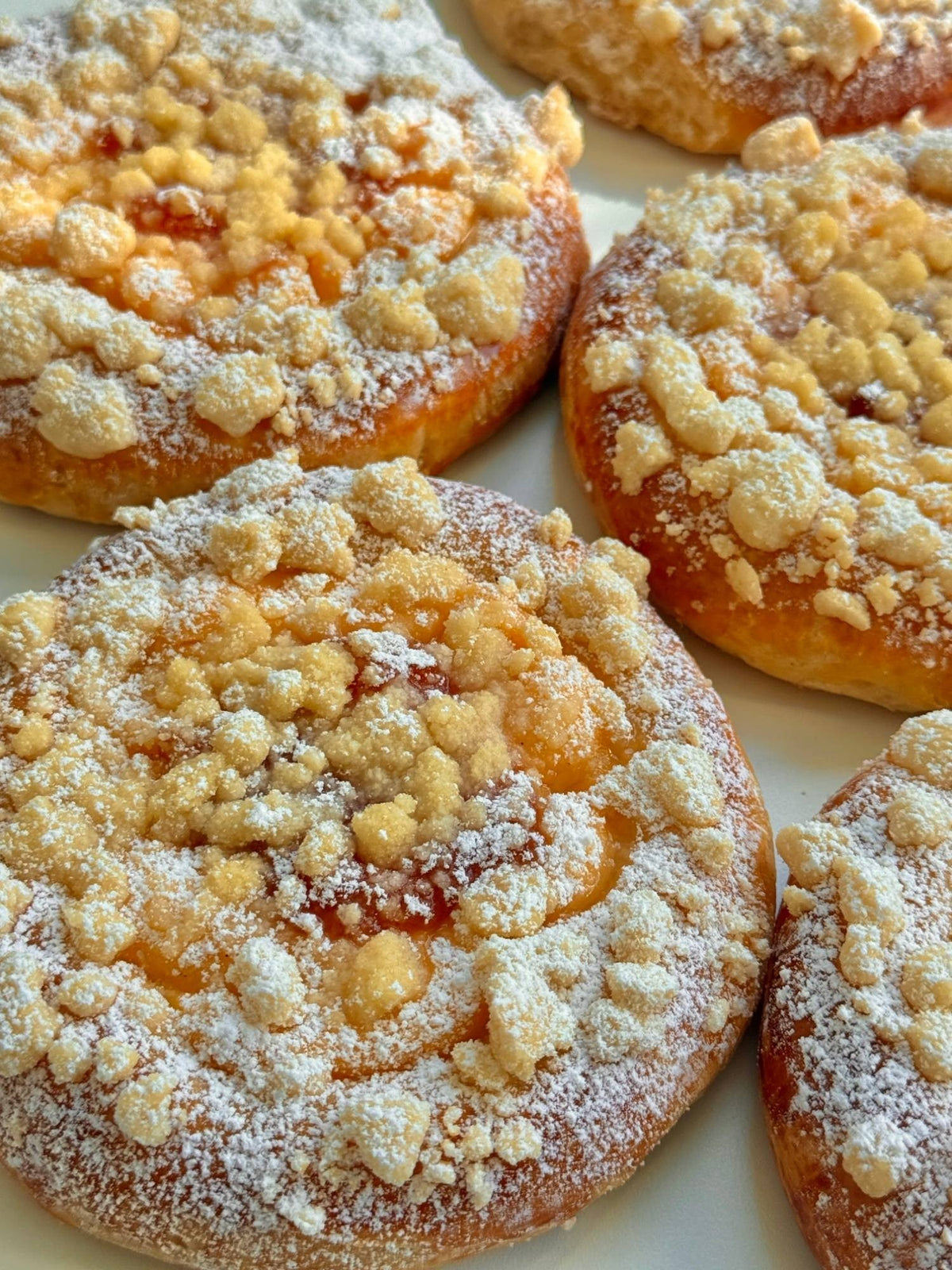
Şöbiyet Tatlısı von Food with Style, fertig angerichtet
Pastry

Şöbiyet

Crocantă la exterior, cremoasă la interior - Şöbiyet este un desert turcesc îndrăgit, care îmbină foile subțiri de plăcintă cu o umplutură bogată de...

Distribuie
Coacere 40 minute

Ingrediente

  • Pentru sirop
  • Pentru umplutură

Preparare

  1. 1
    Pune zahărul și apa la fiert. Lasă să fiarbă la foc mic 5 minutes, apoi adaugă zeama de lămâie și mai fierbe încă 15 minutes. Lasă siropul să se răcească complet.
  2. 2
    Amestecă laptele cu grișul într-o cratiță și fierbe la foc mediu, amestecând continuu, până se îngroașă. Ia de pe foc, adaugă esența de vanilie și amestecă bine. Toarnă într-un bol de sticlă, acoperă cu folie alimentară și lasă să se răcească.
  3. 3
    Topește untul și lasă-l deoparte până când se depune sedimentul de lapte la fund. Folosește doar untul limpezit.
  4. 4
    Desfășoară foile de baklava și unge fiecare foaie cu unt - în total 13-15 foi. Folosește doar untul limpede de deasupra.
  5. 5
    Taie foile suprapuse în pătrate de 8 × 8 cm (3 × 3 inch).
  6. 6
    Pune în mijlocul fiecărui pătrat cam 1 tsp de umplutură de griș și ½ tsp de fistic măcinat. Pliază în formă de triunghi, apăsând ușor doar vârful și lăsând laturile deschise.
  7. 7
    Așază triunghiurile în tavă, ușor suprapuse, astfel încât vârful fiecărui triunghi să fie acoperit. Așa își păstrează forma la copt.
  8. 8
    Unge triunghiurile cu untul rămas.
  9. 9
    Coace în cuptorul preîncălzit la 180°C (356°F) aproximativ 40-45 minutes, până se rumenesc frumos.
  10. 10
    Lasă să se răcorească puțin (cam 1 minute), apoi toarnă încet siropul rece peste ele. Lasă-le să se însiropeze cel puțin 4-5 hours, ideal peste noapte, pentru cea mai bună textură. Astfel rămân umede în interior și crocante la exterior.
  11. 11
    Presară fistic măcinat înainte de servire.

Video

Şöbiyet Tatlısı Questions

The most common cause is pouring warm syrup over hot pastry. The recipe has you cool the syrup completely while the pastry bakes, so the cold syrup meets the hot triangles and is absorbed without steaming the layers limp. Also make sure you used only the clarified butter from the top of the melted butter - the milky solids at the bottom hold water and soften the phyllo.

Fine semolina is what gives the filling its firm, sliceable body after cooking with the 300 g of milk, so a swap changes the texture. Coarse semolina works but needs a little longer cooking and stirring to soften fully, and the filling will be less smooth. Starch-based thickeners set softer and tend to run out of the triangles during the 40-45 minute bake, so semolina is the safer choice.

Keep them at room temperature in a loosely covered container so the phyllo stays crisp - an airtight box traps the moisture from the syrup and softens the pastry. Refrigeration is the bigger problem: the clarified butter in the 13-15 layers firms up cold and the pastry turns hard and dull. If you want them warm again, a few minutes in a low oven revives the crispness.

The syrup is the ideal make-ahead component, since it has to cool completely anyway and only gets better with a long rest. The semolina filling can also be cooked in advance and kept covered so it doesn't form a skin - bring it back to a spreadable consistency before filling. The buttered, filled triangles are best assembled and baked the same day, because phyllo dries out and cracks when it sits shaped and unbaked.

Two steps in the recipe prevent this, and skipping either causes gaping. First, press only the tip of the folded triangle so the pastry stays puffed but sealed at the point. Second, arrange the triangles on the tray slightly overlapping so each tip is covered by the next piece, which weighs it down and holds the shape through the full bake. Overfilling past about 1 tsp of semolina cream and ½ tsp of pistachios also forces the fold open.

delicios, testat și gata să inspire

Explorează peste 400 de Rețete Delicioase