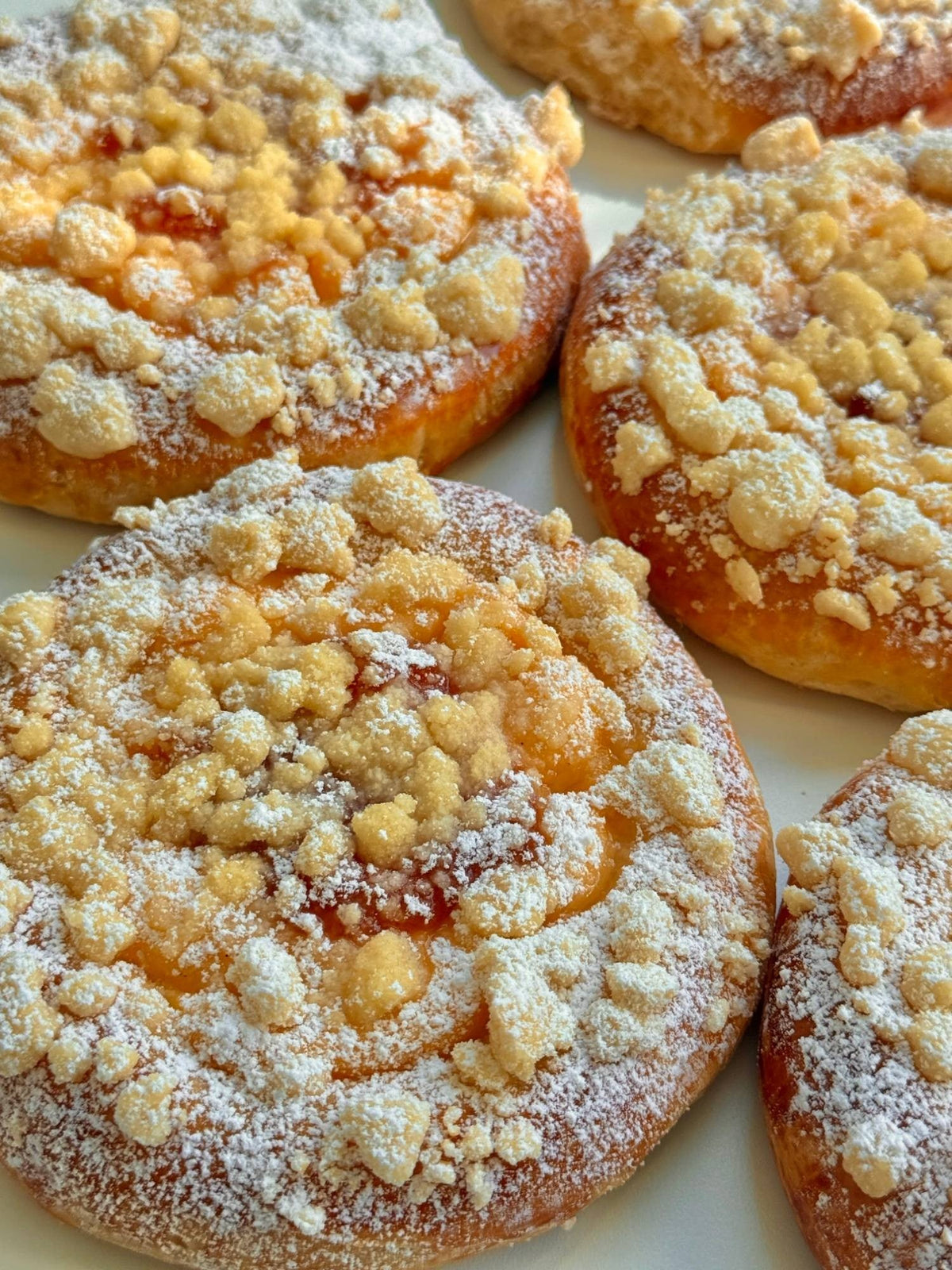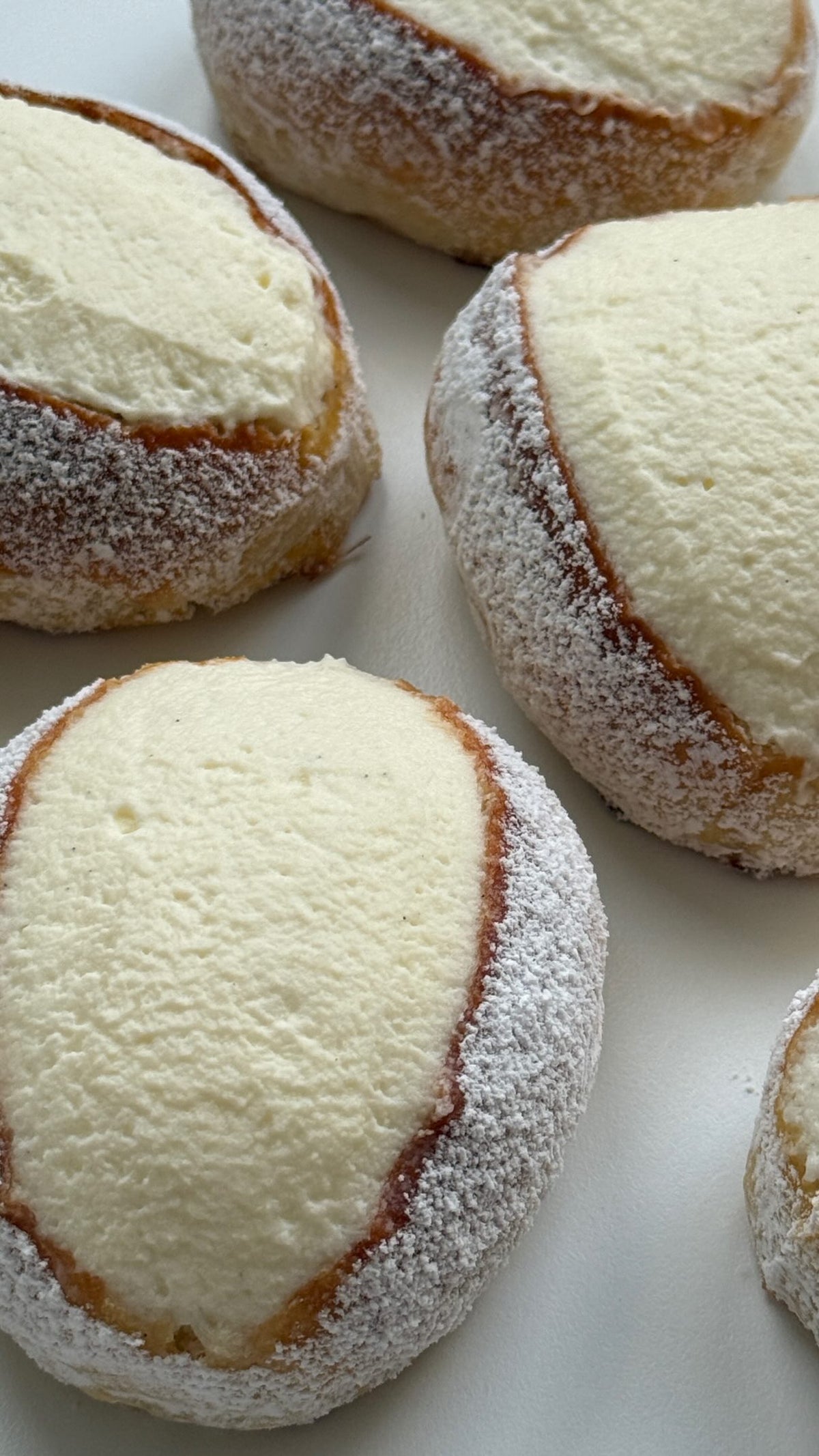


Vanilla Sugar Knots von Food with Style, fertig angerichtet
Brioche

Noduri cu zahăr și vanilie

Aceste noduri pufoase cu vanilie sunt perfecte pentru o după-amiază tihnită sau ca desert dulce la orice oră. Ideale pentru iubitorii de vanilie!

Distribuie
Pregătire 1 oră
Coacere 15 minute

Ingrediente

  • Pentru umplutura de vanilie
  • Pentru uns
  • Pentru decor

Preparare

  1. 1
    Pune făina într-un bol și fă o adâncitură în mijloc. Adaugă în adâncitură drojdia uscată, 1 tsp de zahăr și 2-3 tbsp din laptele călduț. Amestecă ușor și lasă să stea aproximativ 10 minute, până începe să facă bule.
  2. 2
    Adaugă restul de lapte, zahărul, sarea, untul moale și oul. Frământă până obții un aluat fin, care se desprinde de pe pereții bolului. Acoperă-l și lasă-l la crescut la loc cald aproximativ 1 oră sau până își dublează volumul.
  3. 3
    Pentru umplutură, amestecă untul moale cu extractul de vanilie și zahărul tos până devine cremos.
  4. 4
    După ce aluatul a crescut, întinde-l pe blatul presărat cu făină într-un dreptunghi mare. Întinde uniform peste aluat umplutura de unt cu vanilie.
  5. 5
    Împăturește aluatul: adu o latură până la mijloc, apoi pliază cealaltă latură peste ea. Taie fâșii egale.
  6. 6
    Crestează fiecare fâșie pe lungime în trei, fără a o tăia complet. Împletește-le și răsucește-le în formă de noduri.
  7. 7
    Așază nodurile într-o formă de brioșe unsă sau într-o tavă tapetată cu hârtie de copt. Lasă-le să mai crească 20-30 de minute. Între timp, preîncălzește cuptorul la 180°C (350°F).
  8. 8
    Presară zahăr perlat deasupra.
  9. 9
    Coace 15-18 minute, până se rumenesc ușor. Unge nodurile cu unt topit și lasă-le să se răcorească puțin înainte de servire.

Video

Vanilla Sugar Knots Questions

The most common cause is milk that was too hot, which kills the yeast, so keep it lukewarm rather than steaming. A cold kitchen is the other culprit: this dough needs a genuinely warm spot to rise, and a cold egg straight from the fridge slows things down further, which is why the recipe calls for a room-temperature egg. If the pre-ferment in the well doesn't get foamy after resting, start over with fresh yeast rather than kneading on.

Yes - swap the 3.5 g of dry yeast for about 10 g of fresh yeast, crumbled into the well with the sugar and lukewarm milk the same way. Plant-based milk works too; just warm it to lukewarm as you would dairy milk. You can also replace the vanilla extract in the filling with the seeds of a vanilla bean or vanilla sugar, though with vanilla sugar you may want to cut back the 30 g of sugar slightly.

These are at their best the day they're baked, since the butter filling and soft crumb dry out quickly. Keep leftovers in an airtight container at room temperature for a day or two - not the fridge, which makes yeast pastries stale faster. To revive them, warm them briefly in a 180°C (350°F) oven; freezing the baked knots and reheating from frozen also works well.

Yes - after kneading, let the dough rise slowly in the fridge overnight instead of in a warm place, then bring it back to room temperature before rolling it out. You can also mix the vanilla butter filling a day ahead, but let it soften again so it spreads evenly over the dough. Shaped knots can go into the muffin tin and do their second 20-30 minute rise while the oven preheats to 180°C (350°F).

Filling escapes when the butter mixture is too soft or spread too thickly right up to the edges - leave a small border bare so the folded dough can seal. Rolling the rectangle too thin is the other issue: the strips then tear as you braid and twist them, and the filling runs out. Baking in a greased muffin tin, as the recipe suggests, contains any leakage and keeps the knots tall rather than spreading flat.

delicios, testat și gata să inspire

Explorează peste 400 de Rețete Delicioase