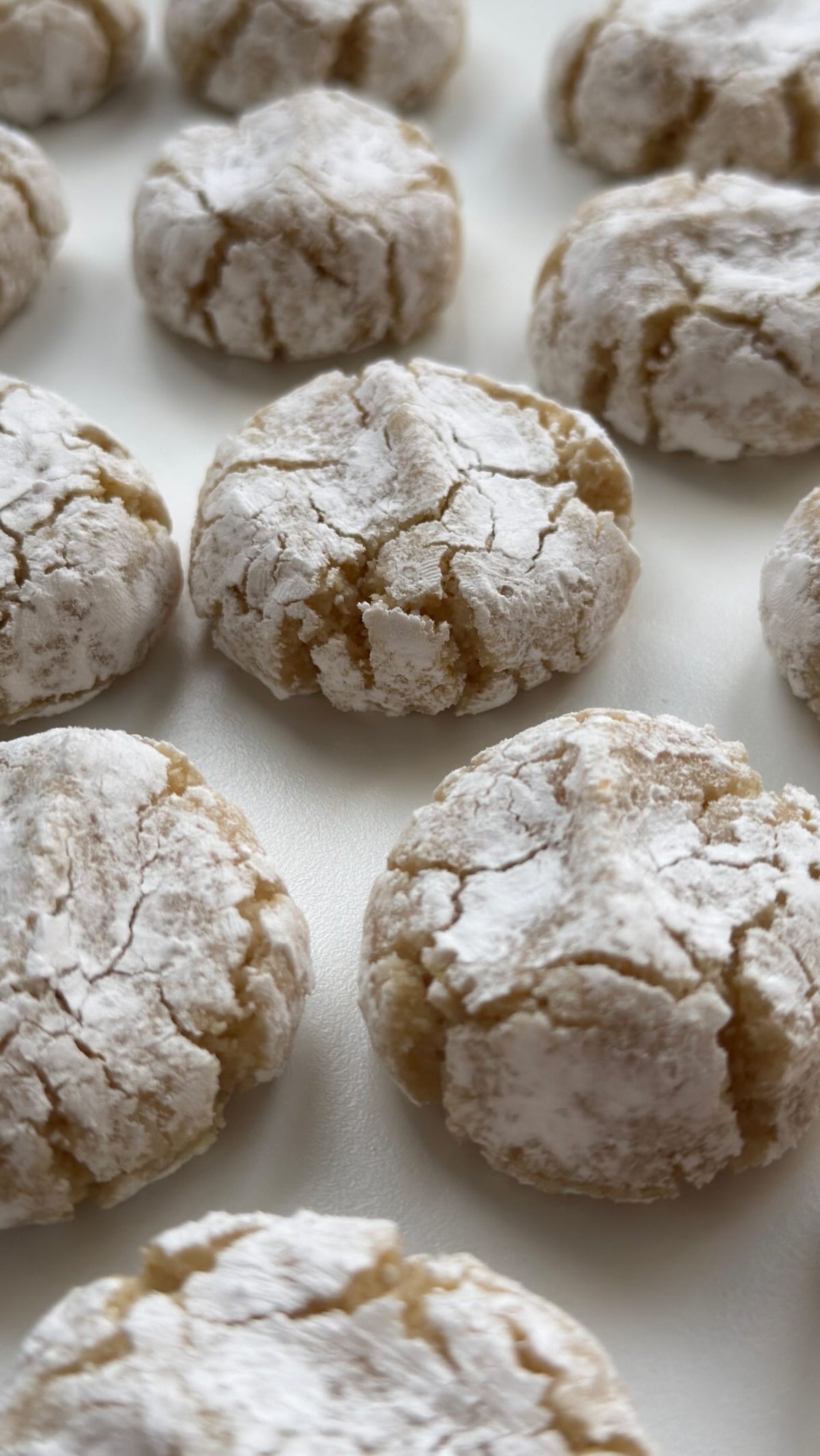
Vanillekipferl von Food with Style, fertig angerichtet
Pastry

Vanillekipferl

Herkullisen hauraita, tyylikkäitä vaniljasarvia, joissa on mureneva suutuntuma ja klassinen vaniljan tuoksu. (noin 18-24 pikkuleipää)

Jaa
Annosta
18 keksiä
Paistoaika 12 minuuttia

Ainekset

  • Pyörittelyyn / päälle sirotteluun

Valmistus

  1. 1
    Sekoita keskenään jauhot, tomusokeri, jauhetut mantelit, suola ja vanilja. Lisää kylmä voi ja vaivaa nopeasti tasaiseksi taikinaksi. Tärkeää: työskentele ripeästi, ettei taikina lämpene.
  2. 2
    Muotoile taikinasta pitkä tanko, kääri tiiviisti kelmuun ja anna vetäytyä jääkaapissa noin 60 minuuttia.
  3. 3
    Kuumenna uuni 170 °C / 338 °F (ylä-alalämpö). Vuoraa uunipelti leivinpaperilla.
  4. 4
    Leikkaa kylmästä taikinatangosta noin 1.5 cm paksuisia viipaleita (noin 20 g kappale). Pyöritä jokainen pala ensin palloksi, sitten lyhyeksi tangoksi ja taivuta päät varovasti alaspäin klassisen sarven muotoon.
  5. 5
    Jos taikina pehmenee muotoilun aikana, jäähdytä valmiit sarvet vielä 15-20 minuuttia, jotta ne säilyttävät muotonsa paistossa.
  6. 6
    Paista 12-15 minuuttia. Pikkuleipien tulee jäädä vaaleiksi, vain kärjistä hieman värjäytyneiksi.
  7. 7
    Ota pellit uunista, anna jäähtyä hetki ja pyörittele sarvet vielä lämpiminä (mutta ei kuumina) varovasti tomusokerissa ja vaniljasokerissa tai sirottele seosta kevyesti päälle.
  8. 8
    Anna jäähtyä kunnolla - vasta silloin niistä tulee täydellisen hauraita ja kestäviä. Täydellisiä jouluksi, kauniiksi lahjaksi tai vain kahvikupin kaveriksi.

Video

Vanillekipferl Questions

Ground blanched almonds make up 70 g of the dough and carry a lot of its tenderness, so they need a like-for-like replacement rather than just more flour. Finely ground hazelnuts or walnuts work well and simply shift the flavour; for a nut-free version, use the same weight of very finely ground blanched almonds' stand-in such as ground sunflower seeds. Keep the grind fine, because coarse pieces make the thin crescent tips break when you bend them.

Store them in an airtight tin at room temperature once they have cooled completely - the recipe stresses that they only become tender and stable after full cooling, and packing them warm traps steam and softens them. Layer them between parchment, since the crescents are fragile and the powdered-sugar coating rubs off easily. Many bakers find the texture improves after a day or two in the tin, and you can dust with a little extra powdered sugar before serving.

Yes - the dough is already shaped into a log and wrapped in plastic wrap for its 60-minute chill, so you can simply leave it in the fridge longer and bake the next day. If it has firmed up too much to slice cleanly, let it sit at room temperature for a few minutes before cutting your 1.5 cm slices. The wrapped log also freezes well; thaw it in the fridge until it is just sliceable.

The dough is very short: 100 g butter against 140 g flour and 70 g almonds, with no egg or liquid to bind it. Crumbliness usually means it simply needs another minute of quick kneading so the cold butter cubes distribute - press it firmly together rather than adding water, which would toughen it. If it still refuses to hold, your butter may be too cold straight from the fridge; let the cubes stand a few minutes, but keep working swiftly so the butter does not warm through.

Spreading means the butter was too warm when the cookies went in, which is why the recipe calls for chilling the formed crescents another 15-20 minutes if the dough softens while shaping. Roll each piece into a ball first, then a short log, and bend the ends downward so the crescent is even in thickness - thin, overworked tips brown fast and break. At 170 °C / 338 °F for 12-15 minutes the cookies should stay pale with just a hint of colour at the tips, so pull them before they take on real colour.

herkullisia, testattuja ja inspiroivia
Tutustu 400+ Herkulliseen Reseptiin