








Mængde
Enheder
Forberedelse
1 time
Bagetid
10 minutter
Ingredienser
- Til lagkagebunden
- Til vaniljecremen
- Til pynt
Fremgangsmåde
-
1
Forvarm ovnen til 180 °C / 350 °F (over- og undervarme). Beklæd en bageplade (30 × 40 cm / 12 × 16 in) med bagepapir.

-
2
Kom æg og salt i en skål og pisk i 1 minut. Tilsæt sukkeret lidt ad gangen og pisk videre i 5 minutter, til massen er lys og luftig. Rør vaniljen i.

-
3
Bland mel, majsstivelse og bagepulver. Sigt det over æggemassen og vend det forsigtigt i, til dejen er ensartet og luftig.

-
4
Fordel dejen på pladen og bag den i 10-12 minutter, til den er gylden. Lad den køle lidt af, og del derefter bunden på langs i to lige store lag.

-
5
Varm 300 ml (1¼ cups) mælk op med vaniljen. Pisk æggeblommer, sukker, majsstivelse og de sidste 100 ml (⅖ cup) mælk sammen i en skål. Hæld den varme mælk i lidt ad gangen, hæld det hele tilbage i gryden og kog cremen tyk. Læg husholdningsfilm helt ned på overfladen og lad den køle helt af.

-
6
Pisk det bløde smør cremet, og tilsæt derefter den afkølede creme skefuld for skefuld, til den er glat. Kom cremen i en sprøjtepose.

-
7
Sprøjt cremen ud på den første kagebund, læg den anden bund ovenpå og tryk let sammen.

-
8
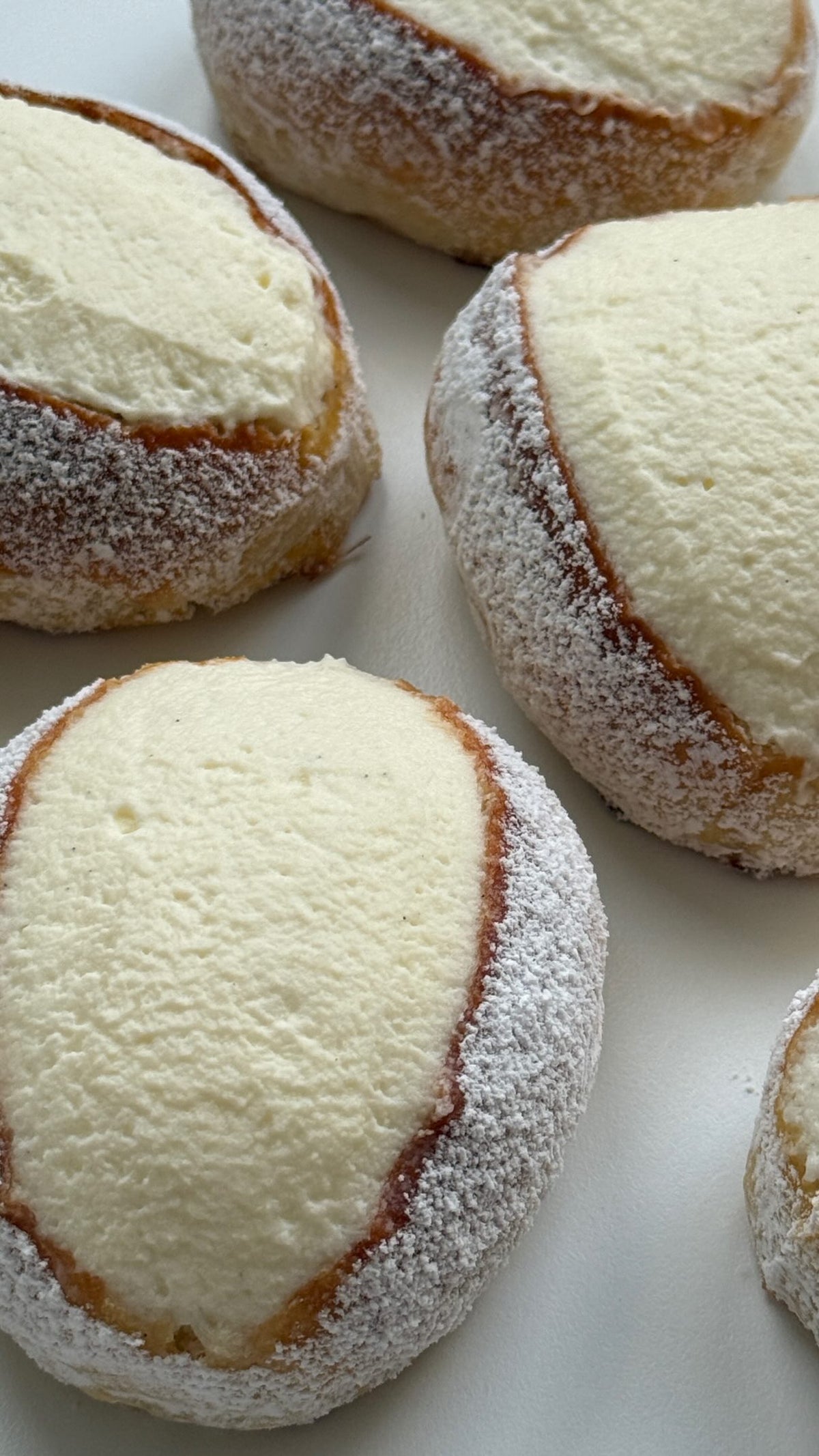
Drys med flormelis, skær kagen i snitter og sæt den på køl i mindst 1 time før servering. Let, cremet og perfekt afstemt - elegante kagesnitter til at blive forelsket i

Video

Food with Style Baking Club
Bag den trin for trin med video
Det passende kursusmodul: Rørt dej
- Bagekursus med 9 moduler og 34 videolektioner
- 1:1-chat med Food with Style Baking Chef
- Community-chat og e-bog med 100 opskrifter
Fra 14,90 € om måneden, kan opsiges hver måned
FAQ
Spørgsmål om Vanilla Patisserie Slices
lækker, testet og klar til at inspirere