






Bageform
cm
cm
Enheder
Bagetid
50 minutter
Ingredienser
- Til bunden
- Til fyldet

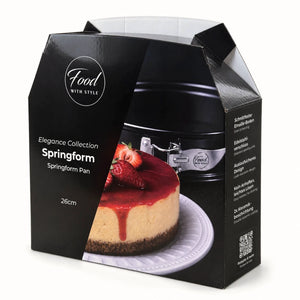
Denne opskrift lykkes perfekt i vores
Springform Ø 26 cm 49,90 €eller som Bagesæt + bagekursus & E-bog for 89,90 €Fremgangsmåde
-
1
Forvarm ovnen til 160°C (320°F). Smør en springform på 20 cm i diameter og drys den med mel.

-
2
Til bunden: Ælt mel, smør, sukker, æg og et nip salt sammen til en ensartet dej. Tryk dejen ud i formen, og sørg for at trække en kant op (ca. 4,5 cm høj). Prik bunden med en gaffel. Sæt formen på køl i cirka 30 minutter.

-
3
Til fyldet: Rør kvark, sukker, æg, cremepulver, citronsaft og revet citronskal sammen i en skål til massen er glat. Pisk fløden stiv i en anden skål, og vend den forsigtigt i kvarkmassen.

-
4
Sådan undgår du revner i midten af kagen: Rør ikke fyldet for meget, så det bevarer en let og ensartet konsistens. Bag kagen langsomt ved lav temperatur, så der ikke kommer revner i midten.

-
5
Fordel kvarkmassen jævnt over bunden.

-
6
Bag kagen i den forvarmede ovn i cirka 50-60 minutter, indtil overfladen er gyldenbrun og fyldet er sat.

-
7
Tag kagen ud af ovnen, og lad den køle helt af, inden du tager den ud af formen.

-
8
Sæt kagen på køl natten over, inden den serveres. Drys eventuelt med flormelis før servering.

Video

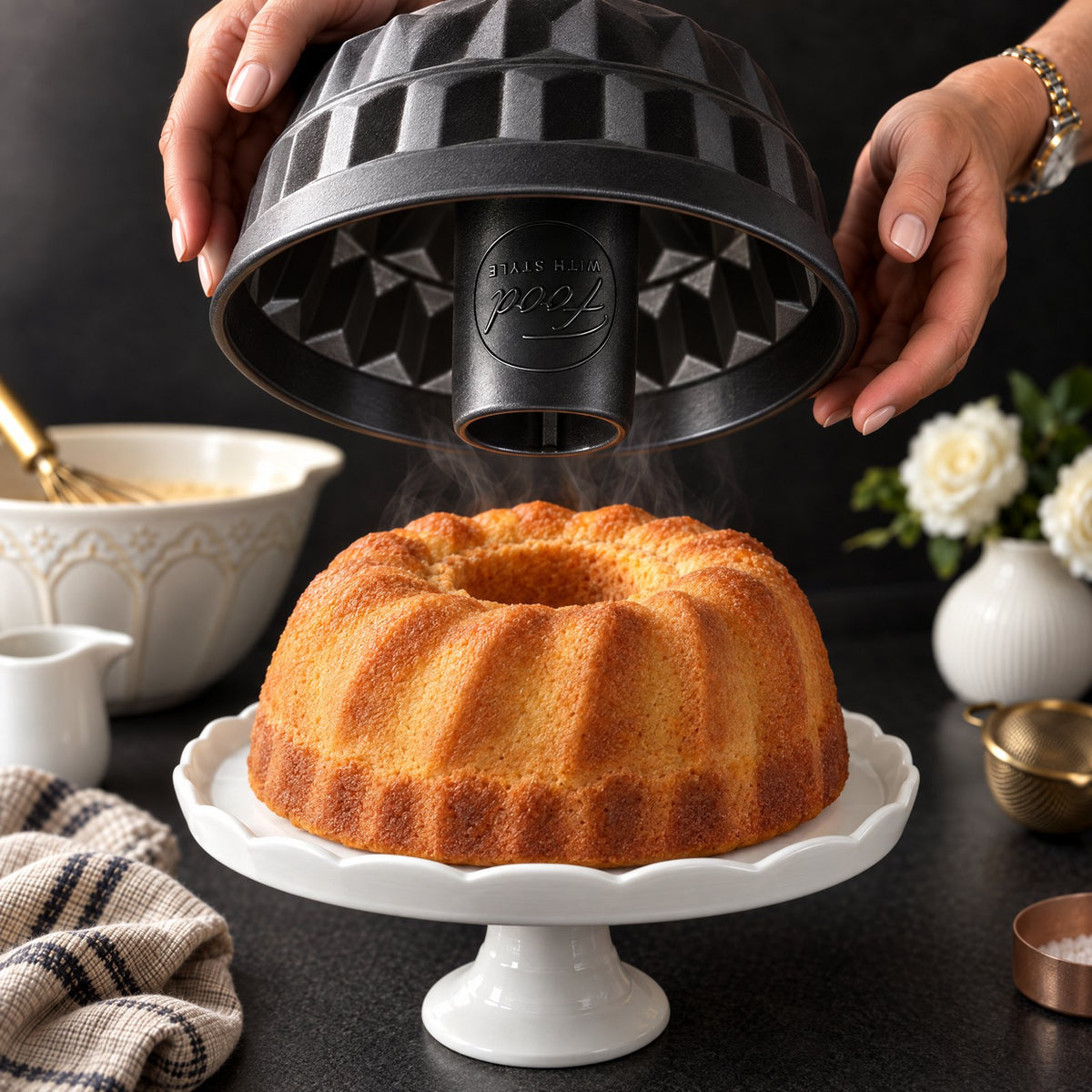
Intet hænger fast. Alt slipper.
Kagen slipper rent fra formen, hver gang.
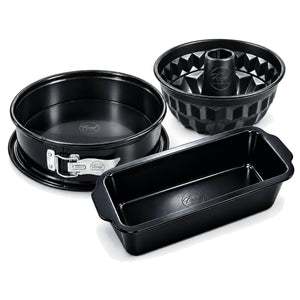
- Dobbelt keramisk slip-let-belægning, PFAS-fri
- Aluminiseret stål med 10 års garanti
- 1 års bagekursus + e‑bog inkluderet
Bagesæt + bagekursus & E-bog · 89,90 €
Se bagesættet

Food with Style Baking Club
Bag den trin for trin med video
Det passende kursusmodul: Rørt dej
- Bagekursus med 9 moduler og 34 videolektioner
- 1:1-chat med Food with Style Baking Chef
- Community-chat og e-bog med 100 opskrifter
Fra 14,90 € om måneden, kan opsiges hver måned
FAQ
Spørgsmål om Käsekuchen
lækker, testet og klar til at inspirere