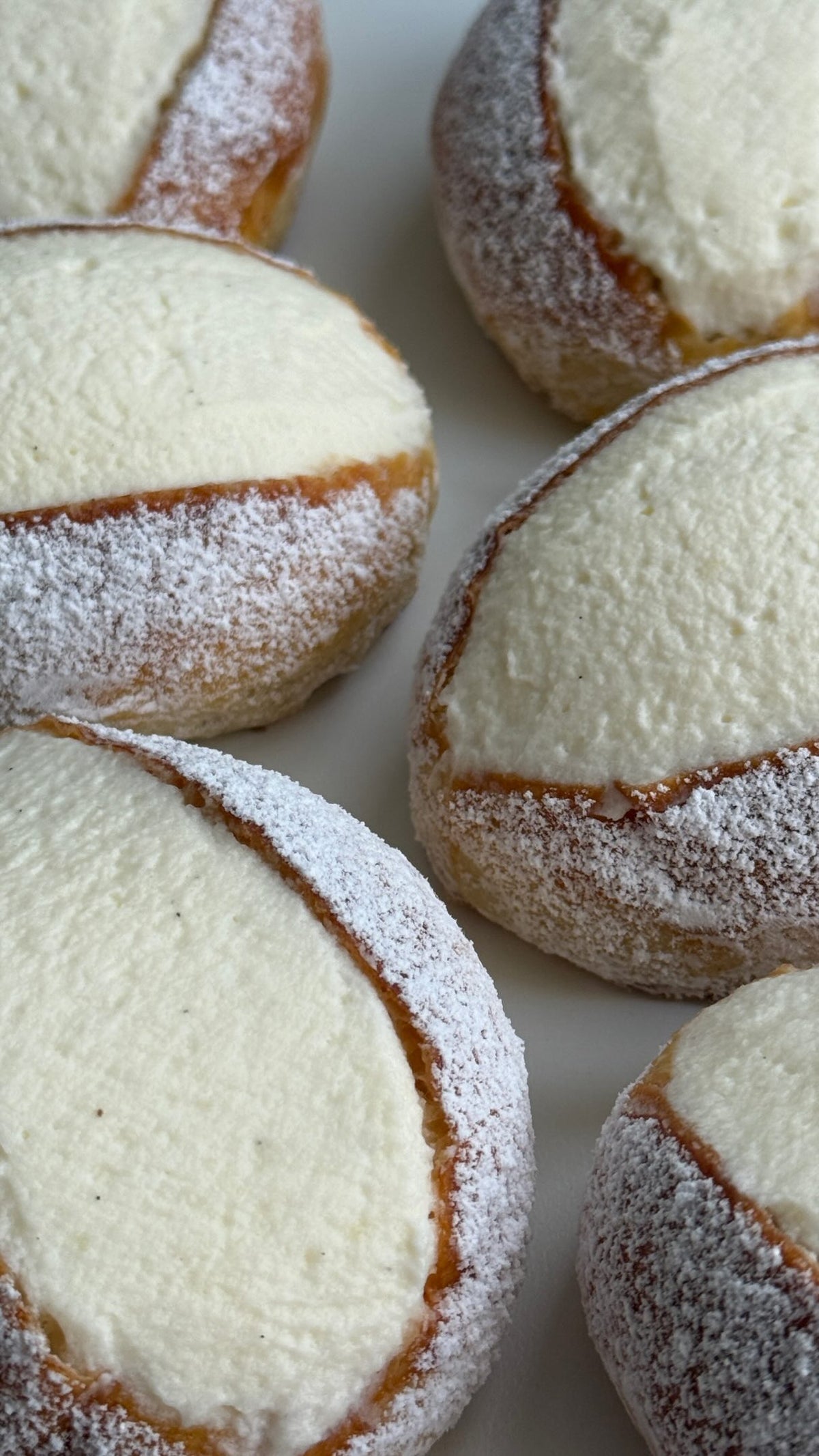
Lemon Custard Triangles von Food with Style, fertig angerichtet
Brioche

Zitronen-Puddingtaschen

Knusprige Blätterteigtaschen mit seidiger Zitronen-Vanillecreme - leicht, elegant und perfekt für den Sommer.

Teilen
Portionen
12 Stück
Backzeit 18 Minuten

Zutaten

  • Zum Bestreichen

Zubereitung

  1. 1
    Den Ofen auf 190°C (375°F) Ober-/Unterhitze vorheizen. Ein Backblech mit Backpapier auslegen.
  2. 2
    Die Teigplatte in der Mitte zusammenklappen und leicht andrücken. In 12 Dreiecke schneiden.
  3. 3
    Mit der Eigelb-Milch-Mischung bestreichen, mit Hagelzucker bestreuen und 18-22 Minuten goldbraun backen. Vollständig auskühlen lassen.
  4. 4
    Zucker und Zitronenabrieb miteinander verreiben. Mit den Eigelben, der Speisestärke, dem Mark der Vanilleschote und etwas von der Milch glatt rühren.
  5. 5
    Die restliche Milch mit der ausgekratzten Vanilleschote erhitzen. Die Schote entfernen, die Eimasse einrühren und unter ständigem Rühren aufkochen, bis die Creme andickt. Zitronensaft und Butter unterrühren. Direkt auf der Oberfläche mit Frischhaltefolie abdecken und vollständig auskühlen lassen.
  6. 6
    Die kalte Creme kurz glatt rühren und in einen Spritzbeutel füllen.
  7. 7
    Die Teigdreiecke waagerecht halbieren, die Zitronen-Vanillecreme aufspritzen, die Deckel wieder aufsetzen und leicht mit Puderzucker bestäuben.

Video

Lemon Custard Triangles Questions

Lumps usually mean the egg yolk mixture wasn't fully smooth before it went into the hot milk, or the pan wasn't stirred constantly while thickening. Whisk the yolks, sugar, cornstarch and vanilla seeds with a little cold milk until completely smooth first, then whisk the hot milk in. If lumps still appear, push the finished custard through a fine sieve while it's warm, then stir in the lemon juice and butter.

Yes, puff pastry works and gives a crisper, flakier triangle, though it will be less soft and bready than croissant dough. Keep the same treatment: fold the sheet in half, press gently, cut 12 triangles, brush with the yolk-milk wash and add pearl sugar. Watch the oven closely, since puff pastry can colour faster than the 18-22 minutes given here.

The custard is the best make-ahead part: cook it a day early, press cling film directly onto the surface so no skin forms, and chill it. The baked triangles are best on the day they're baked, but they can be baked a few hours ahead and left uncovered at room temperature so they stay crisp. Only slice, fill and dust with powdered sugar shortly before serving.

Because they contain a milk-and-egg custard, filled triangles belong in the fridge in a covered container and are best eaten the same day. The pastry softens as it sits against the custard, so texture suffers by day two even if the flavour is fine. Let them stand a few minutes at room temperature before eating and dust with fresh powdered sugar, since the first dusting dissolves in the fridge.

Flat triangles usually come from dough that got warm and soft before baking - chill the cut triangles briefly if your kitchen is hot, and don't press the folded sheet harder than needed to join the layers. Leaking is a sign the custard was still too soft or the pastry was overfilled, so chill the custard fully until it's pipeable and add it in a restrained line rather than packing it in. Piping into the horizontally sliced halves rather than into a cut pocket also keeps the filling contained.

köstlich, erprobt und bereit zu inspirieren

Entdecke 400+ leckere Gerichte