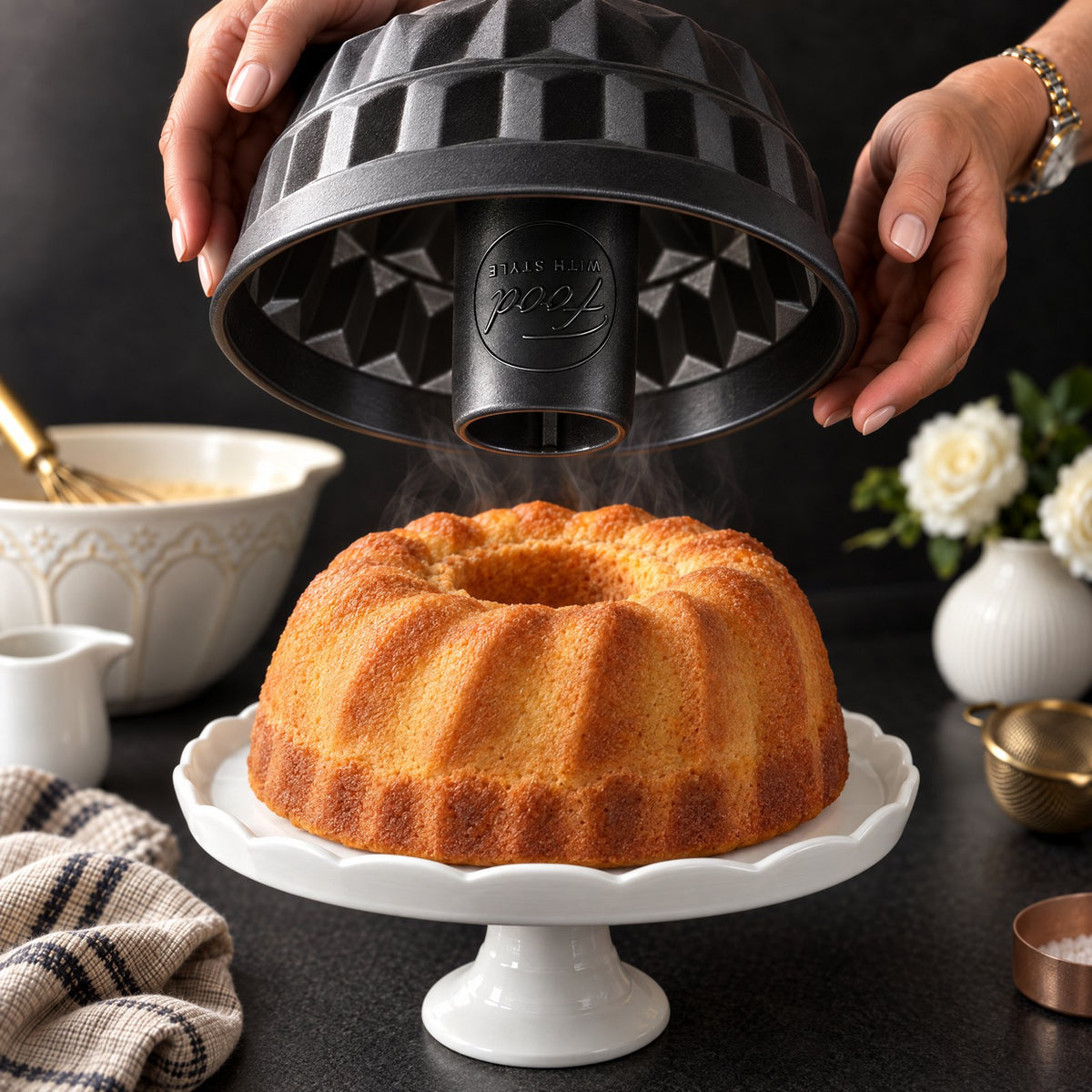

Danish Dream Cake von Food with Style, fertig angerichtet
Cake

Dänischer Traumkuchen

Ein lockerer, saftiger Rührkuchen mit karamellisierter Kokosdecke - buttrig, saftig und einfach unwiderstehlich.

Teilen
Backzeit 20 Minuten

Zutaten

Zubereitung

  1. 1
    Den Backofen auf 180°C (350°F) Ober-/Unterhitze vorheizen. Die Backform mit Backpapier auslegen.
  2. 2
    Eier, Zucker und Vanille 4-5 Minuten hell und schaumig aufschlagen.
  3. 3
    Mehl, Backpulver und Salz in einer zweiten Schüssel mischen. Die trockenen Zutaten vorsichtig unter die Eiermasse heben.
  4. 4
    Milch und Butter erhitzen, bis die Butter vollständig geschmolzen ist, dann unter den Teig rühren.
  5. 5
    Den Teig in die vorbereitete Form füllen und 20-25 Minuten backen.
  6. 6
    Für die Kokosdecke Butter, braunen Zucker und Milch in einem Topf erhitzen. Für eine hellere, mildere Decke die Zutaten einfach nur schmelzen lassen. Für ein kräftigeres Karamellaroma die Masse 2-4 Minuten sanft köcheln lassen.
  7. 7
    Die Kokosraspeln unterrühren und die Masse gleichmäßig auf dem halbfertig gebackenen Kuchen verteilen.
  8. 8
    Den Kuchen zurück in den Ofen schieben und weitere 10-15 Minuten backen, bis die Decke goldbraun ist.
  9. 9
    Den Kuchen etwas abkühlen lassen und dann in Stücke schneiden.

Video

Danish Dream Cake Questions

The lift in this cake comes almost entirely from air beaten into the eggs and sugar, so the full 4-5 minutes of whisking until pale and fluffy is not optional. Once the flour goes in, fold gently rather than stir, and add the milk-butter mixture warm but not hot, since heat and vigorous mixing both knock the air back out. If you deflate the batter at either step, the baking powder alone cannot rescue the texture.

Shredded coconut is what gives the topping its structure and chew, so desiccated or flaked coconut works, but a coconut-free version will not set the same way. Brown sugar can be replaced with white sugar if that is all you have, though you will lose some of the caramel depth the topping is known for. Keep the butter-sugar-milk ratio as written, otherwise the topping runs off the cake or stiffens too much to spread.

Let it cool completely before storing, or trapped steam will soften the golden topping. Keep it covered at room temperature rather than in the fridge, since cold firms up the butter in both the sponge and the coconut layer and dulls the flavour. Cut squares stay best when the cut sides are pressed together or covered.

You can weigh out the dry mix of flour, baking powder, and salt ahead and keep it covered, and line the pan in advance. Do not mix the batter ahead - the beaten eggs lose volume on standing and the baking powder starts working as soon as it meets the milk. The coconut topping can be cooked ahead too, but it will thicken as it cools, so warm it gently before spreading.

The cake bakes 20-25 minutes first so the surface is set enough to carry the topping; adding it too early lets it sink into a still-wet batter. Spread it evenly and quickly with a light hand so you do not tear the surface, then return it to the oven for the final 10-15 minutes. Watch it closely at the end, because the sugar in the topping goes from golden to burnt faster than the sponge browns.

köstlich, erprobt und bereit zu inspirieren

Entdecke 400+ leckere Gerichte