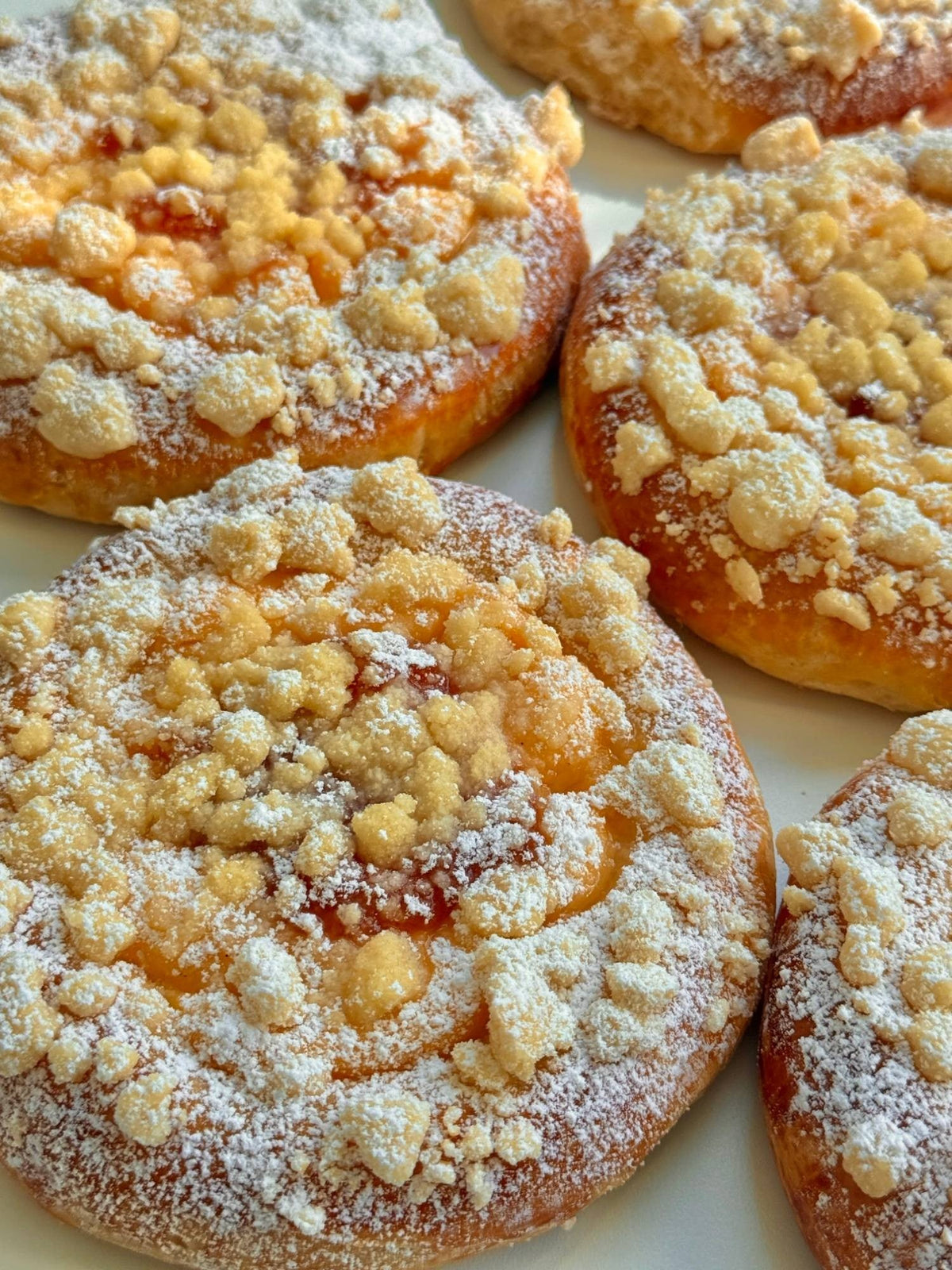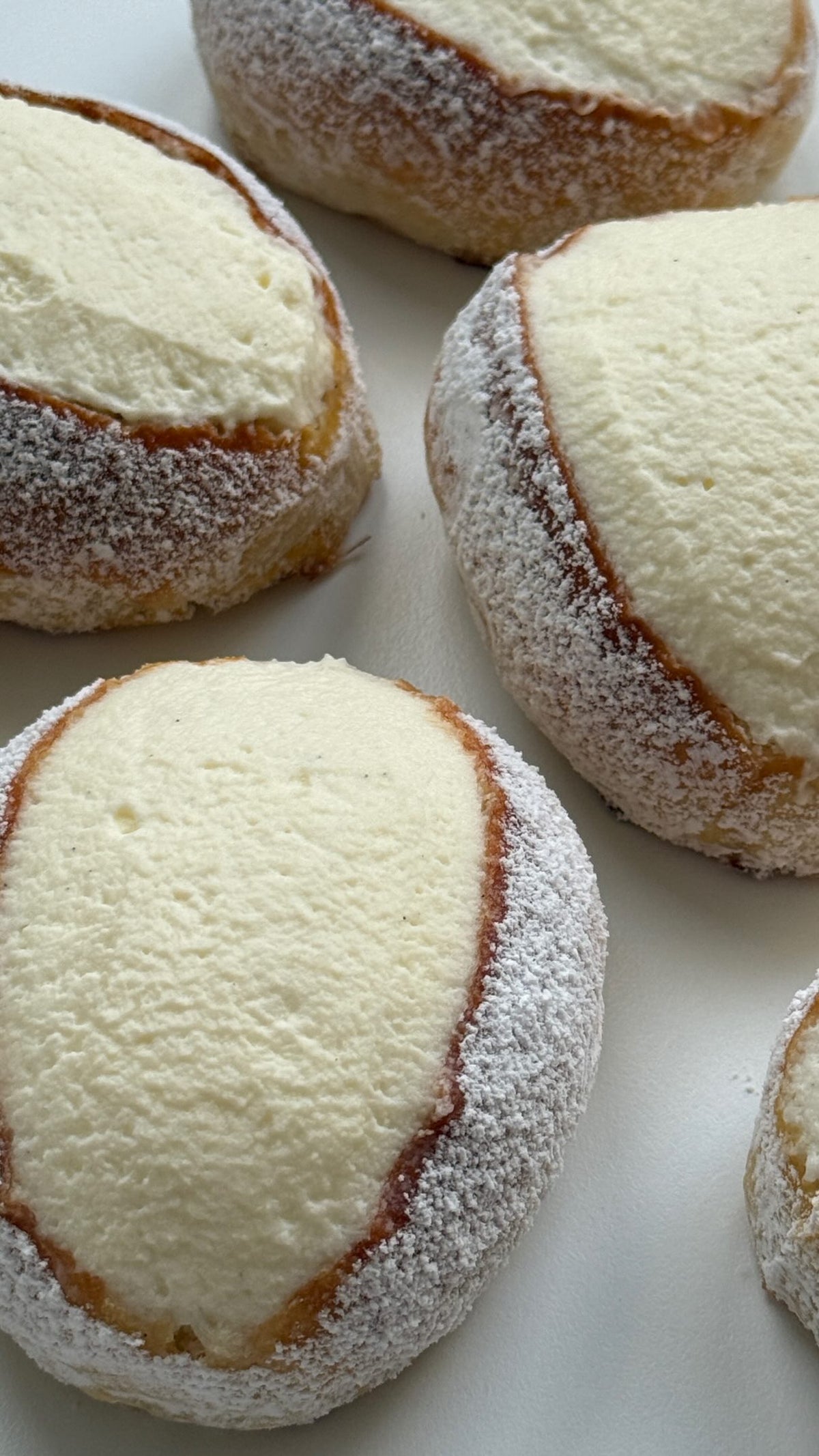


Vanilla Sugar Knots von Food with Style, fertig angerichtet
Brioche

Vanille-Zuckerknoten

Diese fluffigen Vanilleknoten sind perfekt für einen gemütlichen Nachmittag oder als süße Nascherei zwischendurch. Ideal für alle Vanillefans!

Teilen
Vorbereitung 1 Stunde
Backzeit 15 Minuten

Zutaten

  • Für die Vanillefüllung
  • Zum Bestreichen
  • Zum Bestreuen

Zubereitung

  1. 1
    Das Mehl in eine Schüssel geben und in der Mitte eine Mulde formen. Trockenhefe, 1 tsp Zucker und 2-3 tbsp der lauwarmen Milch in die Mulde geben. Kurz verrühren und etwa 10 Minuten stehen lassen, bis sich Bläschen bilden.
  2. 2
    Die restliche Milch, den Zucker, das Salz, die weiche Butter und das Ei dazugeben. Alles zu einem geschmeidigen Teig verkneten, der sich vom Schüsselrand löst. Abgedeckt an einem warmen Ort etwa 1 Stunde gehen lassen, bis sich das Volumen verdoppelt hat.
  3. 3
    Für die Füllung die weiche Butter mit dem Vanilleextrakt und dem Zucker glatt rühren.
  4. 4
    Den aufgegangenen Teig auf einer bemehlten Arbeitsfläche zu einem großen Rechteck ausrollen. Die Vanillebutter gleichmäßig darauf verstreichen.
  5. 5
    Den Teig falten: eine Seite zur Mitte klappen, dann die andere Seite darüberlegen. In gleichmäßige Streifen schneiden.
  6. 6
    Jeden Streifen der Länge nach in drei Teile schneiden, dabei oben nicht ganz durchschneiden. Die Stränge flechten und zu Knoten drehen.
  7. 7
    Die Knoten in eine gefettete Muffinform oder auf ein mit Backpapier belegtes Blech setzen. Nochmals 20-30 Minuten gehen lassen. Inzwischen den Ofen auf 180°C (350°F) vorheizen.
  8. 8
    Mit Hagelzucker bestreuen.
  9. 9
    15-18 Minuten goldgelb backen. Die Knoten mit geschmolzener Butter bestreichen und vor dem Servieren etwas abkühlen lassen.

Video

Vanilla Sugar Knots Questions

The most common cause is milk that was too hot, which kills the yeast, so keep it lukewarm rather than steaming. A cold kitchen is the other culprit: this dough needs a genuinely warm spot to rise, and a cold egg straight from the fridge slows things down further, which is why the recipe calls for a room-temperature egg. If the pre-ferment in the well doesn't get foamy after resting, start over with fresh yeast rather than kneading on.

Yes - swap the 3.5 g of dry yeast for about 10 g of fresh yeast, crumbled into the well with the sugar and lukewarm milk the same way. Plant-based milk works too; just warm it to lukewarm as you would dairy milk. You can also replace the vanilla extract in the filling with the seeds of a vanilla bean or vanilla sugar, though with vanilla sugar you may want to cut back the 30 g of sugar slightly.

These are at their best the day they're baked, since the butter filling and soft crumb dry out quickly. Keep leftovers in an airtight container at room temperature for a day or two - not the fridge, which makes yeast pastries stale faster. To revive them, warm them briefly in a 180°C (350°F) oven; freezing the baked knots and reheating from frozen also works well.

Yes - after kneading, let the dough rise slowly in the fridge overnight instead of in a warm place, then bring it back to room temperature before rolling it out. You can also mix the vanilla butter filling a day ahead, but let it soften again so it spreads evenly over the dough. Shaped knots can go into the muffin tin and do their second 20-30 minute rise while the oven preheats to 180°C (350°F).

Filling escapes when the butter mixture is too soft or spread too thickly right up to the edges - leave a small border bare so the folded dough can seal. Rolling the rectangle too thin is the other issue: the strips then tear as you braid and twist them, and the filling runs out. Baking in a greased muffin tin, as the recipe suggests, contains any leakage and keeps the knots tall rather than spreading flat.

köstlich, erprobt und bereit zu inspirieren

Entdecke 400+ leckere Gerichte