
Melonpan von Food with Style, fertig angerichtet
Pastry

Melonpan

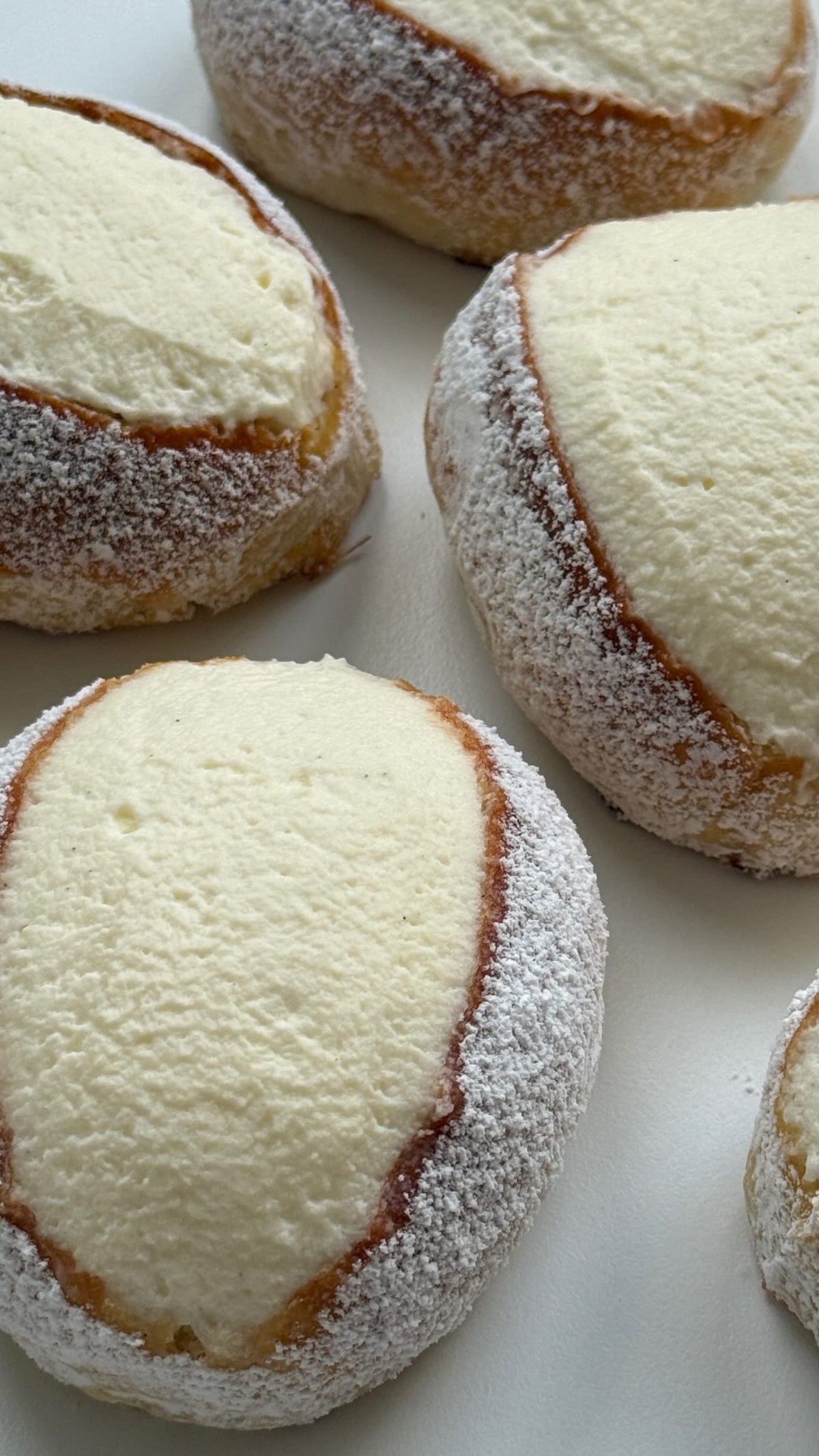
Melonpan ist ein fluffiges japanisches Süßbrötchen mit knuspriger Kekskruste. Frisch gebacken ist es innen weich und watteweich, außen fein knusprig.

Teilen
Portionen
6 Portionen
Vorbereitung 1 Stunde
Backzeit 18 Minuten

Zutaten

  • Für den Hefeteig
  • Für den Keksteig (Topping)

Zubereitung

  1. 1
    Das Mehl für den Hefeteig in eine Rührschüssel sieben. In die Mitte eine Mulde drücken, Hefe, etwas Zucker und einen Teil der lauwarmen Milch hineingeben. Vorsichtig verrühren und ca. 10 Minuten stehen lassen, bis die Hefe Blasen wirft.
  2. 2
    Restlichen Zucker, Salz, die übrige Milch, Eigelb und weiche Butter zugeben. Alles zu einem weichen, leicht klebrigen Teig verkneten (ca. 8-10 Minuten). Abgedeckt an einem warmen Ort ca. 1 Stunde gehen lassen, bis sich das Volumen verdoppelt hat.
  3. 3
    In der Zwischenzeit den Keksteig zubereiten: Mehl, Zucker und Vanilleextrakt mischen. Weiche Butter und 1 tbsp Milch zugeben und kurz zu einem glatten Teig verkneten. Bei Bedarf noch etwas Milch zufügen. In Frischhaltefolie wickeln und kalt stellen.
  4. 4
    Den aufgegangenen Hefeteig in 6 gleich große Stücke teilen und zu Kugeln formen. Den Keksteig ebenfalls in 6 Stücke teilen und jedes zu einem flachen Kreis ausrollen (bei Bedarf mit Mehl bestäuben).
  5. 5
    Jede Teigkugel mit einem Keksteig-Kreis überziehen - wie eine Haube, aber nicht bis ganz nach unten. Die Oberfläche mit einem scharfen Messer rautenförmig einritzen und mit Kristallzucker bestreuen.
  6. 6
    Die Melonpan abgedeckt noch einmal 30 Minuten ruhen lassen.
  7. 7
    Im vorgeheizten Backofen bei 180 °C (350 °F) Ober-/Unterhitze ca. 18-20 Minuten backen, bis sie leicht goldbraun sind. Nicht zu lange backen - sie sollen weich bleiben. Melonpan schmecken frisch am besten - mit knuspriger Kruste und weichem Kern. Falls etwas übrig bleibt, einfach kurz aufbacken, dann schmecken sie auch am nächsten Tag noch großartig.

Video

Melonpan Questions

The topping only has 90 g flour, 40 g sugar, 30 g butter and 1-2 tbsp milk, so it is a stiff dough that needs the butter to be genuinely soft. If it crumbles, knead in the second tablespoon of milk a little at a time until it comes together smoothly. Roll the circles between two sheets of parchment or on a lightly floured surface, and if the dough warms up too much and tears, chill it briefly before shaping.

Fresh yeast works if you crumble it into the well with the sugar and lukewarm milk instead of the 1 tsp instant yeast, and let it stand until it foams before mixing in the rest. For the 100 ml milk in the dough and the 1-2 tbsp in the topping, an unsweetened plant milk works fine - the milk mainly supplies liquid and a little richness. Keep the butter soft in both doughs, since the texture of the yeast dough and the cookie crust depends on it being workable rather than melted.

Let the buns cool completely before storing, otherwise steam from the soft yeast dough softens the sugar-sprinkled crust from underneath. Keep them at room temperature in a loosely covered container or paper bag rather than an airtight box, and eat them within a day or two. To revive the crust, warm them for a few minutes in an oven at the baking temperature of 180 °C (350 °F).

Yes - the cookie dough is the easiest part to make ahead, since it keeps well wrapped in the fridge; just let it soften slightly before rolling it into circles. The yeast dough can also do its first rise slowly in the fridge overnight instead of at room temperature, then be divided into 6 balls the next morning. Either way, keep the final 30-minute rest after topping the balls, since that is what gives the buns their lift in the oven.

The recipe has you place the cookie circle like a cap that does not reach all the way to the bottom, which leaves room for the yeast dough to expand upward without pushing the crust off. If the circles are rolled too thin they tear apart as the bun rises, and if they are wrapped too far down they can slip. Score the criss-cross pattern with a sharp knife so the crust has defined lines to split along, and press the topping gently onto the ball so it sticks before the final 30-minute rest.

köstlich, erprobt und bereit zu inspirieren

Entdecke 400+ leckere Gerichte