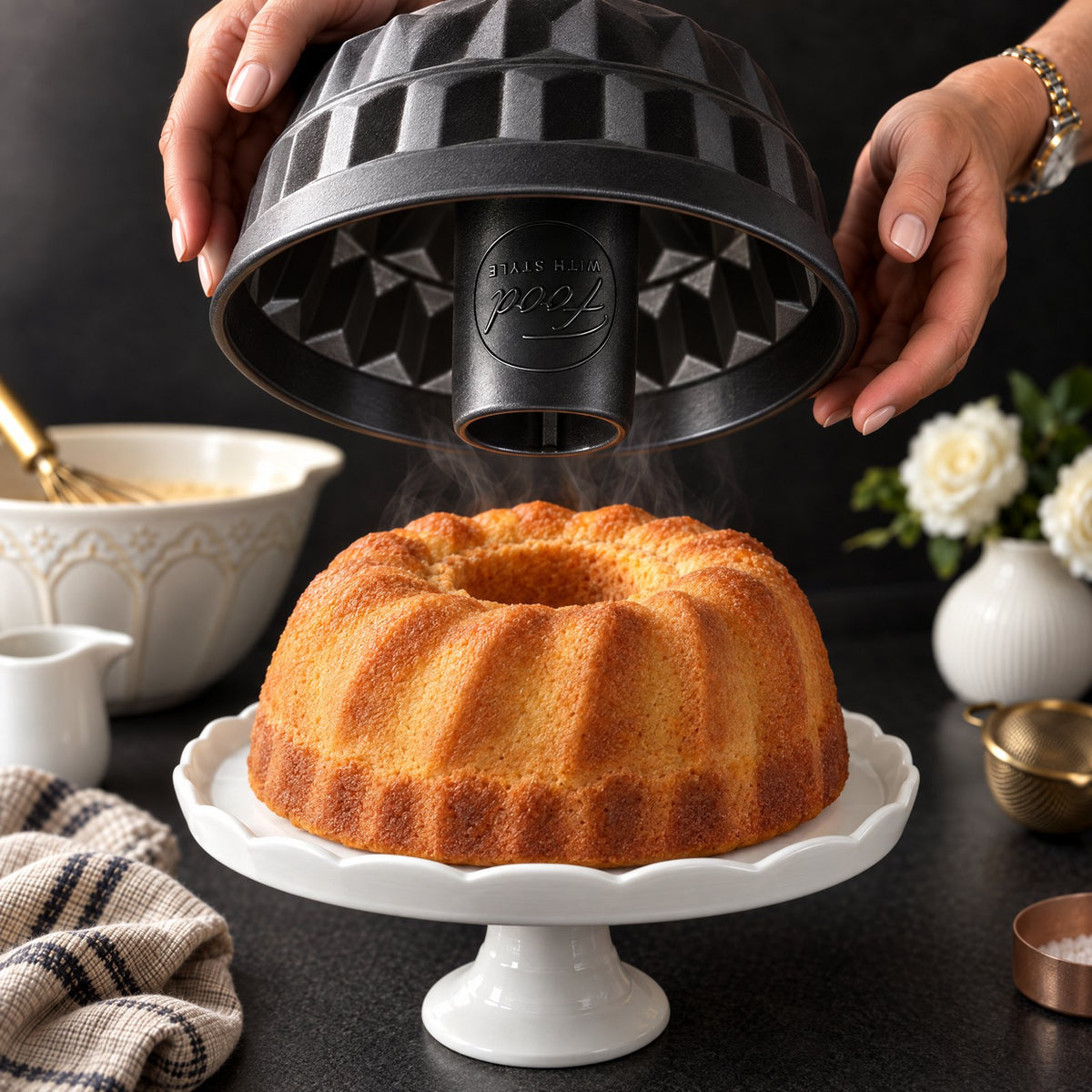

Cevizli Kesme von Food with Style, fertig angerichtet
Pastry

Cevizli Kesme

Ein klassischer türkischer Grießkuchen wie aus der Pastane - saftig, aromatisch und perfekt zum Bayram

Teilen
Backzeit 35 Minuten

Zutaten

  • Für den Sirup
  • Für den Teig
  • Für die Füllung

Zubereitung

  1. 1
    Zucker und Wasser aufkochen und 8-10 Minuten sanft köcheln lassen. Zitronensaft zugeben und den Sirup vollständig auskühlen lassen.
  2. 2
    Den Backofen auf 180°C (350°F) Ober-/Unterhitze vorheizen.
  3. 3
    Geschmolzene Butter und Zucker verrühren, dann Milch und Vanille zugeben.
  4. 4
    Den Grieß einrühren und zu einem weichen, formbaren Teig verarbeiten.
  5. 5
    Den Teig abwiegen, die Hälfte davon nehmen und mit leicht geölten Händen gleichmäßig in die Form drücken.
  6. 6
    Die gehackten Walnüsse gleichmäßig darauf verteilen.
  7. 7
    Den restlichen Teig nicht am Stück auflegen - stattdessen in kleinen Portionen gleichmäßig auf der Oberfläche verteilen. Dann mit leicht geölten Händen vorsichtig zu einer gleichmäßigen Schicht verbinden und glattstreichen.
  8. 8
    Die Oberfläche in Quadrate oder Rauten einschneiden.
  9. 9
    35-40 Minuten goldbraun backen.
  10. 10
    10 Minuten ruhen lassen, dann den kalten Sirup gleichmäßig über das heiße Gebäck gießen.
  11. 11
    Mindestens 2-3 Stunden durchziehen lassen, damit der Sirup vollständig einzieht.
  12. 12
    Mit gehackten Walnüssen bestreuen. Ein Dessert, das auf keinem Bayram-Tisch fehlen darf - traditionell, einfach und gemacht, um es mit der Familie bei einem Glas Tee zu genießen.

Video

Cevizli Kesme Questions

The most common reason is pouring warm syrup over the bake. The syrup is boiled and then cooled completely for a reason: it should meet the hot squares cold, so the semolina absorbs it slowly instead of sealing up. Also give the dough a few minutes after mixing so the semolina can drink up the butter and milk - if it still feels sandy rather than moldable, it will bake dry.

Coarse semolina works but gives a grainier, more open crumb and drinks more syrup, so expect a wetter, chewier square. Flour is not a good substitute here: with only 90 ml milk and 200 g melted butter, the dough is built around semolina's absorbency and would turn into a stiff shortbread. If coarse is all you have, let the dough rest a little longer before pressing it into the pan.

Keep it at room temperature in a covered tin or under foil, not in the fridge - cold makes the butter firm and dulls the syrup. Syrup-soaked semolina bakes hold well for several days and many people find the flavor better on day two, once the syrup has settled evenly through the layers. Don't cover it while still warm, or condensation will soften the golden top.

Yes - the syrup is the ideal make-ahead step, since it has to cool completely anyway and can be boiled hours earlier or the day before. You can also chop the walnuts, both the 160-180 g for the filling and the topping, ahead of time. The dough itself is best mixed and pressed right before baking, as the melted butter firms up on standing and makes it hard to press evenly.

The top layer. Never lay the second half of the dough on as one sheet - it drags the walnut filling around and tears. Instead place small portions evenly across the surface and press them together with lightly oiled hands, which also keeps the dough from sticking to you. Weighing the dough so both halves are truly equal makes this much easier, and score the squares before baking, not after.

köstlich, erprobt und bereit zu inspirieren

Entdecke 400+ leckere Gerichte