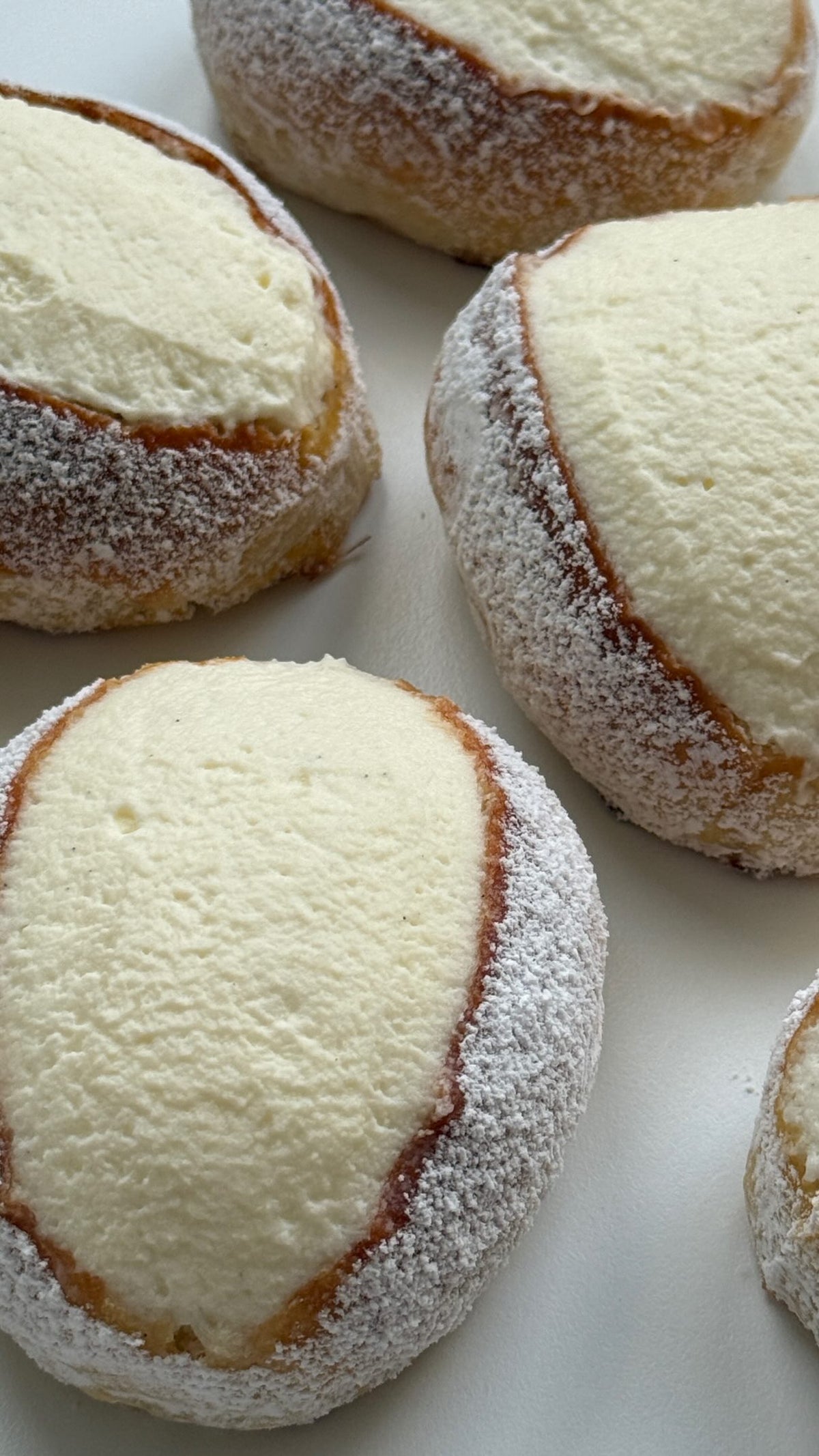
Baumstriezel (Kürtőskalács) von Food with Style, fertig angerichtet
Pastry

Baumstriezel (Kürtőskalács)

Perfekt, um den Kirmes-Geschmack von Baumstriezel als Mini-Variante nach Hause zu holen - innen weich, außen karamellisiert und wunderbar aromatisch.

Teilen
Vorbereitung 1 Stunde
Backzeit 20 Minuten

Zutaten

  • Für den Hefeteig
  • Für die Zimt-Zucker-Mischung

Zubereitung

  1. 1
    Das Mehl in eine Schüssel sieben und in der Mitte eine Mulde formen. Hefe, 1 tsp Zucker und etwas lauwarme Milch in die Mulde geben. 10 Minuten gehen lassen.
  2. 2
    Restliche Milch, Zucker, Butter, Ei und Salz zugeben und alles zu einem weichen, geschmeidigen Teig verkneten. Abgedeckt 1 Stunde gehen lassen.
  3. 3
    Den Teig auf einer leicht bemehlten Arbeitsfläche etwa 3-4 mm dick ausrollen. Lange Streifen (ca. 1,5 cm breit) abschneiden.
  4. 4
    Die Cannoli-Formen gut einfetten. Die Teigstreifen straff und leicht überlappend um jede Form wickeln.
  5. 5
    Die Mini-Baumstriezel mit zerlassener Butter bestreichen und in Zimtzucker wälzen oder großzügig damit bestreuen.
  6. 6
    Bei 180 °C (350 °F) etwa 20-25 Minuten backen, bis sie goldbraun und karamellisiert sind.
  7. 7
    Kurz abkühlen lassen, dann vorsichtig von den Formen ziehen. Nach Belieben noch einmal in Zimtzucker wälzen. Kleine, karamellisierte Mini-Baumstriezel mit knusprigem Zimtmantel - perfekt zum Kaffee, für Gäste oder einfach zwischendurch.

Video

Baumstriezel (Kürtőskalács) Questions

After the 1 hour rise, the dough should have visibly grown and feel soft and airy, springing back slowly when you press it with a finger. If your kitchen is cool it may need longer - go by the look and feel, not strictly by the clock. A dough that is still dense and firm will be hard to roll to 3-4 mm and the strips will shrink back as you wrap them.

Yes. Instant yeast can be mixed straight into the flour with the sugar and salt, so you can skip the 10-minute activation step in the well and just add the lukewarm milk with the other ingredients. For fresh yeast, crumble roughly three times the weight of the 1 tsp dry yeast into the well with a little sugar and milk and let it foam as described.

Any heatproof cylinder works as long as you grease it well, since the recipe relies on being able to slide the baked cake off. Thick wooden dowels or metal cream-horn moulds are the classic substitutes; you can also wrap sturdy aluminium foil tightly into a cylinder around a wooden spoon handle. Keep the diameter small so the 20-25 minutes at 180 °C still bake the dough through.

They are best on the day they are baked, while the caramelized cinnamon sugar is still crisp; keep them loosely covered at room temperature rather than in an airtight box, which softens the crust. The yeast dough is the part to prepare ahead - after kneading you can let it rise slowly in the fridge overnight, then bring it to room temperature before rolling. A quick few minutes in a warm oven revives leftovers before serving.

Unravelling usually means the strips were not wrapped tightly and overlapping enough, or the ends were not pressed firmly against the dough underneath before baking. Sticking almost always comes down to greasing: the molds need a generous coat, and the cakes should cool only slightly before you slide them off - fully cooled caramelized sugar glues them in place. Also press the strip ends down well so the cinnamon sugar does not run under the dough and weld it to the mold.

köstlich, erprobt und bereit zu inspirieren

Entdecke 400+ leckere Gerichte