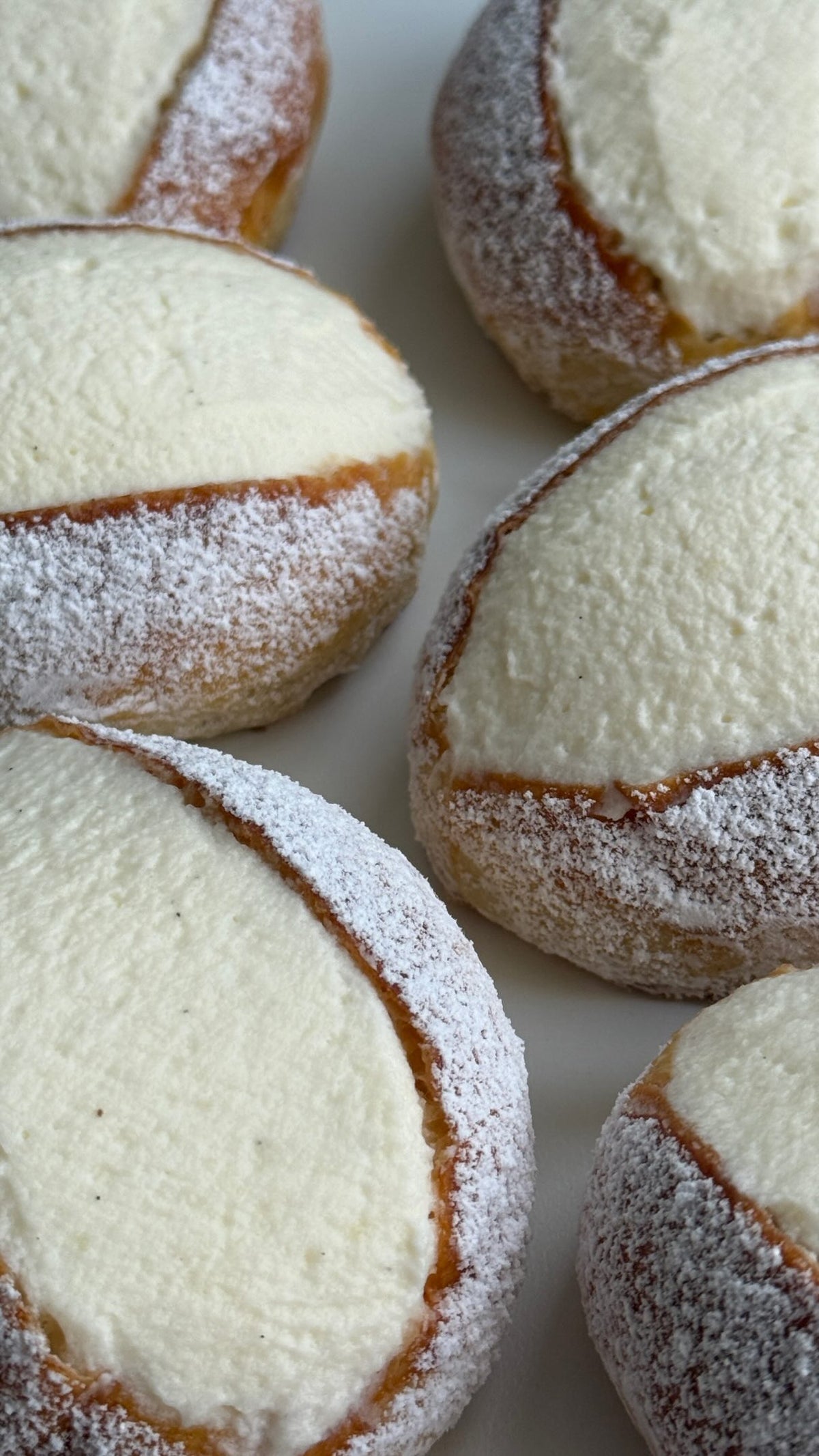


Lemon Custard Triangles von Food with Style, fertig angerichtet
Brioche

Triángulos de crema de limón

Crujientes triángulos de hojaldre rellenos de una sedosa crema de limón y vainilla: ligeros, elegantes y perfectos para el verano.

Compartir
Raciones
12 piezas
Cocción 18 minutos

Ingredientes

  • Para pincelar

Preparación

  1. 1
    Precalienta el horno a 190°C (375°F) con calor arriba y abajo. Forra una bandeja de horno con papel vegetal.
  2. 2
    Dobla la lámina de masa por la mitad y presiona con suavidad para que se una. Córtala en 12 triángulos.
  3. 3
    Pincela con la mezcla de yema y leche, espolvorea con azúcar perlado y hornea de 18-22 minutos hasta que estén dorados. Deja enfriar por completo.
  4. 4
    Frota el azúcar con la ralladura de limón. Mézclalo con las yemas, la maicena, las semillas de la vaina de vainilla y un poco de la leche hasta obtener una mezcla lisa.
  5. 5
    Calienta el resto de la leche junto con la vaina de vainilla raspada. Retira la vaina, incorpora la mezcla de yemas con unas varillas y cocina sin dejar de remover hasta que espese. Añade el zumo de limón y la mantequilla y remueve. Cubre la superficie con film transparente a piel y deja enfriar por completo.
  6. 6
    Remueve brevemente la crema fría hasta que quede lisa y pásala a una manga pastelera.
  7. 7
    Corta los triángulos por la mitad en horizontal, rellénalos con la crema de limón y vainilla, coloca de nuevo las tapas y espolvorea ligeramente con azúcar glas.

Video

Lemon Custard Triangles Questions

Lumps usually mean the egg yolk mixture wasn't fully smooth before it went into the hot milk, or the pan wasn't stirred constantly while thickening. Whisk the yolks, sugar, cornstarch and vanilla seeds with a little cold milk until completely smooth first, then whisk the hot milk in. If lumps still appear, push the finished custard through a fine sieve while it's warm, then stir in the lemon juice and butter.

Yes, puff pastry works and gives a crisper, flakier triangle, though it will be less soft and bready than croissant dough. Keep the same treatment: fold the sheet in half, press gently, cut 12 triangles, brush with the yolk-milk wash and add pearl sugar. Watch the oven closely, since puff pastry can colour faster than the 18-22 minutes given here.

The custard is the best make-ahead part: cook it a day early, press cling film directly onto the surface so no skin forms, and chill it. The baked triangles are best on the day they're baked, but they can be baked a few hours ahead and left uncovered at room temperature so they stay crisp. Only slice, fill and dust with powdered sugar shortly before serving.

Because they contain a milk-and-egg custard, filled triangles belong in the fridge in a covered container and are best eaten the same day. The pastry softens as it sits against the custard, so texture suffers by day two even if the flavour is fine. Let them stand a few minutes at room temperature before eating and dust with fresh powdered sugar, since the first dusting dissolves in the fridge.

Flat triangles usually come from dough that got warm and soft before baking - chill the cut triangles briefly if your kitchen is hot, and don't press the folded sheet harder than needed to join the layers. Leaking is a sign the custard was still too soft or the pastry was overfilled, so chill the custard fully until it's pipeable and add it in a restrained line rather than packing it in. Piping into the horizontally sliced halves rather than into a cut pocket also keeps the filling contained.

deliciosas, probadas y listas para inspirar
Explora Más de 400 Recetas Deliciosas