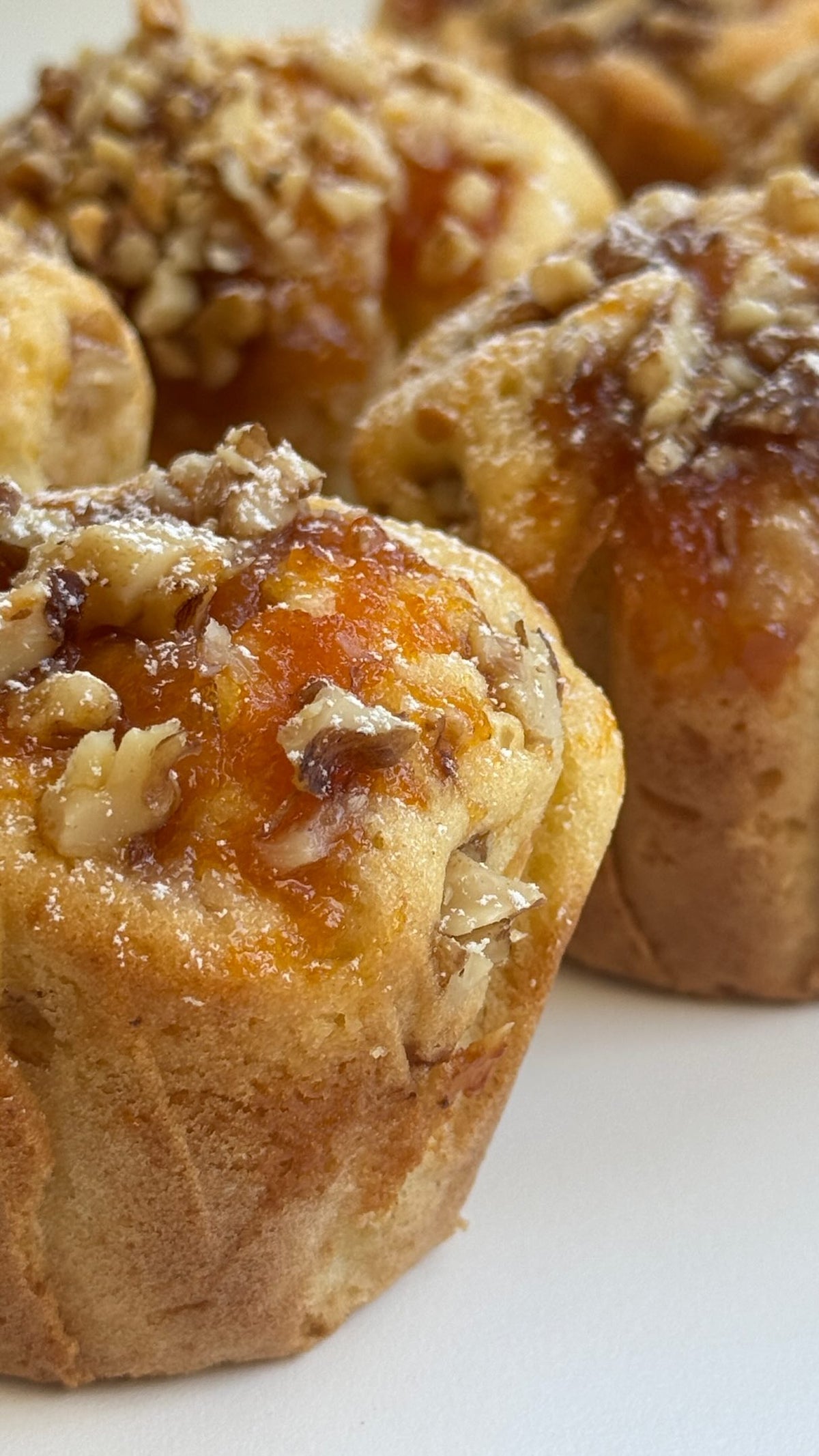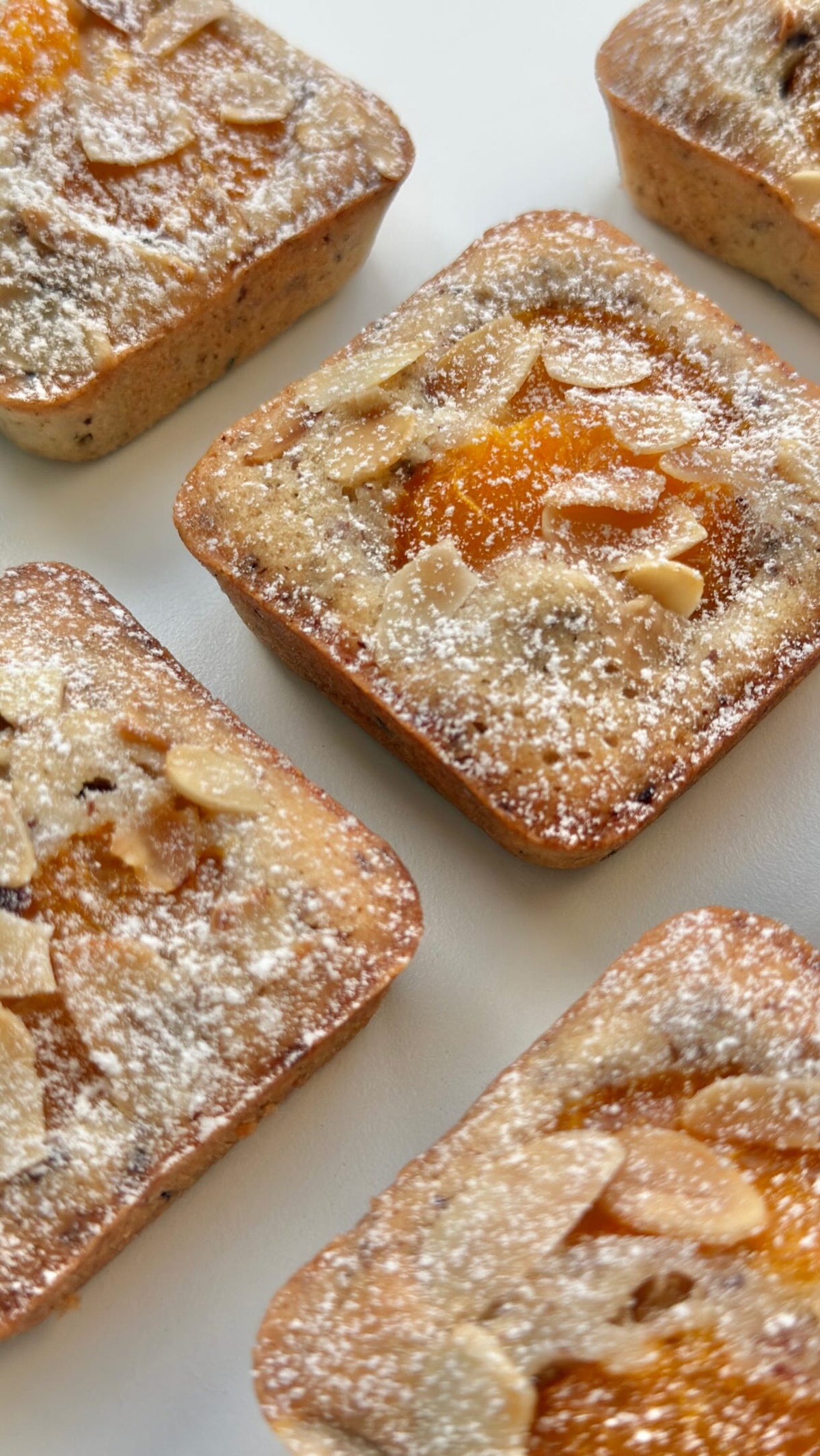


Peach Tartlets von Food with Style, fertig angerichtet
Pastry

Tartaletas de melocotón

Delicadas tartaletas con melocotones frescos: un capricho que combina ligereza y una dulzura suave.

Compartir
Raciones
6 piezas
Cocción 15 minutos

Ingredientes

  • Para la base de masa quebrada
  • Para la capa de mermelada de melocotón
  • Para la crema pastelera
  • Para la decoración

Preparación

  1. 1
    Mezcla la harina, la sal y el azúcar. Añade la mantequilla y trabájala con los dedos hasta obtener una textura de migas. Incorpora la yema y el agua y amasa rápidamente hasta formar una masa. Envuélvela en film transparente y déjala reposar 30 minutos en la nevera.
  2. 2
    Estira la masa a 3 mm de grosor, corta círculos y forra los moldes de tartaleta (Ø 8 cm, mejor si son desmoldables). Pincha las bases, cúbrelas con papel de horno y legumbres secas. Hornea a 180 °C / 350 °F (calor arriba y abajo) durante 15 minutos, retira las legumbres y hornea otros 15 minutos hasta que estén doradas. Deja enfriar por completo.
  3. 3
    Cuece a fuego suave los dados de melocotón con el azúcar y el zumo de limón durante 10 minutos, hasta que estén tiernos. Disuelve la maicena en 1 tbsp de agua, incorpórala y da un hervor breve. Deja enfriar y reparte la mezcla sobre las bases.
  4. 4
    Mezcla ⅓ de la leche con la maicena, el azúcar, las yemas y la vainilla hasta que no queden grumos. Calienta el resto de la leche, incorpora la mezcla con unas varillas y cuece sin dejar de remover hasta que espese. Pasa la crema a un bol, cúbrela a piel con film transparente y deja enfriar. Repártela sobre la capa de mermelada.
  5. 5
    Escurre las láminas de melocotón del agua con limón, sécalas ligeramente con papel de cocina y colócalas encima en forma de abanico. Servidas bien frías, estas tartaletas son un placer ligero y afrutado.

Video

Peach Tartlets Questions

Shrinking usually means the dough was worked too much or was still warm when it went into the oven. Knead only until the dough just comes together after adding the egg yolk and water, and keep the full 30 minutes of chilling before rolling. If your kitchen is warm, chill the lined pans again for 15 minutes before you add the parchment and baking beans.

For the jam layer, yes - canned or thawed frozen peaches work, but drain them well and cut the sugar back a little, since canned fruit in syrup is already sweet. They may release more liquid, so simmer a bit longer before you stir in the cornstarch slurry so the jam still sets. For the fanned topping, stick with a firm fresh peach; softer preserved slices won't hold the neat fan shape.

Because of the milk-and-egg-yolk custard, they belong in the fridge, not on the counter. Keep them chilled and loosely covered, and enjoy them within a day or two - the moist jam and custard will gradually soften the crisp shortcrust base. They are meant to be served chilled anyway, so take them straight from the fridge to the table.

The dough, the peach jam and the custard can all be made a day in advance. Wrap the dough in plastic and refrigerate it, and cool the jam and the custard fully in the fridge with plastic wrap pressed onto the custard's surface so it doesn't form a skin. Blind-bake the shells ahead too, then fill with jam and custard and fan out the fresh peach slices shortly before serving so the pastry stays crisp.

Lumps come from adding the cornstarch mixture to hot milk without whisking hard enough, or from letting it catch on the bottom of the pan. Whisk the starch slurry into the hot milk vigorously and keep stirring constantly as it thickens, then push the finished cream through a sieve if lumps do appear. If it stays runny, it simply hasn't boiled long enough - the cornstarch only sets once the cream bubbles and visibly thickens.

deliciosas, probadas y listas para inspirar
Explora Más de 400 Recetas Deliciosas