








Raciones
Unidades
Cocción
12 minutos
Ingredientes
Preparación
-
1
Mezcla bien el azúcar con la ralladura de limón en un bol, frotando hasta que se integren los aromas.

-
2
Incorpora la almendra molida y vuelve a mezclar hasta que quede todo bien integrado.

-
3
Añade poco a poco las claras ligeramente batidas y el zumo de limón, mezclando con movimientos envolventes hasta obtener una masa blanda y algo pegajosa. Si te queda demasiado suelta, agrega un poco más de almendra molida, poco a poco, hasta que puedas manejarla.

-
4
Con las manos ligeramente humedecidas, forma porciones pequeñas de masa (de unos 25 g cada una) y dales forma de rectángulo un poco alargado.

-
5
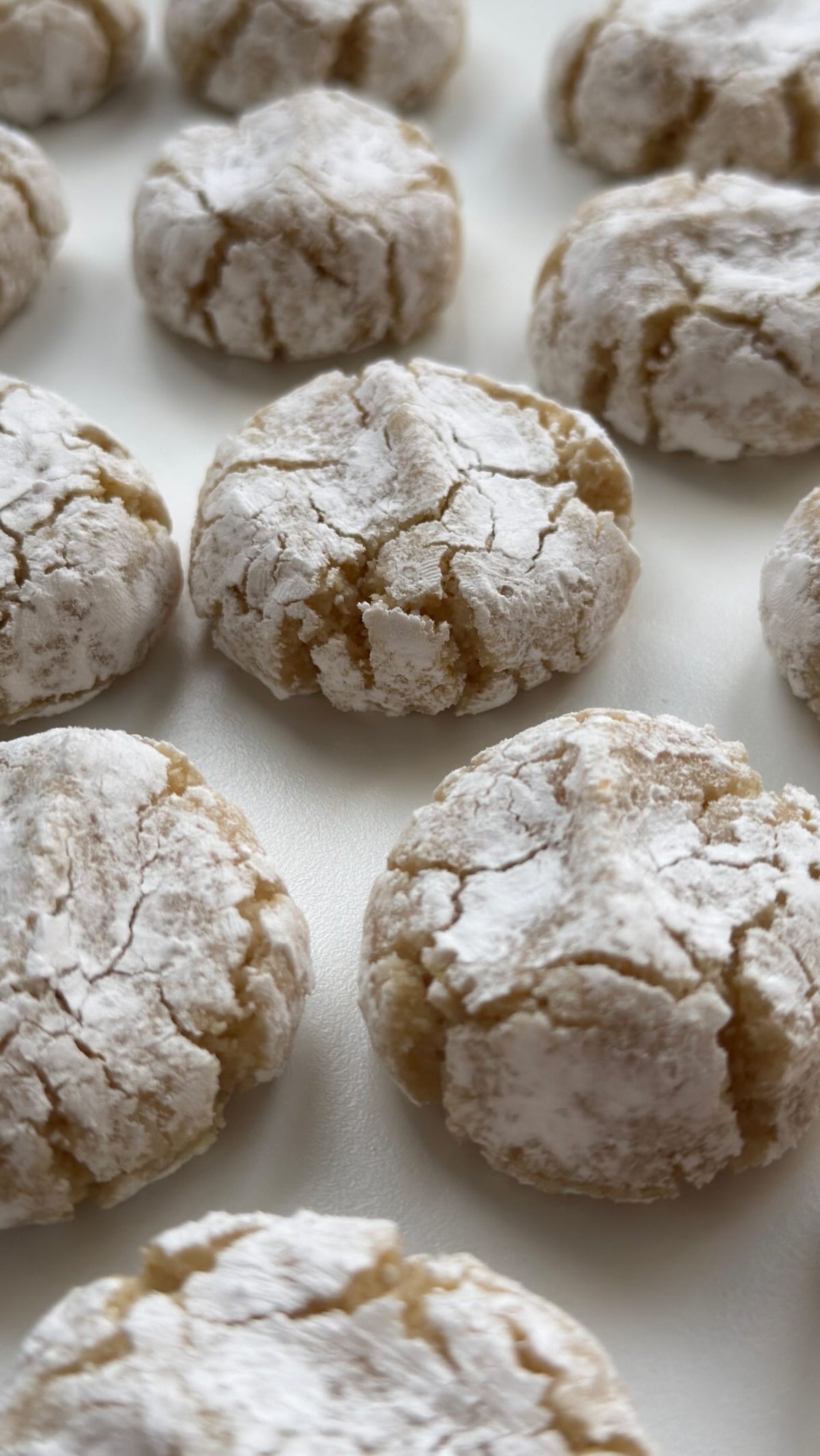
Reboza cada pieza ligeramente en azúcar glas y colócalas en una bandeja de horno forrada con papel de hornear. Presiona suavemente el centro con tres dedos para conseguir la forma característica de los caprilù.

-
6
Hornea a 170 °C (340 °F) con el horno precalentado durante 12-15 minutos. Las pastas deben quedar pálidas, sin dorarse demasiado.

-
7
Deja que se enfríen por completo antes de manipularlas, porque recién salidas del horno están muy blandas y se asientan al enfriar. Finamente crujientes por fuera, tiernas y jugosas por dentro, con un aroma fresco a limón: así saben los caprilù en Italia.

Video

Food with Style Baking Club
Hazlo paso a paso con vídeo
El módulo del curso que encaja: Masa de cookies
- Curso de repostería con 9 módulos y 34 videolecciones
- Chat 1:1 con la Baking Chef de Food with Style
- Chat de la Community y e-book con 100 recetas
Desde 14,90 € al mes, te das de baja mes a mes
1 año incluido con el Set de repostería + curso & Baking Club
FAQ
Preguntas sobre los Caprilù al limone
deliciosas, probadas y listas para inspirar