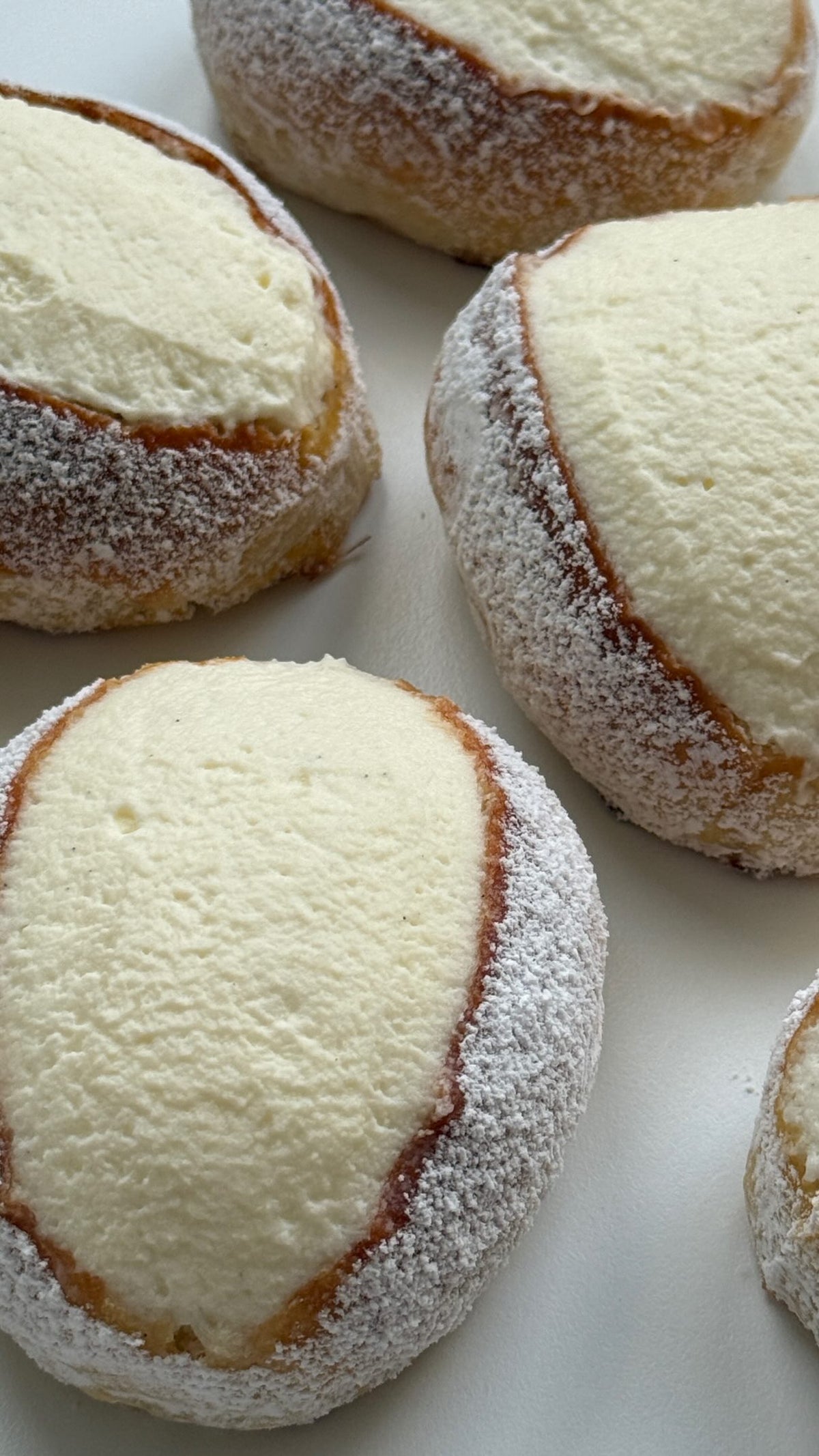

Bambas de Nata von Food with Style, fertig angerichtet
Pastry

Bambas de Nata

Un clásico de la pastelería española: bollos suaves de masa fermentada rellenos de nata montada ligeramente azucarada. Son un capricho sencillo y muy querido,...

Compartir
Raciones
9 piezas
Cocción 15 minutos

Ingredientes

  • Para la masa fermentada
  • Para el relleno de nata
  • Para terminar

Preparación

  1. 1
    Tamiza la harina en un bol y haz un hueco en el centro. Añade la levadura, 1 cucharadita del azúcar y un poco de la leche templada. Deja reposar de 8-10 minutos, hasta que la levadura haga espuma.
  2. 2
    Incorpora el resto del azúcar, la sal, el huevo, el extracto de vainilla y la leche restante. Amasa con el gancho amasador hasta obtener una masa lisa.
  3. 3
    Añade la mantequilla blanda al final y sigue amasando de 8-10 minutos, hasta que la masa quede suave, elástica y se despegue de las paredes del bol. Tapa y deja levar unos 60 minutos.
  4. 4
    Divide la masa en 9 porciones iguales (unos 50 g cada una), boléalas hasta que queden lisas y colócalas en una bandeja forrada con papel de hornear. Tapa y deja levar otros 20-30 minutos. Pincela la superficie con un poco de nata.
  5. 5
    Hornea en el horno precalentado a 180 °C / 350 °F (calor arriba y abajo) de 15-18 minutos, hasta que estén ligeramente doradas. Deja enfriar por completo.
  6. 6
    Monta la nata bien fría con el azúcar glas y la vainilla hasta que quede firme.
  7. 7
    Abre las bambas por la mitad en horizontal, rellénalas generosamente con la nata (a cuchara o con manga pastelera), vuelve a poner la tapa y espolvorea abundante azúcar glas. Tiernas, esponjosas y maravillosamente sencillas: un clásico relleno de nata que nunca decepciona.

Video

Bambas de Nata Questions

Yes. Instant yeast works in the same amount and can be mixed straight into the flour, so you can skip the 8-10 minute proofing step with the milk and sugar. For fresh yeast use about 21 g, crumbled into the lukewarm milk with the teaspoon of sugar, and let it foam as described. In all cases the milk should only be lukewarm, since hot milk kills the yeast.

This dough is enriched with egg and 40 g butter, so it is meant to feel soft and slightly tacky at first. The butter is added last on purpose, and it takes the full 8-10 minutes of kneading before the gluten develops enough for the dough to come together and clear the sides. Resist adding lots of extra flour - a tablespoon at most - because more flour makes the baked Bambas dry instead of airy.

The buns themselves are best baked the day you fill them, but you can knead the dough in the evening and let it do its first rise slowly in the fridge overnight, then shape, let it come to room temperature and finish the second rise the next morning. You can also bake the buns a day ahead and store them airtight once fully cooled. Whip the cream only shortly before filling, and always fill the Bambas after they have cooled completely, or the cream will melt.

Once filled with whipped cream they need to go in the fridge and are really best eaten the same day, since the moist cream softens the crumb over time. Store them in a covered container so they do not take on fridge smells, and dust with the finishing powdered sugar just before serving because it dissolves on standing. Unfilled buns keep better at room temperature in an airtight container, and they also freeze well - thaw, then split and fill.

The cream must be properly cold, straight from the fridge, and it helps to chill the bowl and beaters too, because warm cream will not whip stiff. Whip it just until stiff peaks form and stop there - beating past that point makes it grainy and starts turning it to butter. If you want the filling to stay piped-neat for several hours, sweeten toward the higher end of the 1-2 tablespoons of powdered sugar or use a cream stabilizer.

deliciosas, probadas y listas para inspirar
Explora Más de 400 Recetas Deliciosas