











Quantità
Unità
Preparazione
1 ora
Cottura
10 minuti
Ingredienti
- Per il pan di Spagna
- Per la crema pasticcera
- Per spolverizzare
Preparazione
-
1
Scalda il forno a 180 °C / 350 °F (statico). Rivesti una teglia (30 × 40 cm / 12 × 16 in) con carta da forno.

-
2
Metti le uova e il sale in una ciotola e monta per 1 minuto. Unisci lo zucchero poco alla volta e continua a montare per 5 minuti, fino a ottenere un composto chiaro e spumoso. Incorpora la vaniglia.

-
3
Mescola farina, amido di mais e lievito per dolci. Setacciali sul composto di uova e incorporali delicatamente, fino a ottenere un impasto liscio e soffice.

-
4
Stendi l'impasto sulla teglia e cuoci per 10-12 minuti, finché è dorato. Lascia intiepidire, poi taglia il pan di Spagna nel senso della lunghezza in due strati uguali.

-
5
Scalda 300 ml di latte con la vaniglia. In una ciotola sbatti i tuorli, lo zucchero, l'amido di mais e i restanti 100 ml di latte. Versa a filo il latte caldo, riporta tutto nel pentolino e cuoci finché la crema si addensa. Copri con pellicola a contatto e lascia raffreddare completamente.

-
6
Monta il burro morbido finché diventa cremoso, poi aggiungi la crema fredda un cucchiaio alla volta, fino a ottenere un composto liscio. Trasferisci in una sac à poche.

-
7
Distribuisci la crema con la sac à poche sul primo strato di pan di Spagna, copri con il secondo strato e premi leggermente.

-
8
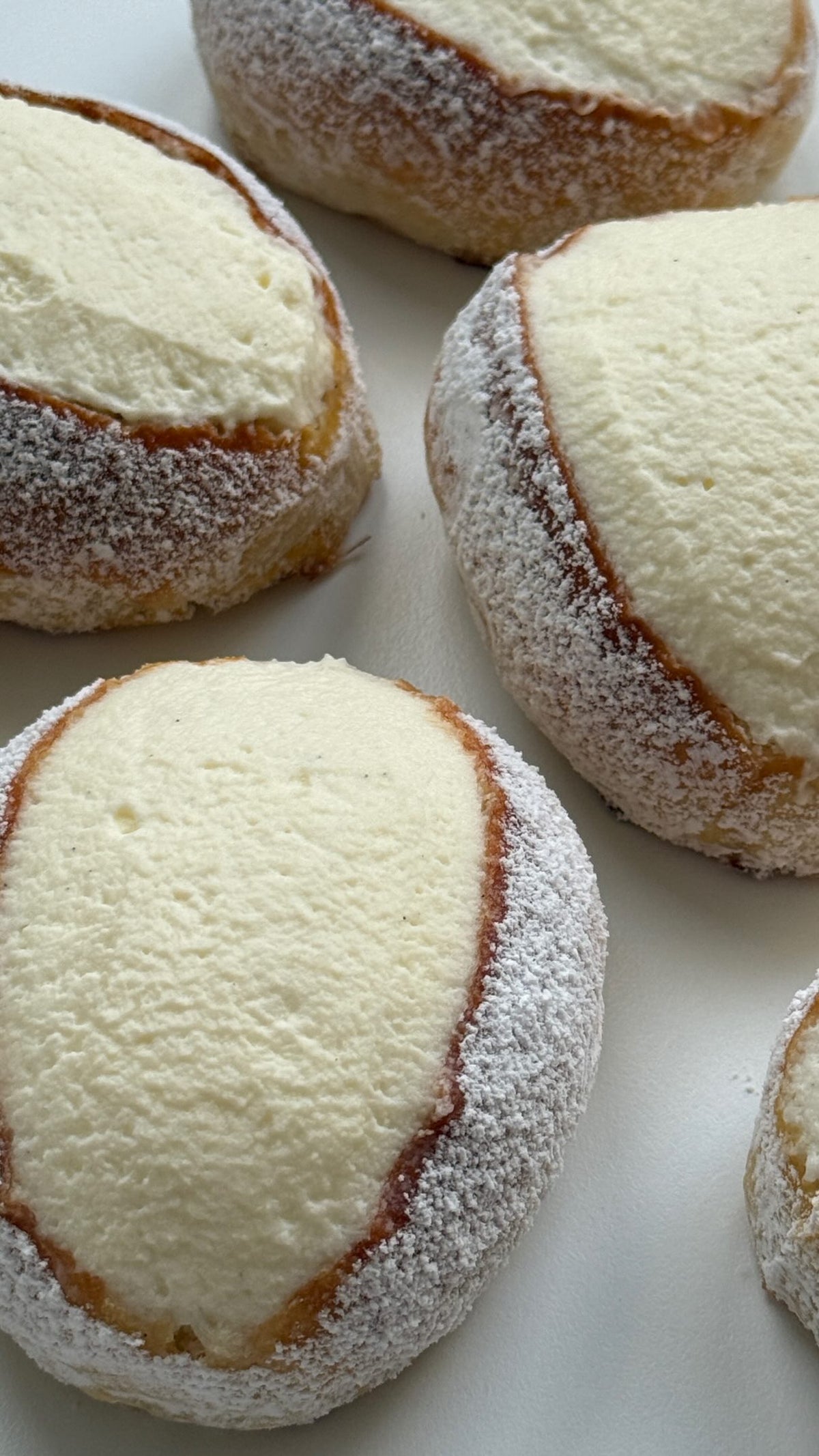
Spolverizza con zucchero a velo, taglia a fette e lascia in frigorifero almeno 1 ora prima di servire. Leggere, cremose e perfettamente equilibrate - fette di pasticceria eleganti da innamorarsene

Video

Food with Style Baking Club
Preparalo passo dopo passo in video
Il modulo del corso giusto: Impasto per torte
- Corso di pasticceria con 9 moduli e 34 videolezioni
- Chat 1:1 con la Baking Chef di Food with Style
- Chat della Community ed e-book con 100 ricette
Da 14,90 € al mese, disdici quando vuoi ogni mese
FAQ
Domande sulle fette alla crema di vaniglia
delizioso, testato e pronto a ispirare