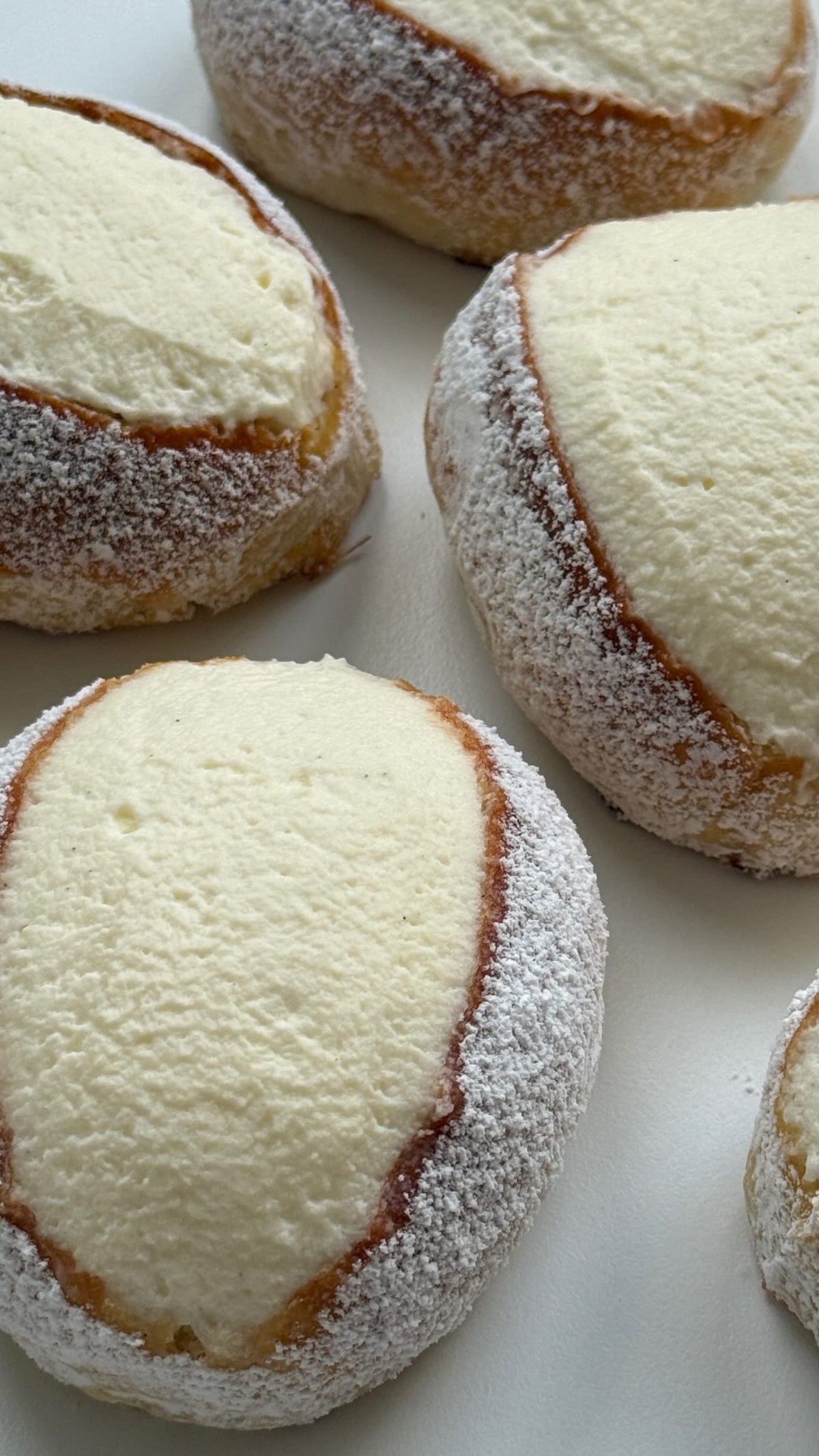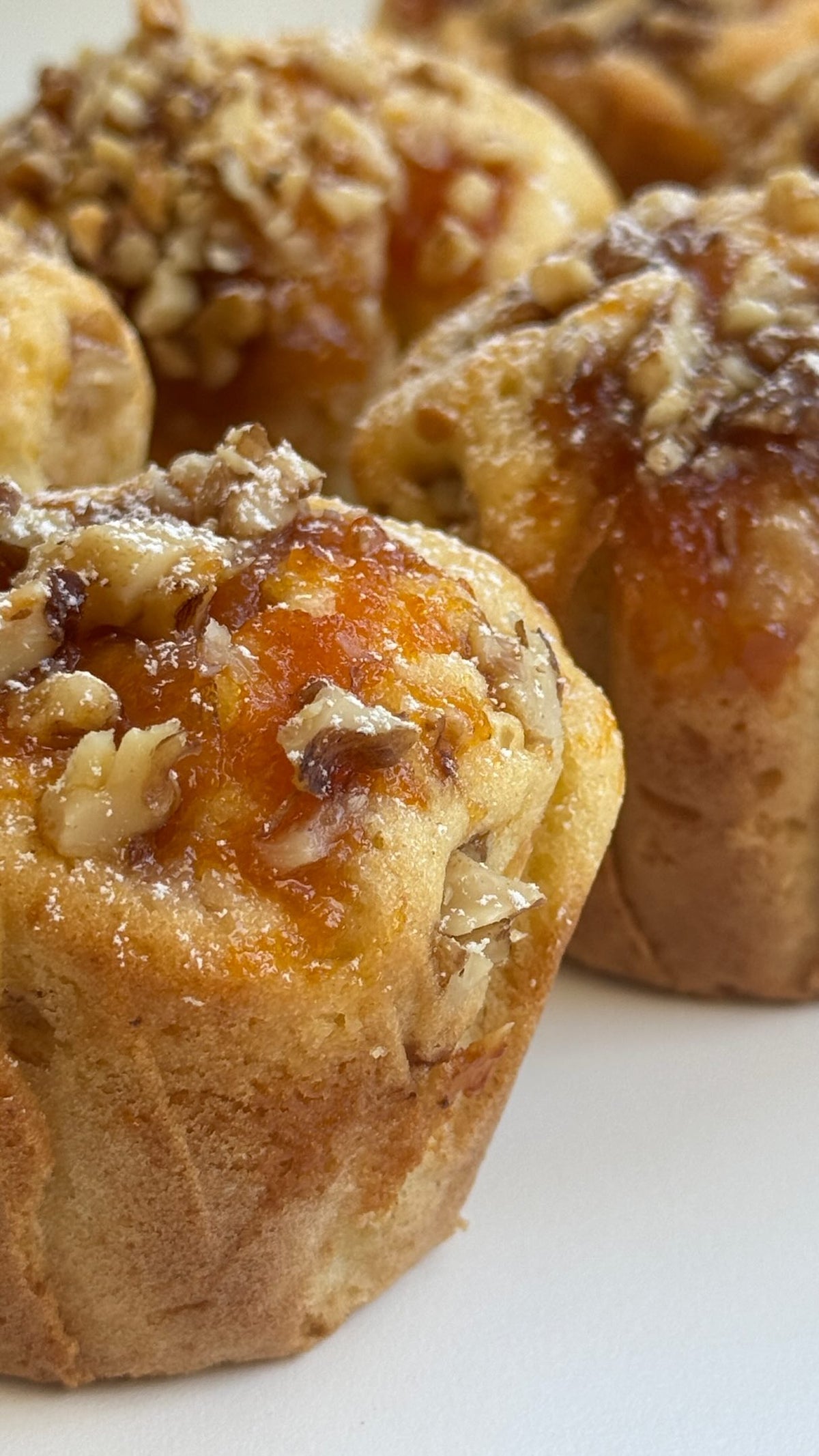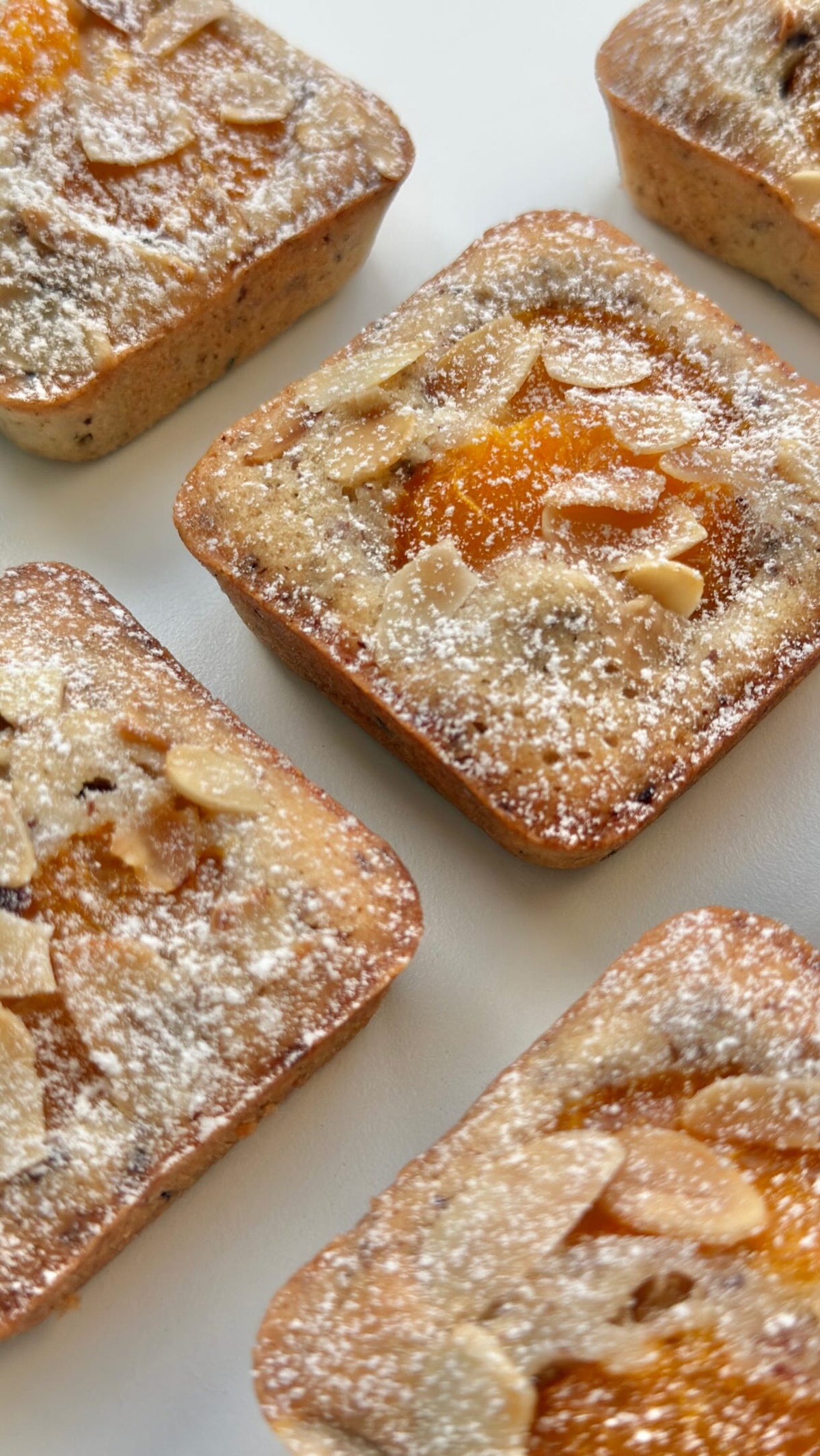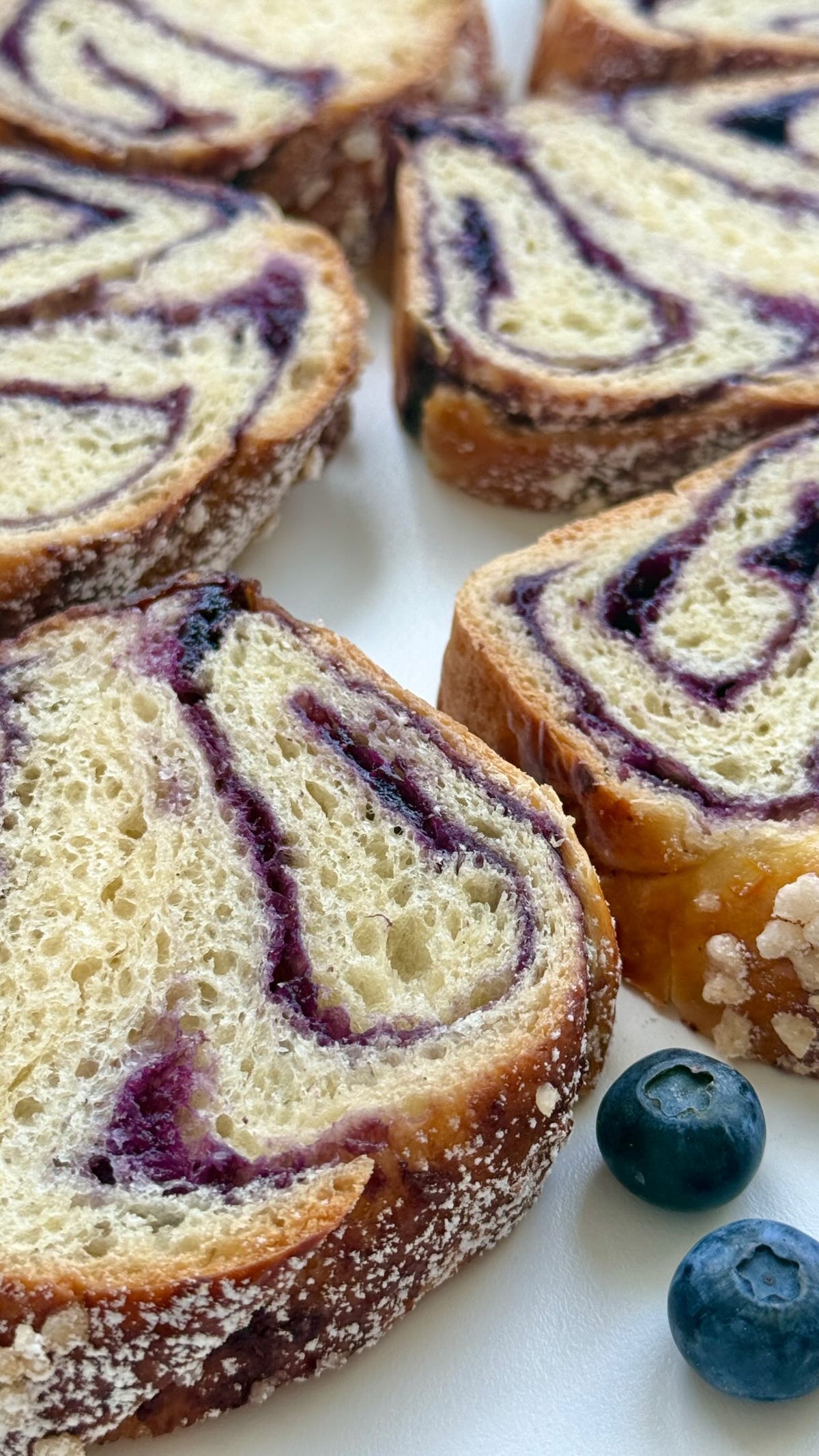




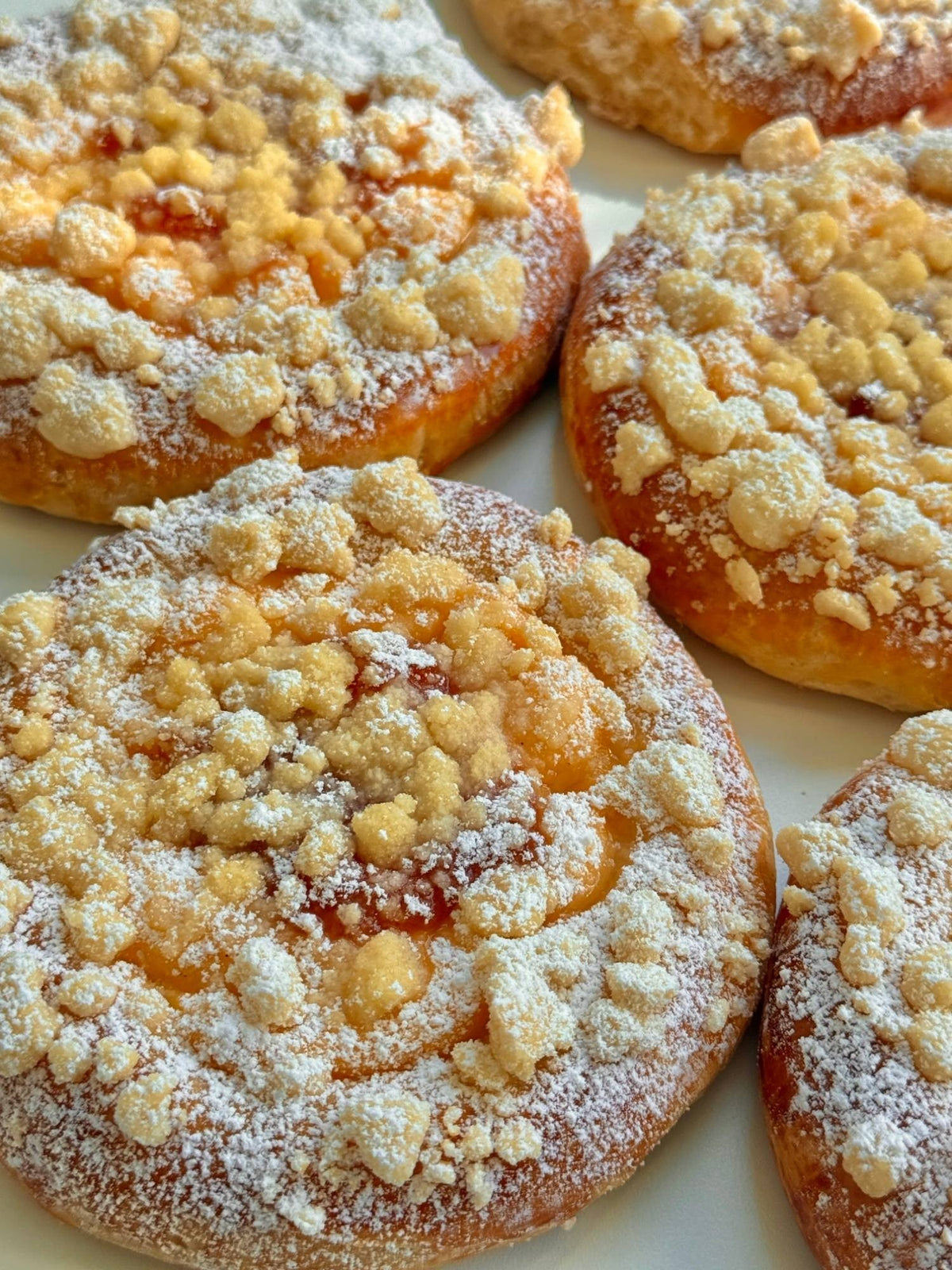
Melonpan von Food with Style, fertig angerichtet
Pastry

Melonpan

Il melonpan è un soffice pane dolce giapponese ricoperto da una croccante crosta di pasta frolla. Appena sfornato è morbido e soffice all'interno e...

Condividi
Porzioni
6 porzioni
Preparazione 1 ora
Cottura 18 minuti

Ingredienti

  • Per l'impasto lievitato
  • Per la pasta frolla (copertura)

Preparazione

  1. 1
    Setacciate la farina per l'impasto lievitato in una ciotola capiente. Fate una fontana al centro, unite il lievito, un po' di zucchero e parte del latte tiepido. Mescolate delicatamente e lasciate riposare per circa 10 minuti, finché il composto non si attiva e forma delle bollicine.
  2. 2
    Aggiungete lo zucchero rimasto, il sale, il resto del latte, il tuorlo e il burro morbido. Impastate fino a ottenere un impasto morbido e leggermente appiccicoso (circa 8-10 minuti). Coprite e lasciate lievitare in un luogo tiepido per circa 1 ora, o finché non raddoppia di volume.
  3. 3
    Nel frattempo preparate la pasta frolla: mescolate la farina, lo zucchero e l'estratto di vaniglia. Unite il burro morbido e 1 tbsp di latte e lavorate brevemente fino a ottenere un impasto liscio. Se necessario aggiungete ancora un po' di latte. Avvolgete nella pellicola e mettete in frigorifero.
  4. 4
    Dividete l'impasto lievitato in 6 parti uguali e formate delle palline. Dividete la pasta frolla in 6 pezzi e stendete ognuno in un disco sottile (se serve, infarinate leggermente).
  5. 5
    Rivestite ogni pallina di impasto con un disco di frolla, come una calotta, senza però arrivare fino alla base. Incidete la superficie a losanghe con un coltello affilato e spolverate con zucchero semolato.
  6. 6
    Lasciate riposare i melonpan altri 30 minuti, coperti.
  7. 7
    Cuocete in forno preriscaldato a 180 °C (350 °F) statico per circa 18-20 minuti, finché non sono leggermente dorati. Non cuoceteli troppo: devono restare morbidi. I melonpan danno il meglio appena sfornati, con la crosta croccante e il cuore morbido. Se ne avanzano, basta scaldarli brevemente e il giorno dopo saranno ancora ottimi.

Video

Melonpan Questions

The topping only has 90 g flour, 40 g sugar, 30 g butter and 1-2 tbsp milk, so it is a stiff dough that needs the butter to be genuinely soft. If it crumbles, knead in the second tablespoon of milk a little at a time until it comes together smoothly. Roll the circles between two sheets of parchment or on a lightly floured surface, and if the dough warms up too much and tears, chill it briefly before shaping.

Fresh yeast works if you crumble it into the well with the sugar and lukewarm milk instead of the 1 tsp instant yeast, and let it stand until it foams before mixing in the rest. For the 100 ml milk in the dough and the 1-2 tbsp in the topping, an unsweetened plant milk works fine - the milk mainly supplies liquid and a little richness. Keep the butter soft in both doughs, since the texture of the yeast dough and the cookie crust depends on it being workable rather than melted.

Let the buns cool completely before storing, otherwise steam from the soft yeast dough softens the sugar-sprinkled crust from underneath. Keep them at room temperature in a loosely covered container or paper bag rather than an airtight box, and eat them within a day or two. To revive the crust, warm them for a few minutes in an oven at the baking temperature of 180 °C (350 °F).

Yes - the cookie dough is the easiest part to make ahead, since it keeps well wrapped in the fridge; just let it soften slightly before rolling it into circles. The yeast dough can also do its first rise slowly in the fridge overnight instead of at room temperature, then be divided into 6 balls the next morning. Either way, keep the final 30-minute rest after topping the balls, since that is what gives the buns their lift in the oven.

The recipe has you place the cookie circle like a cap that does not reach all the way to the bottom, which leaves room for the yeast dough to expand upward without pushing the crust off. If the circles are rolled too thin they tear apart as the bun rises, and if they are wrapped too far down they can slip. Score the criss-cross pattern with a sharp knife so the crust has defined lines to split along, and press the topping gently onto the ball so it sticks before the final 30-minute rest.

delizioso, testato e pronto a ispirare
Esplora oltre 400 Ricette Gustose