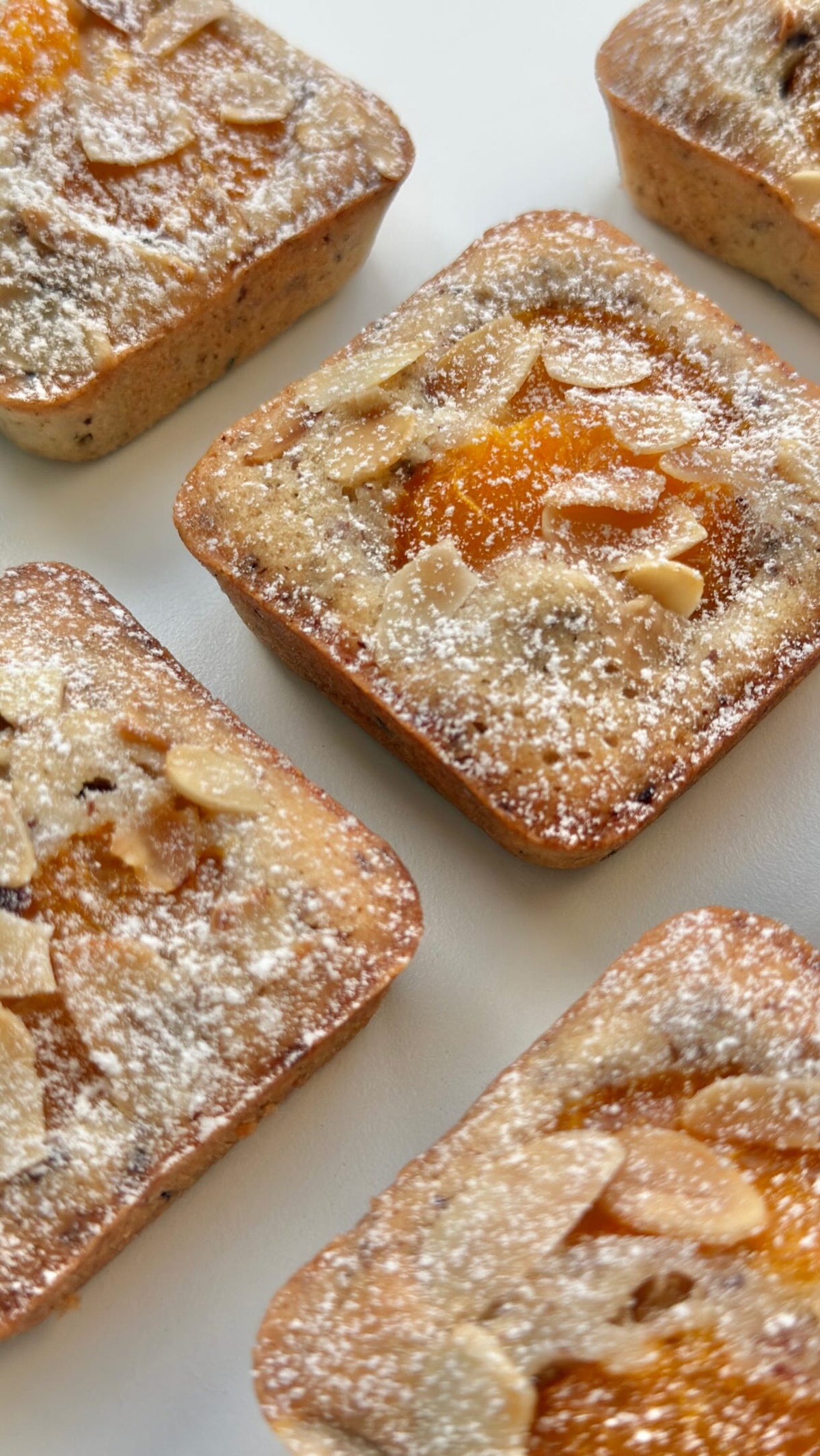

Peach Tartlets von Food with Style, fertig angerichtet
Pastry

Tartelettes aux pêches

De délicates tartelettes aux pêches fraîches - une gourmandise qui allie légèreté et douceur subtile.

Partager
Portions
6 pièces
Cuisson 15 minutes

Ingrédients

  • Pour la pâte sablée
  • Pour la couche de confiture de pêches
  • Pour la crème pâtissière
  • Pour la finition

Préparation

  1. 1
    Mélangez la farine, le sel et le sucre. Ajoutez le beurre et sablez la pâte du bout des doigts. Incorporez le jaune d'œuf et l'eau, puis pétrissez rapidement pour former une boule. Filmez et laissez reposer 30 minutes au réfrigérateur.
  2. 2
    Étalez la pâte sur 3 mm d'épaisseur, découpez des disques et foncez les moules à tartelettes (Ø 8 cm, de préférence à fond amovible). Piquez les fonds, recouvrez de papier cuisson et de billes de cuisson. Enfournez à 180 °C / 350 °F (chaleur voûte et sole) pendant 15 minutes, retirez les billes et poursuivez la cuisson 15 minutes jusqu'à ce que les fonds soient dorés. Laissez refroidir complètement.
  3. 3
    Faites compoter les dés de pêche avec le sucre et le jus de citron 10 minutes, jusqu'à ce qu'ils soient tendres. Délayez la maïzena dans 1 tbsp d'eau, incorporez-la et donnez un bref bouillon. Laissez refroidir, puis répartissez sur les fonds de tartelettes.
  4. 4
    Délayez ⅓ du lait avec la maïzena, le sucre, les jaunes d'œufs et la vanille jusqu'à obtenir un mélange lisse. Faites chauffer le reste du lait, versez-y la préparation en fouettant et faites épaissir sans cesser de remuer. Débarrassez dans un saladier, filmez au contact et laissez refroidir. Étalez sur la couche de confiture.
  5. 5
    Égouttez les tranches de pêche de l'eau citronnée, épongez-les légèrement et disposez-les en rosace sur le dessus. Servies bien fraîches, ces tartelettes sont un délice léger et fruité.

Video

Peach Tartlets Questions

Shrinking usually means the dough was worked too much or was still warm when it went into the oven. Knead only until the dough just comes together after adding the egg yolk and water, and keep the full 30 minutes of chilling before rolling. If your kitchen is warm, chill the lined pans again for 15 minutes before you add the parchment and baking beans.

For the jam layer, yes - canned or thawed frozen peaches work, but drain them well and cut the sugar back a little, since canned fruit in syrup is already sweet. They may release more liquid, so simmer a bit longer before you stir in the cornstarch slurry so the jam still sets. For the fanned topping, stick with a firm fresh peach; softer preserved slices won't hold the neat fan shape.

Because of the milk-and-egg-yolk custard, they belong in the fridge, not on the counter. Keep them chilled and loosely covered, and enjoy them within a day or two - the moist jam and custard will gradually soften the crisp shortcrust base. They are meant to be served chilled anyway, so take them straight from the fridge to the table.

The dough, the peach jam and the custard can all be made a day in advance. Wrap the dough in plastic and refrigerate it, and cool the jam and the custard fully in the fridge with plastic wrap pressed onto the custard's surface so it doesn't form a skin. Blind-bake the shells ahead too, then fill with jam and custard and fan out the fresh peach slices shortly before serving so the pastry stays crisp.

Lumps come from adding the cornstarch mixture to hot milk without whisking hard enough, or from letting it catch on the bottom of the pan. Whisk the starch slurry into the hot milk vigorously and keep stirring constantly as it thickens, then push the finished cream through a sieve if lumps do appear. If it stays runny, it simply hasn't boiled long enough - the cornstarch only sets once the cream bubbles and visibly thickens.

délicieux, testé et prêt à inspirer
Explorez plus de 400 Recettes Savoureuses