






Moule
cm
cm
Unités
Cuisson
50 minutes
Ingrédients
- Pour la pâte
- Pour l'appareil

Cette recette réussit parfaitement dans notre
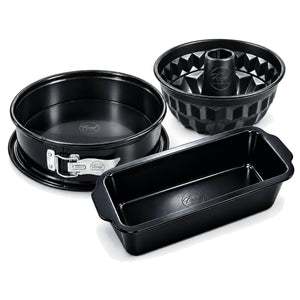
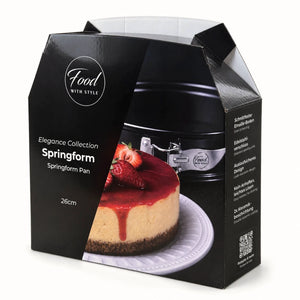
Moule à charnière Ø 26 cm 49,90 €ou en Coffret pâtisserie + cours & E-book pour 89,90 €Préparation
-
1
Préchauffer le four à 160°C (320°F). Beurrer et fariner un moule de 20 cm de diamètre.

-
2
Pour la pâte : pétrir la farine, le beurre, le sucre, l'œuf et une pincée de sel jusqu'à obtenir une pâte homogène. Foncer le moule avec la pâte en remontant bien sur les bords (environ 4,5 cm de haut). Piquer le fond à la fourchette. Réserver au réfrigérateur environ 30 minutes.

-
3
Pour l'appareil : dans un saladier, mélanger le fromage blanc, le sucre, les œufs, la préparation pour flan, le jus et le zeste de citron jusqu'à obtenir une préparation lisse. Dans un autre saladier, monter la crème en chantilly ferme, puis l'incorporer délicatement à l'appareil au fromage blanc.

-
4
Astuces pour éviter que le cheesecake ne craquelle au centre : ne pas trop travailler l'appareil, afin de conserver une texture légère et homogène. Cuire le cheesecake lentement à basse température pour éviter les fissures au centre.

-
5
Répartir l'appareil au fromage blanc uniformément sur la pâte.

-
6
Enfourner le cheesecake dans le four préchauffé pendant environ 50 à 60 minutes, jusqu'à ce que la surface soit dorée et l'appareil pris.

-
7
Sortir le cheesecake du four et le laisser refroidir complètement avant de le démouler.

-
8
Placer le cheesecake au réfrigérateur une nuit entière avant de servir. Saupoudrer de sucre glace au moment de servir, si tu le souhaites.

Video

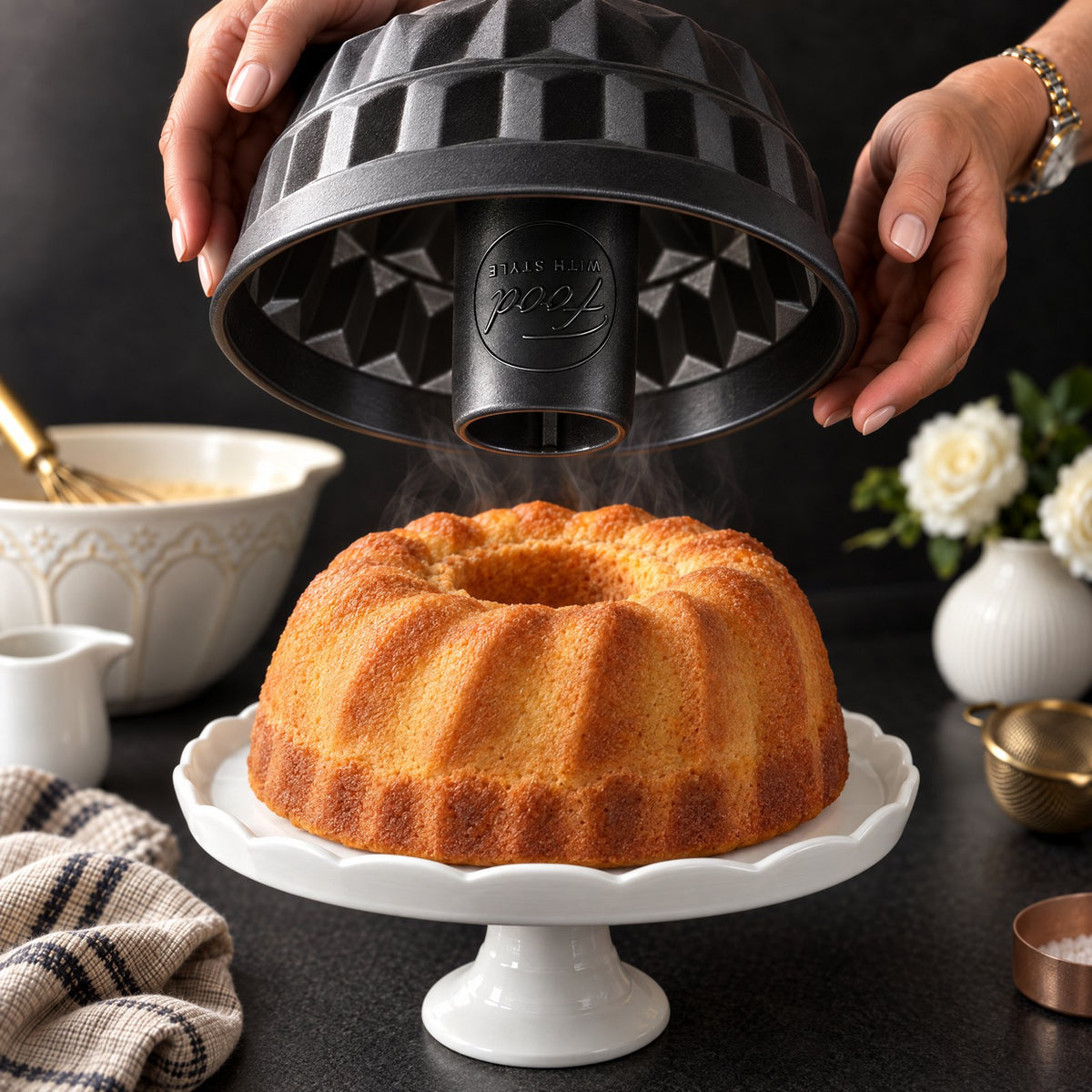
Rien n'accroche. Tout se démoule.
Ton gâteau sort proprement du moule, à chaque fois.
- Double revêtement céramique antiadhésif, sans PFAS
- Acier aluminié, garanti 10 ans
- 1 an de cours de pâtisserie + e‑book inclus
Coffret pâtisserie + cours & E-book · 89,90 €
Voir le coffret

Food with Style Baking Club
Fais-le pas à pas en vidéo
Le module du cours qui va avec : Pâte à cake
- Cours de pâtisserie : 9 modules et 34 leçons vidéo
- Tête-à-tête avec la Baking Chef de Food with Style
- Chat de la Community et e-book de 100 recettes
Dès 14,90 € par mois, résiliable chaque mois
FAQ
Questions sur le Käsekuchen
délicieux, testé et prêt à inspirer