








Portions
Unités
Préparation
1 heure 20 minutes
Cuisson
20 minutes
Ingrédients
Préparation
-
1
Tamise la farine dans un saladier, creuse un puits et verses-y la levure, un peu de sucre et un peu de lait. Laisse reposer 5-10 min, jusqu'à ce que le mélange mousse. Ajoute le reste du lait, le sucre, le sel et la moitié de l'œuf, puis pétris. Incorpore enfin le beurre en pétrissant jusqu'à obtenir une pâte lisse (8-10 min). Couvre et laisse pousser 1 h, jusqu'à ce que la pâte double de volume.

-
2
Pour la crème pâtissière, fouette dans une casserole le lait, le sucre, la maïzena, les jaunes d'œufs et la vanille. Porte à ébullition sans cesser de remuer, jusqu'à épaississement. Retire du feu, filme au contact, laisse refroidir, puis transfère dans une poche à douille.

-
3
Divise la pâte en 8 pâtons et étale chacun en rectangle. Poche un boudin de crème pâtissière le long du grand côté et dépose 4-5 myrtilles. Rabats la pâte et soude bien le bord. Incise l'autre côté de 5-6 entailles, roule la pâte, puis forme une couronne en soudant les deux extrémités.

-
4
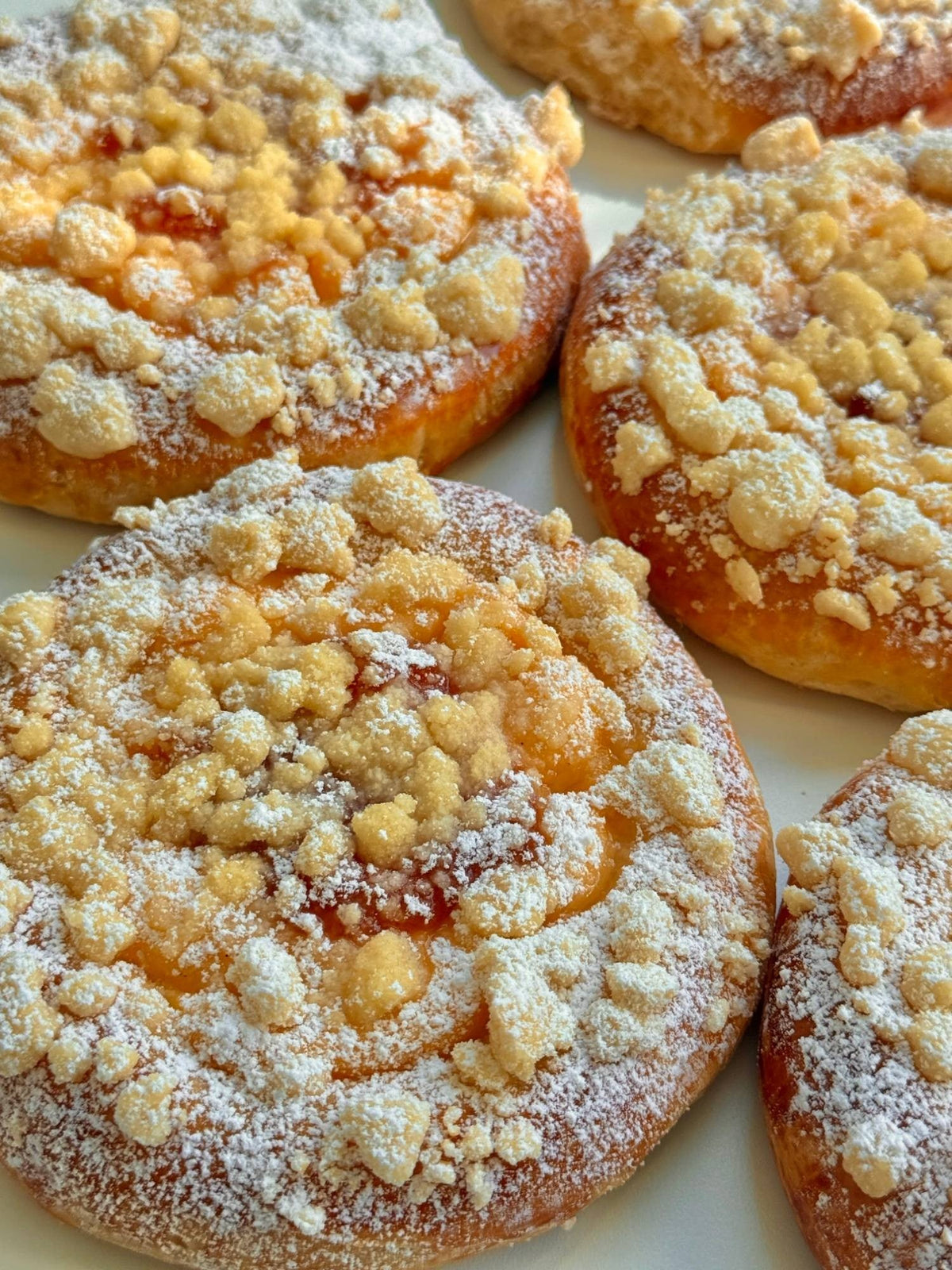
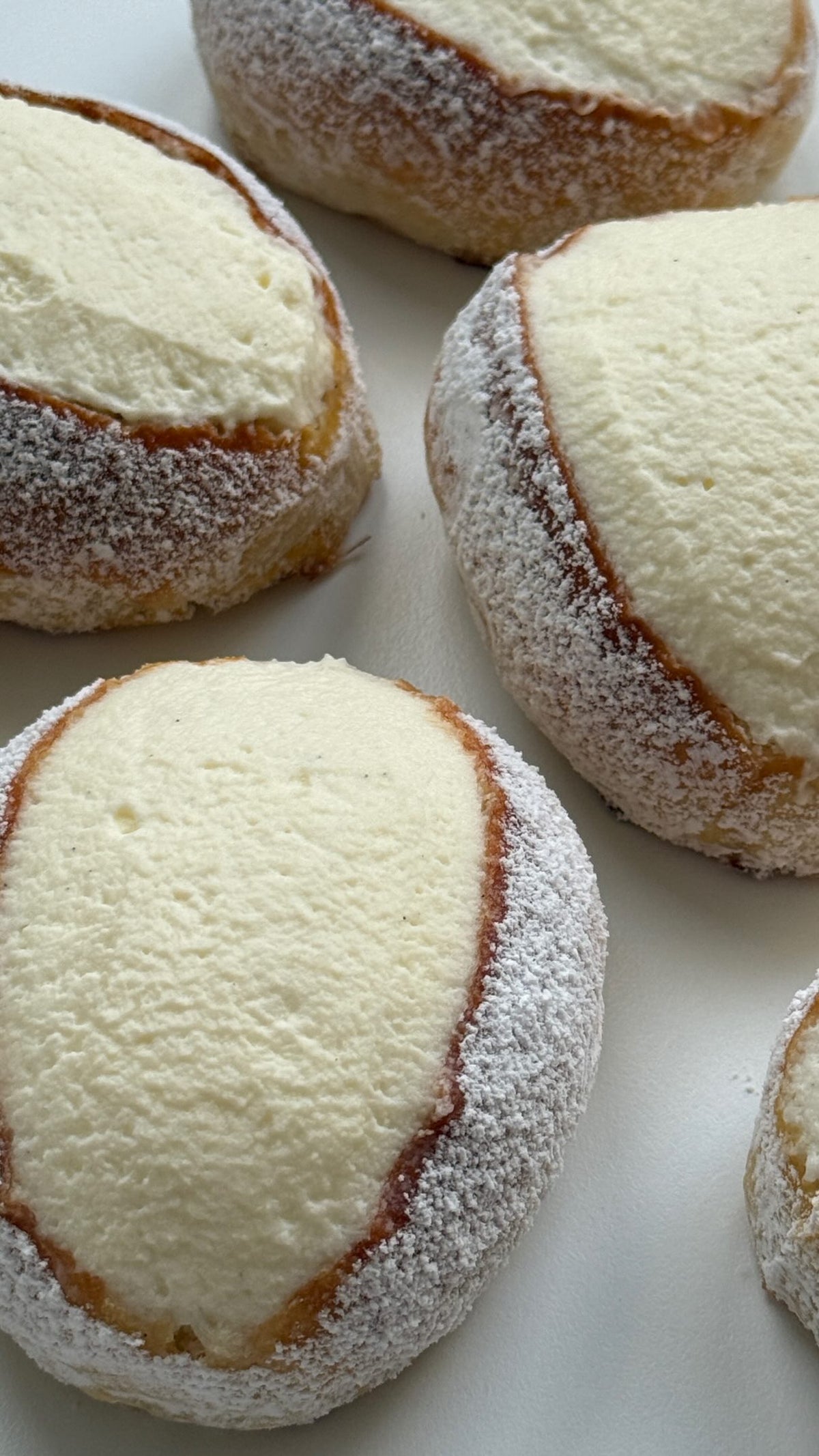
Dépose les couronnes sur une plaque, couvre et laisse reposer 15-20 min. Dore au jaune d'œuf et enfourne à 180 °C / 350 °F (chaleur traditionnelle) pendant 20-25 min, jusqu'à ce qu'elles soient bien dorées. Laisse refroidir sur une grille et saupoudre de sucre glace. La crème pâtissière restante fait un joli dessert en verrine avec des fruits frais. Tes couronnes aux myrtilles et à la crème pâtissière sont prêtes : dorées à l'extérieur, moelleuses et crémeuses à l'intérieur, avec une surprise fruitée.

Video

Food with Style Baking Club
Fais-le pas à pas en vidéo
- Cours de pâtisserie : 9 modules et 34 leçons vidéo
- Tête-à-tête avec la Baking Chef de Food with Style
- Chat de la Community et e-book de 100 recettes
Dès 14,90 € par mois, résiliable chaque mois
1 an inclus avec le Coffret pâtisserie + cours & Baking Club
FAQ
Questions sur les Blueberry Custard Rings
délicieux, testé et prêt à inspirer