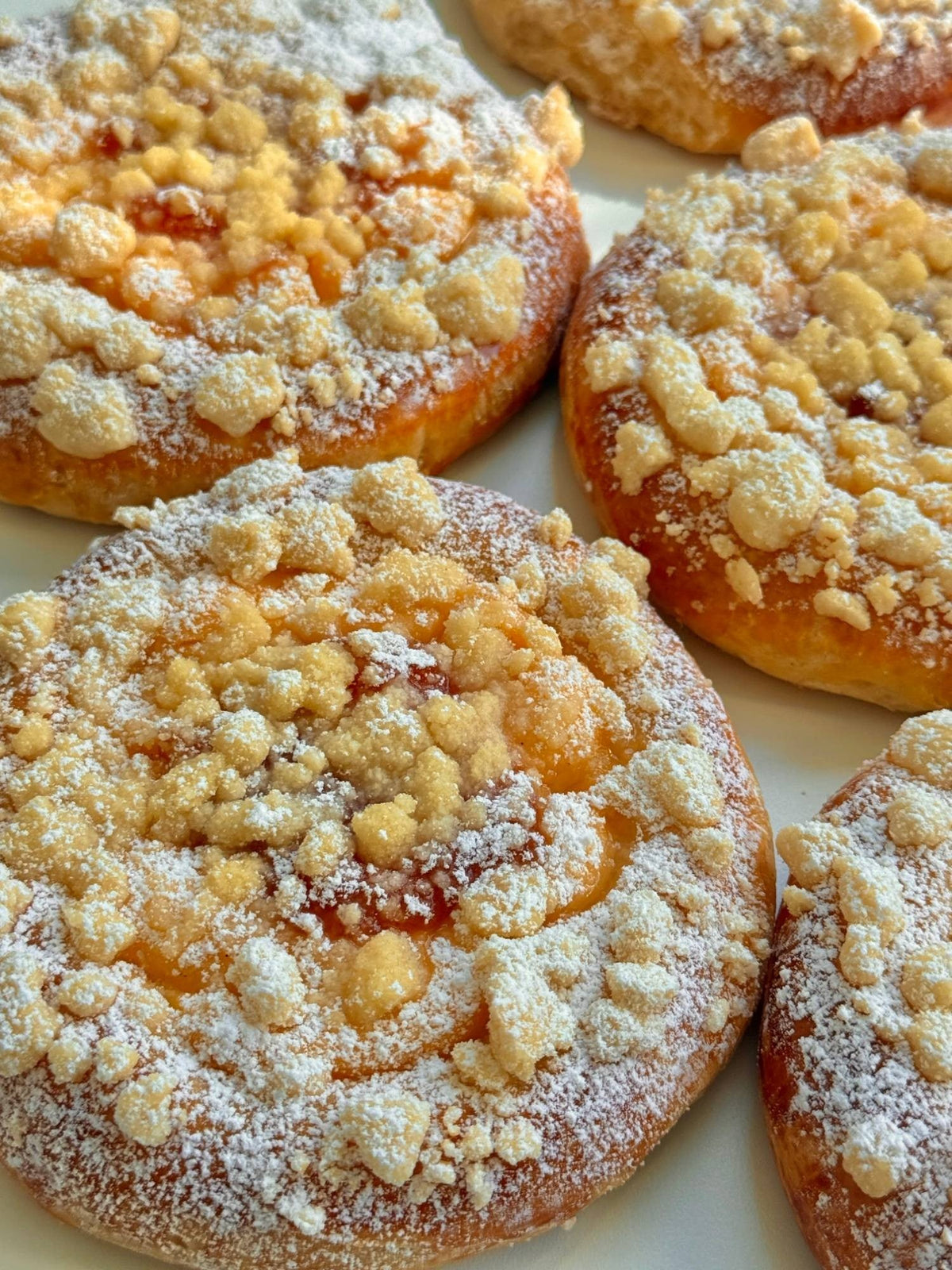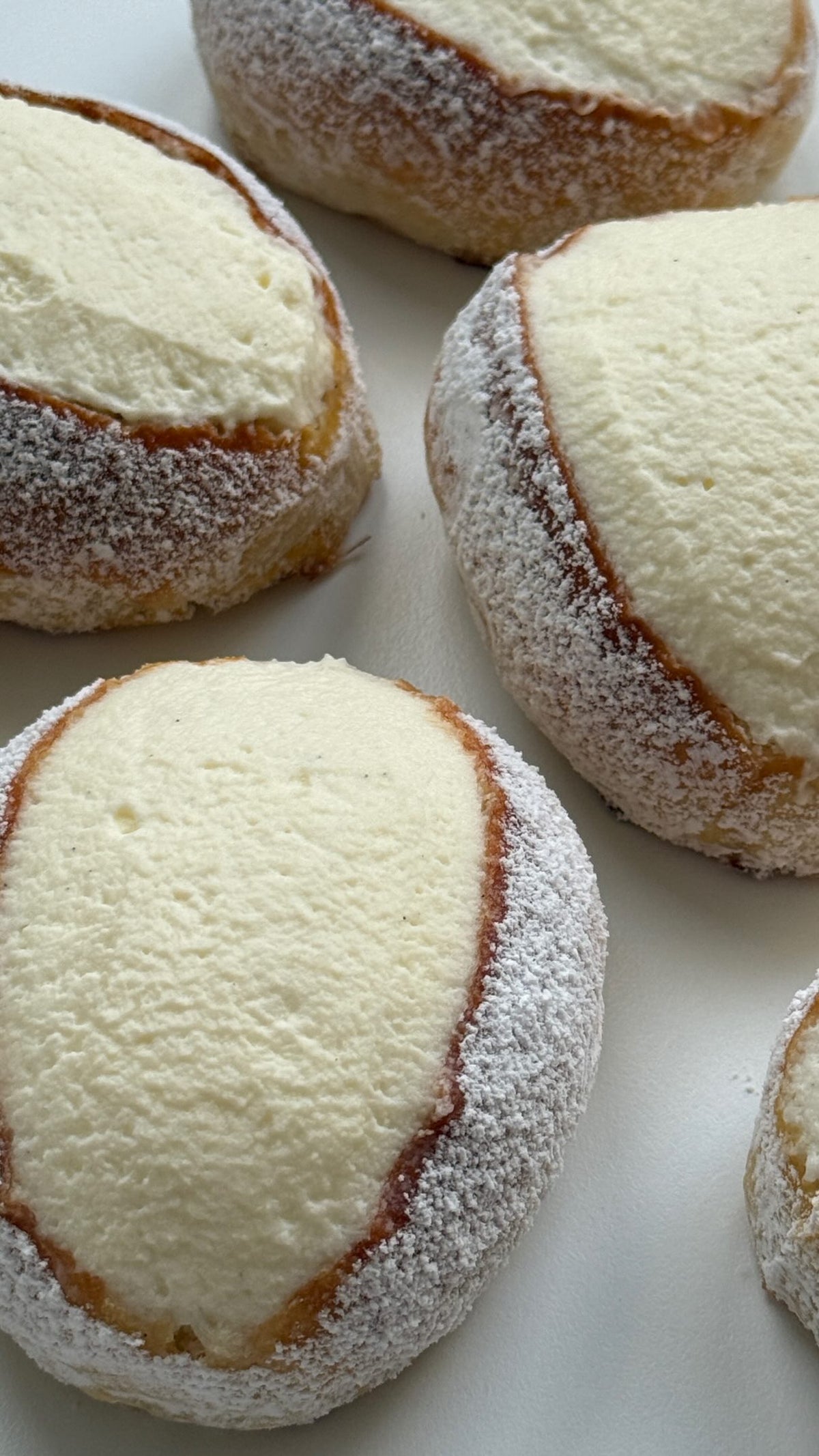

Bülbül Yuvasi von Food with Style, fertig angerichtet
Pastry

Bülbül Yuvasi

Parfait pour l'Aïd / Bayram - un merveilleux classique de la cuisine turque : délicat, élégant et idéal sur toutes les tables de dessert.

Partager
Portions
24 pièces
Cuisson 15 minutes

Ingrédients

  • Pour la dorure

Préparation

  1. 1
    Pour le sirop, portez l'eau et le sucre à ébullition et laissez frémir environ 12 minutes. Ajoutez le jus de citron et laissez frémir encore 5 minutes. Laissez ensuite refroidir complètement.
  2. 2
    Mélangez le beurre, l'huile de tournesol, l'œuf, le yaourt et le sel. Ajoutez la semoule, la levure chimique et la farine, puis pétrissez jusqu'à obtenir une pâte souple. Filmez et laissez reposer au réfrigérateur environ 30 minutes.
  3. 3
    Abaissez la pâte et découpez au total 48 disques d'environ 5 cm de diamètre.
  4. 4
    Dans la moitié des disques, découpez en plus un trou au centre, d'environ 2.5-3 cm de diamètre.
  5. 5
    Déposez les disques entiers sur une plaque recouverte de papier cuisson et badigeonnez légèrement les bords de blanc d'œuf.
  6. 6
    Posez délicatement les disques troués par-dessus et appuyez légèrement pour les faire adhérer.
  7. 7
    Dorez le tout au mélange jaune d'œuf et lait.
  8. 8
    Garnissez les ouvertures centrales de noix concassées.
  9. 9
    Enfournez à 175°C (chaleur traditionnelle) pendant environ 15-20 minutes, jusqu'à ce que les gâteaux soient bien dorés. Le temps de cuisson peut varier légèrement selon le four.
  10. 10
    Laissez refroidir complètement les gâteaux.
  11. 11
    Versez ensuite délicatement le sirop tiède ou froid dessus et attendez qu'il soit entièrement absorbé.

Video

Bülbül Yuvasi Questions

The syrup must be completely cool before it meets the freshly baked, still-hot nests - that temperature contrast is what lets them absorb just enough without collapsing. Since the syrup simmers for about 12 minutes plus 5 more after the lemon juice, make it first and let it cool while you work on the dough. Pouring warm syrup over warm pastries is the most common reason they turn mushy.

Yes - chopped pistachios, hazelnuts, or almonds work in place of the 60 g walnuts, since the nuts sit in the center opening rather than being worked into the dough. Chop them to a similar size so they fill the 2.5-3 cm hole neatly and don't tumble off during baking. Keep the amount roughly the same, or the nests will look sparse.

Keep them at room temperature in a tin or airtight container rather than the fridge, where the dough dries out and the syrup goes sticky. Let them cool and finish absorbing the syrup completely before stacking, and put parchment between layers so the glazed tops don't stick together. They're best in the first few days, while the edges still have some bite.

Both the syrup and the dough are made for advance work: the syrup needs to cool fully anyway and can rest in the fridge, and the dough is already wrapped in plastic wrap for chilling. Let the dough come back to a workable temperature before rolling, or the 5 cm circles will crack at the edges. Assemble and bake on the day you plan to serve - the nests taste best fresh.

The egg white brushed on the edges of the whole circles is the glue - brush it right onto the rim where the ring will sit, then press the top ring down gently so the two layers actually bond. Rolling the dough too thick or unevenly is the other culprit, as thicker bases puff up and push the rings sideways in the oven. Also avoid overfilling the center with walnuts before baking, since a heaped middle can lift the ring as the dough rises.

délicieux, testé et prêt à inspirer

Explorez plus de 400 Recettes Savoureuses