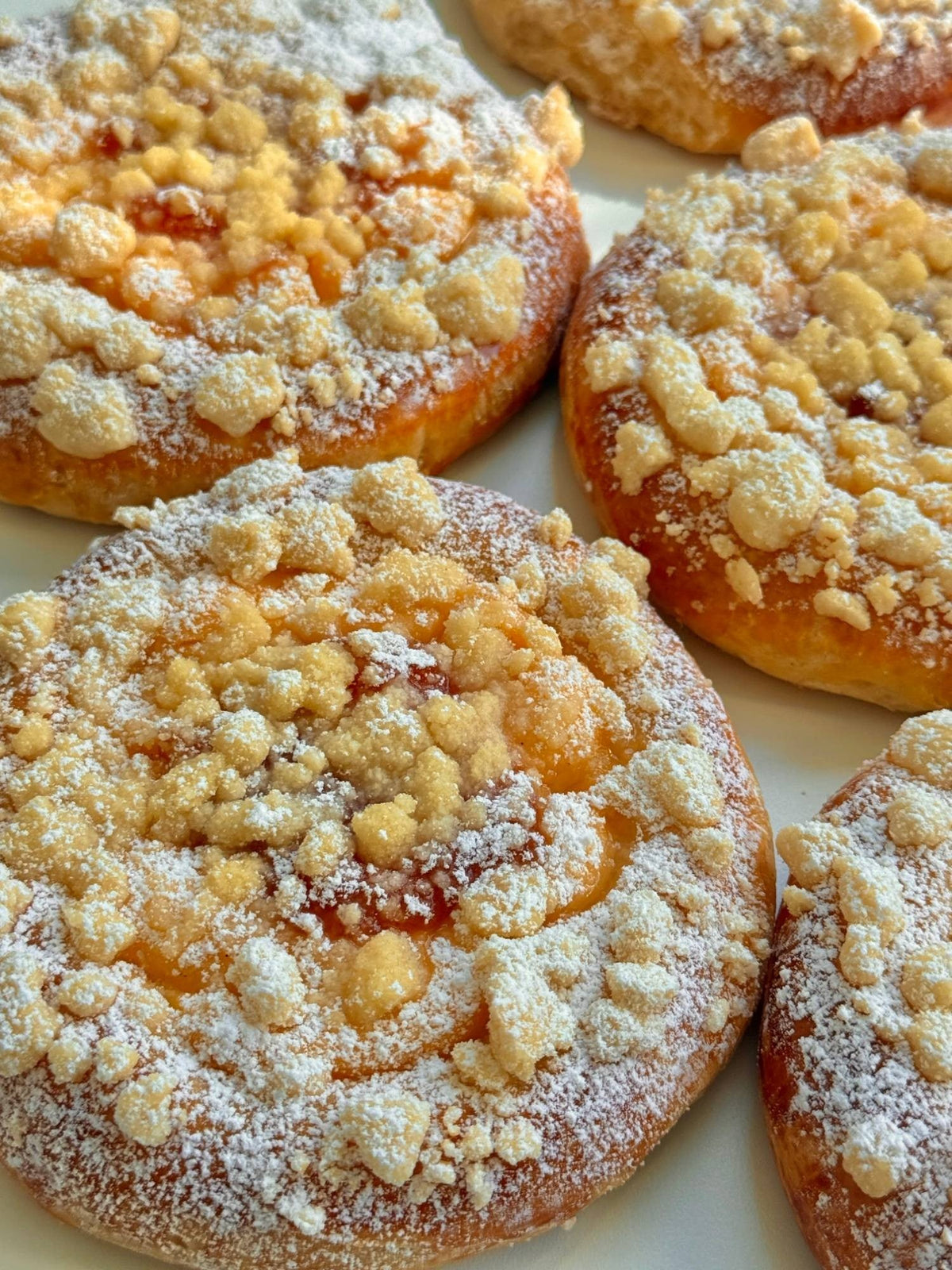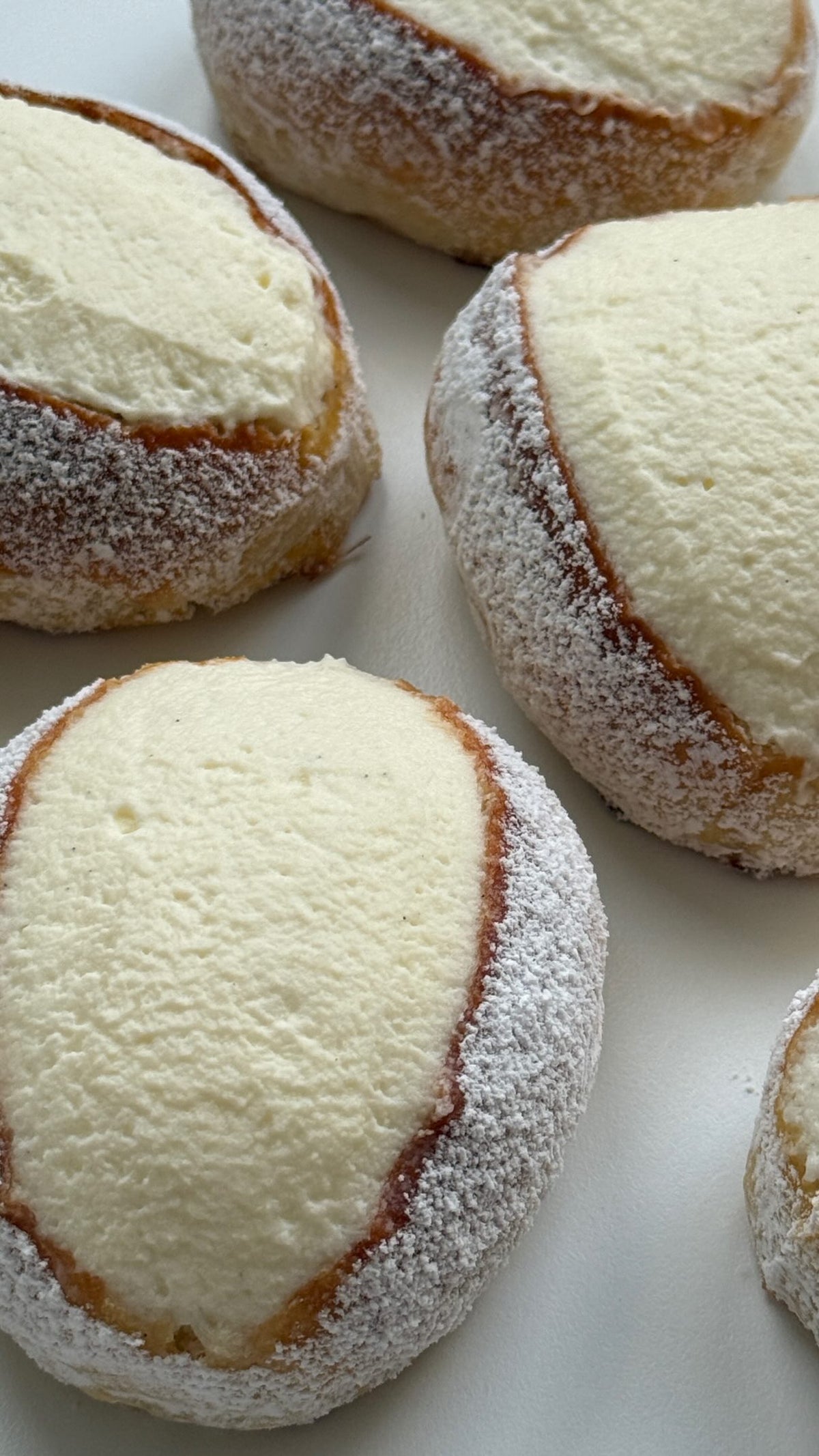

Bambas de Nata von Food with Style, fertig angerichtet
Pastry

Bambas de Nata

Une pâtisserie espagnole classique : de petites brioches moelleuses à la levure, fourrées de crème fouettée légèrement sucrée. Une gourmandise toute simple et très...

Partager
Portions
9 pièces
Cuisson 15 minutes

Ingrédients

  • Pour la pâte levée
  • Pour la garniture à la crème (nata)
  • Pour la finition

Préparation

  1. 1
    Tamisez la farine dans un saladier et creusez un puits au centre. Ajoutez-y la levure, 1 cuillère à café du sucre et un peu de lait tiède. Laissez reposer 8-10 minutes, jusqu'à ce que la levure mousse.
  2. 2
    Ajoutez le reste du sucre, le sel, l'œuf, l'extrait de vanille et le reste du lait. Pétrissez au crochet jusqu'à obtenir une pâte lisse.
  3. 3
    Incorporez le beurre mou en dernier et poursuivez le pétrissage 8-10 minutes, jusqu'à ce que la pâte soit souple, élastique et se décolle des parois du bol. Couvrez et laissez pousser environ 60 minutes.
  4. 4
    Divisez la pâte en 9 pâtons de même poids (environ 50 g chacun), boulez-les bien lisses et déposez-les sur une plaque recouverte de papier cuisson. Couvrez et laissez pousser encore 20-30 minutes. Badigeonnez légèrement le dessus d'un peu de crème.
  5. 5
    Enfournez à four préchauffé à 180 °C / 350 °F (chaleur traditionnelle) pendant 15-18 minutes, jusqu'à ce que les brioches soient légèrement dorées. Laissez refroidir complètement.
  6. 6
    Montez la crème bien froide en chantilly ferme avec le sucre glace et la vanille.
  7. 7
    Coupez les Bambas en deux dans l'épaisseur, garnissez-les généreusement de crème à la cuillère ou à la poche à douille, replacez les chapeaux et saupoudrez généreusement de sucre glace. Moelleuses, aériennes et merveilleusement simples - une pâtisserie à la crème indémodable qui fait toujours son effet.

Video

Bambas de Nata Questions

Yes. Instant yeast works in the same amount and can be mixed straight into the flour, so you can skip the 8-10 minute proofing step with the milk and sugar. For fresh yeast use about 21 g, crumbled into the lukewarm milk with the teaspoon of sugar, and let it foam as described. In all cases the milk should only be lukewarm, since hot milk kills the yeast.

This dough is enriched with egg and 40 g butter, so it is meant to feel soft and slightly tacky at first. The butter is added last on purpose, and it takes the full 8-10 minutes of kneading before the gluten develops enough for the dough to come together and clear the sides. Resist adding lots of extra flour - a tablespoon at most - because more flour makes the baked Bambas dry instead of airy.

The buns themselves are best baked the day you fill them, but you can knead the dough in the evening and let it do its first rise slowly in the fridge overnight, then shape, let it come to room temperature and finish the second rise the next morning. You can also bake the buns a day ahead and store them airtight once fully cooled. Whip the cream only shortly before filling, and always fill the Bambas after they have cooled completely, or the cream will melt.

Once filled with whipped cream they need to go in the fridge and are really best eaten the same day, since the moist cream softens the crumb over time. Store them in a covered container so they do not take on fridge smells, and dust with the finishing powdered sugar just before serving because it dissolves on standing. Unfilled buns keep better at room temperature in an airtight container, and they also freeze well - thaw, then split and fill.

The cream must be properly cold, straight from the fridge, and it helps to chill the bowl and beaters too, because warm cream will not whip stiff. Whip it just until stiff peaks form and stop there - beating past that point makes it grainy and starts turning it to butter. If you want the filling to stay piped-neat for several hours, sweeten toward the higher end of the 1-2 tablespoons of powdered sugar or use a cream stabilizer.

délicieux, testé et prêt à inspirer

Explorez plus de 400 Recettes Savoureuses