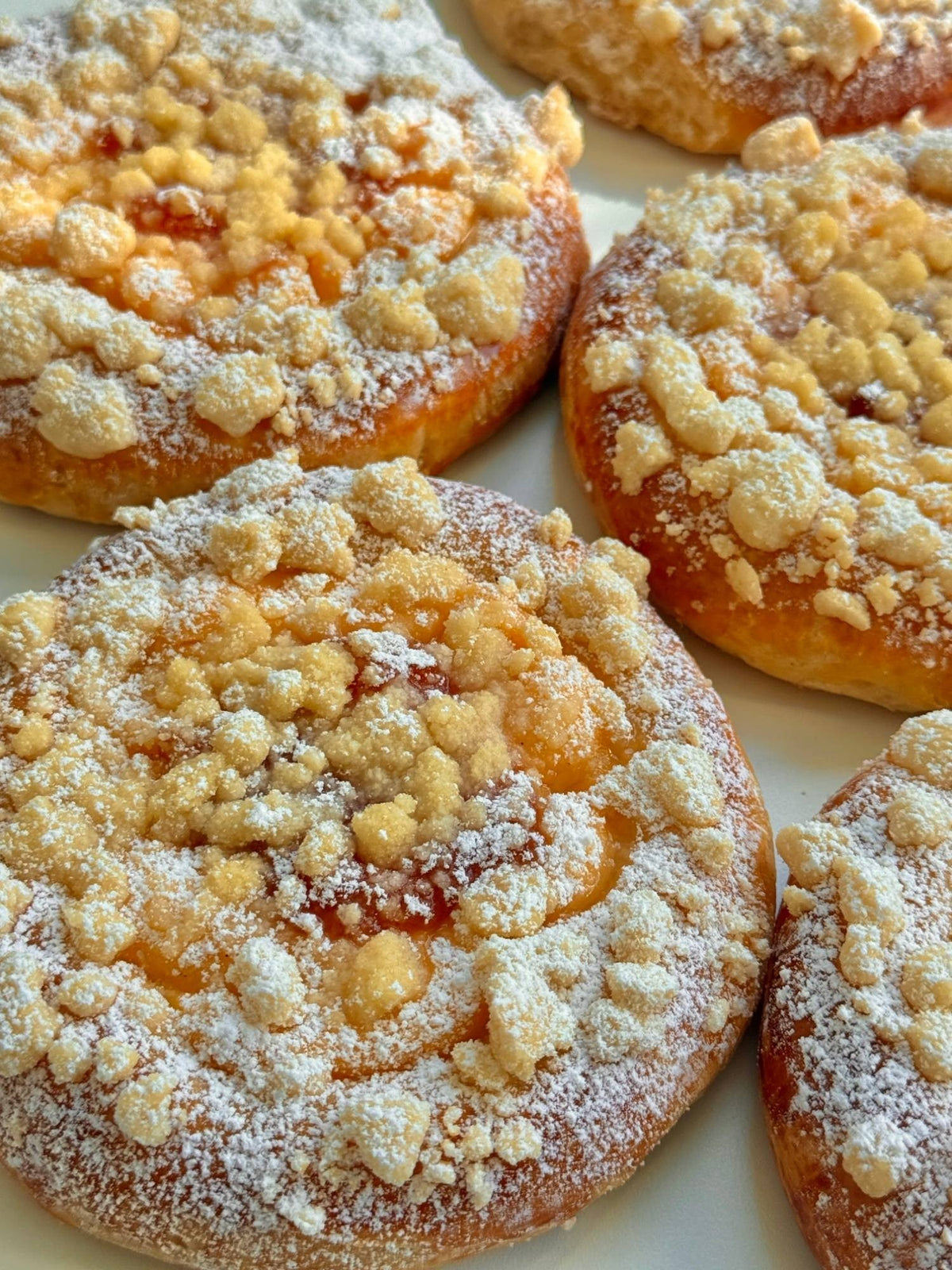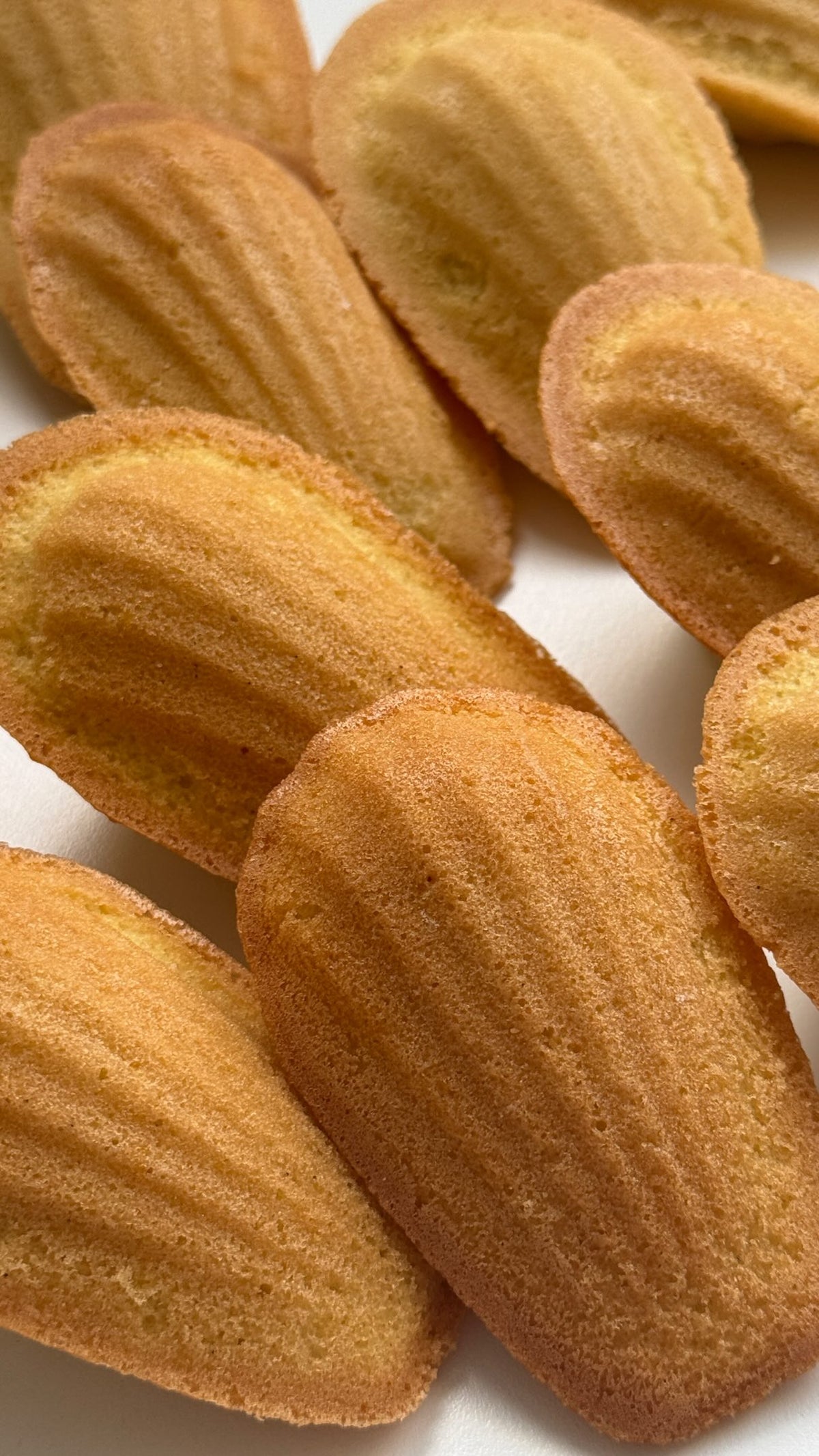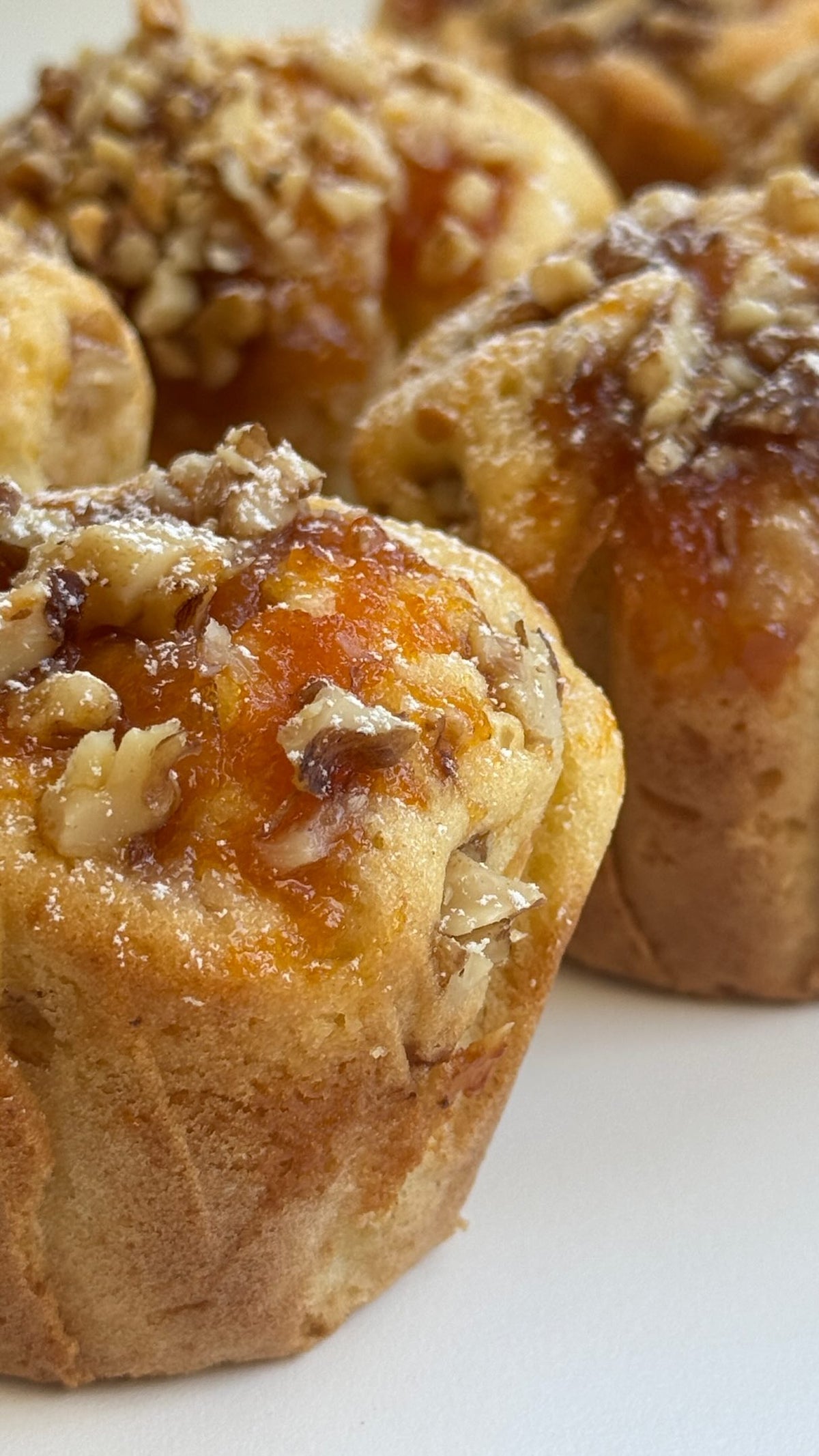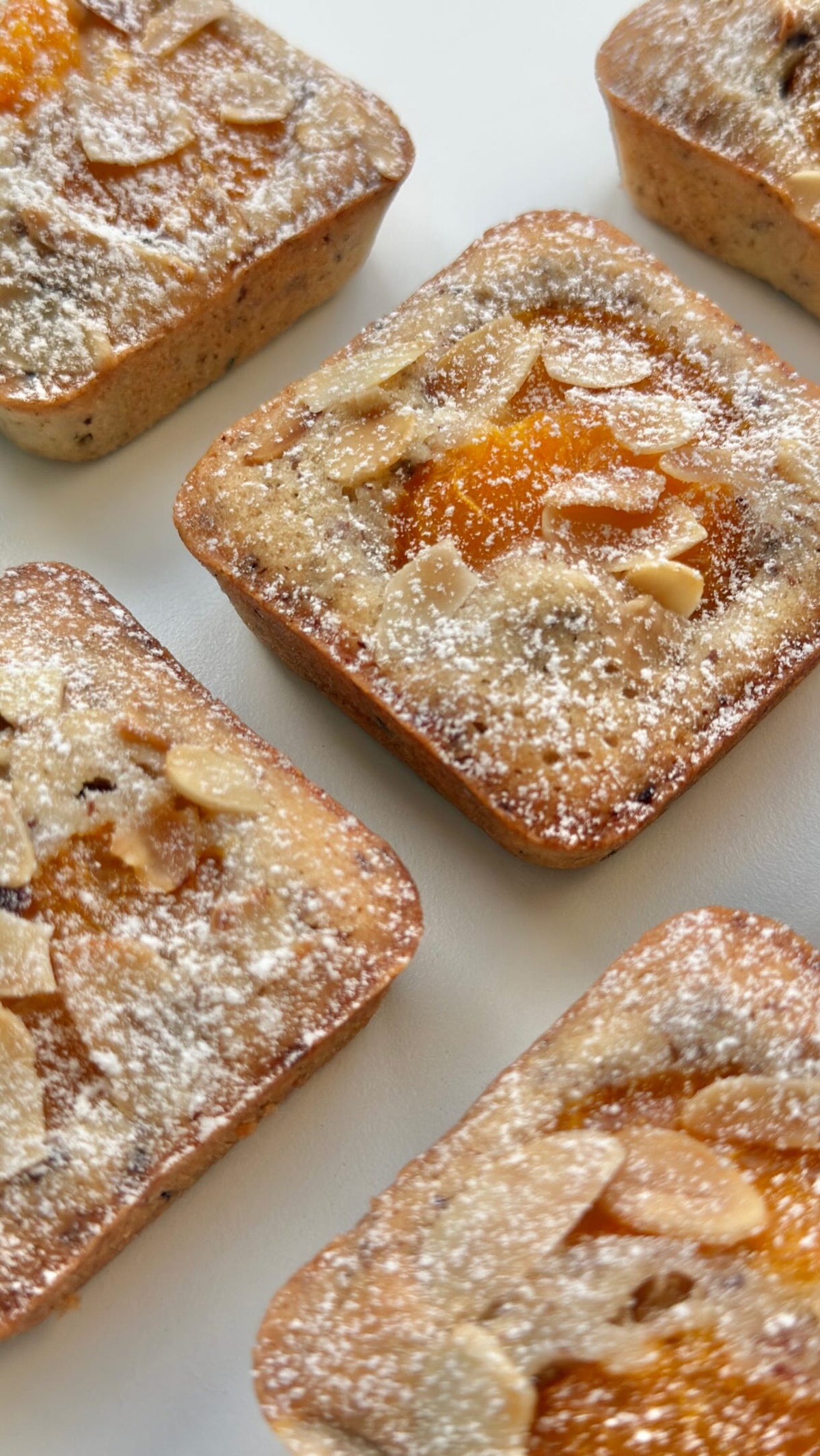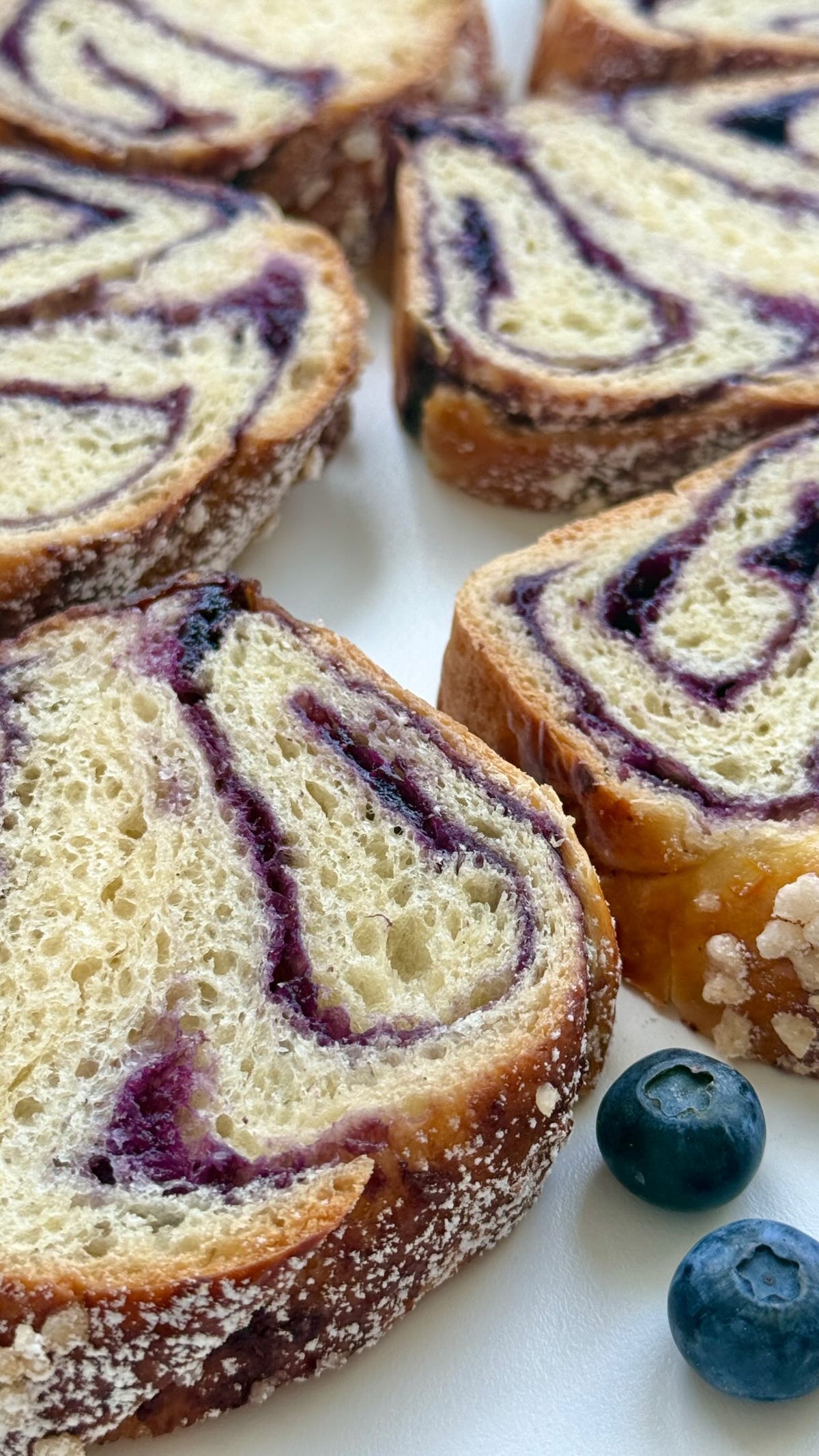

Franzbrötchen von Food with Style, fertig angerichtet
Pastry

Франзбрьотхен

Тези франзбрьотхен са божествено меки и ухаят неустоимо. Идеални за всеки, който обича нещо сладко!

Сподели
Порции
6 броя
Подготовка 1 час
Печене 15 минути

Съставки

  • За тестото
  • За плънката

Приготвяне

  1. 1
    Пресейте брашното в купа и направете кладенче в средата. Сложете в него маята, 1 tsp захар и 2-3 tbsp хладко мляко. Разбъркайте леко и оставете за 10 минути, докато мая­та се разпени.
  2. 2
    Добавете в купата останалото мляко, захарта, яйцето и солта. Месете, докато се получи гладко тесто. Прибавете омекналото масло на парченца и продължете да месите, докато тестото стане еластично. Покрийте и оставете да втаса на топло около 1 час или докато удвои обема си.
  3. 3
    В отделна купа смесете кафявата захар, канелата и омекналото масло до получаване на мека паста за намазване.
  4. 4
    Разточете тестото върху леко набрашнена повърхност на правоъгълник с размери около 20 x 30 cm (8 x 12 inches).
  5. 5
    Намажете равномерно тестото със сместа от масло, захар и канела.
  6. 6
    Навийте тестото стегнато на руло от дългата страна и нарежете на парчета с ширина около 5 cm ( 2 inches).
  7. 7
    Наредете парчетата с разреза надолу в тава, покрита с хартия за печене. С дървена пръчка притиснете силно в средата на всяко парче, за да оформите характерната форма на франзбрьотхен.
  8. 8
    Покрийте и оставете да втасат още 30 минути.
  9. 9
    Загрейте фурната на 180°C (350°F) горен и долен нагревател (160°C с вентилатор). Печете франзбрьотхен 15-18 минути до златисто.
  10. 10
    Намажете топлите франзбрьотхен с разтопено масло и ги оставете да изстинат покрити с кърпа. По желание поръсете с канелена или пудра захар.

Video

Franzbrötchen Questions

After stirring the yeast with 1 tsp sugar and 2-3 tbsp lukewarm milk in the well, let it sit for 10 minutes as the recipe directs. You should see foam or bubbles on the surface - that means the yeast is alive and the dough will rise. If the mixture stays flat and smooth after 10 minutes, discard it and start again with fresh yeast, since the whole dough depends on this step.

Yes. The recipe already starts the yeast in lukewarm milk with a little sugar, so active dry yeast works in the same amount and simply needs the full 10 minutes to foam. Fresh yeast also works - crumble it into the milk in the well and stir until dissolved. Whichever you use, keep the milk lukewarm, not hot, or you will kill the yeast.

This usually happens when the butter in the filling is too soft or the dough is rolled too loosely. Mix the brown sugar, cinnamon, and butter into a spreadable paste rather than a runny one, and spread it evenly so no thick pockets form. Roll the dough tightly from the long side, and always bake on parchment paper as the recipe says - some caramel escaping is normal and lifts right off the paper.

Yes. Knead the dough through the butter stage, then cover it and let it rise slowly in the fridge overnight instead of at room temperature. The next morning, let it come back to room temperature before rolling it into the 20 x 30 cm rectangle, otherwise the cold dough will crack and the butter filling won't spread. Then continue with shaping, the 30-minute rise, and baking as written.

Let them cool completely, then keep them in an airtight container at room temperature - the butter in both the dough and the filling keeps them tender for a couple of days. To refresh them, warm them briefly in the oven at the same 180°C (350°F) until the filling softens again. They also freeze well once cooled; thaw and reheat the same way.

вкусни, тествани и готови да вдъхновят

Разгледайте 400+ вкусни рецепти