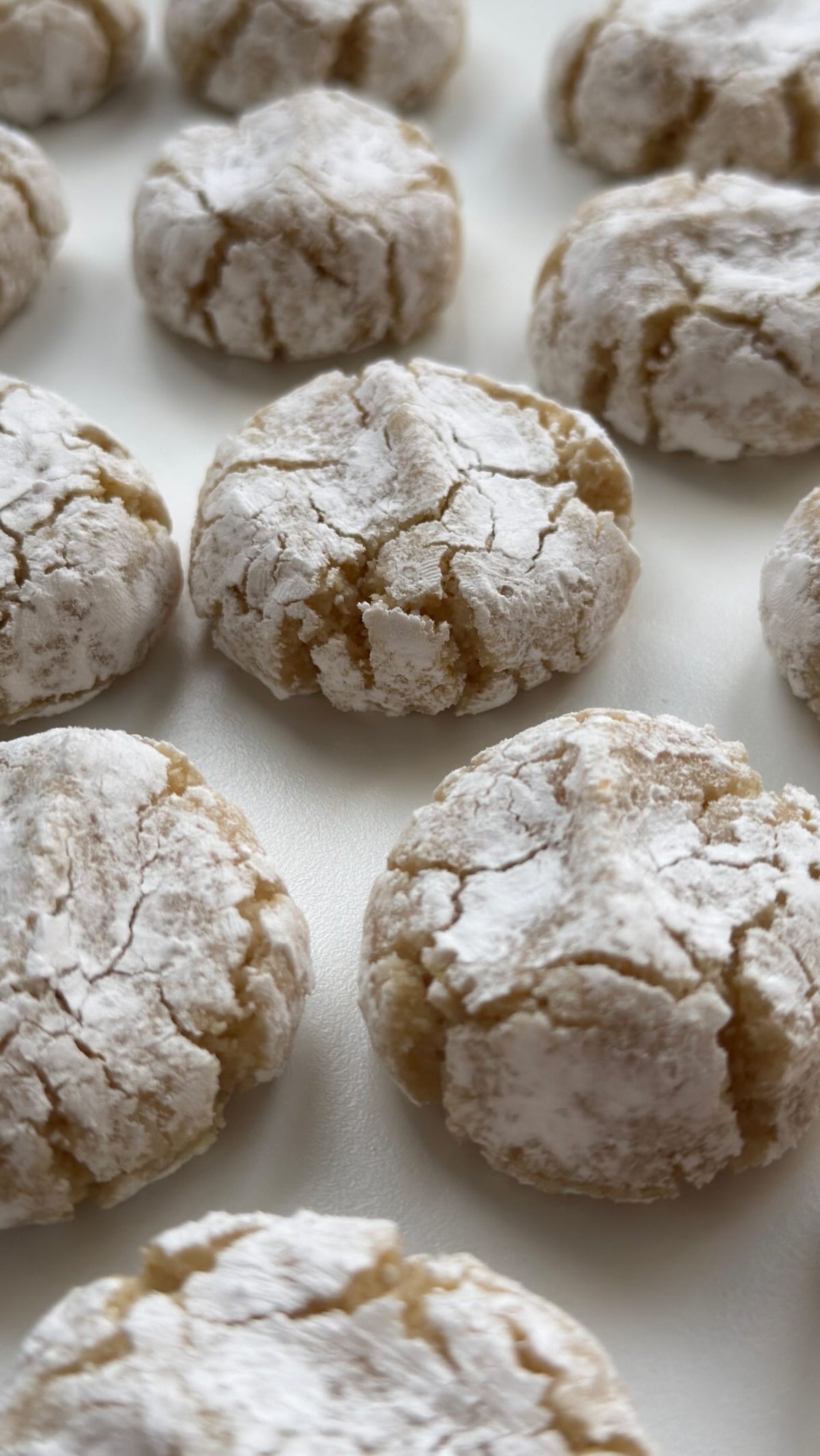
Vanillekipferl von Food with Style, fertig angerichtet
Pastry

Vanillekipferl

Fina, eleganta vaniljkakor i halvmåneform med mör konsistens och klassisk vaniljarom. (blir ca 18-24 kakor)

Dela
Portioner
18 kakor
Tillagning 12 minuter

Ingredienser

  • Till rullning / pudring

Gör så här

  1. 1
    Blanda vetemjöl, florsocker, malen mandel, salt och vanilj. Tillsätt det kalla smöret och arbeta snabbt ihop till en slät deg. Viktigt: jobba raskt så att degen inte blir varm.
  2. 2
    Forma degen till en lång rulle, slå in den ordentligt i plastfolie och låt vila i kylen ca 60 minuter.
  3. 3
    Sätt ugnen på 170 °C / 338 °F (över- och undervärme). Klä en plåt med bakplåtspapper.
  4. 4
    Skär den kalla degrullen i skivor på ca 1.5 cm (ca 20 g per bit). Rulla varje bit till en kula, sedan till en kort rulle och böj ändarna försiktigt nedåt så att det bildas klassiska halvmånar.
  5. 5
    Blir degen för lös när du formar, ställ de färdigformade kakorna kallt igen 15-20 minuter så håller de formen bättre i ugnen.
  6. 6
    Grädda 12-15 minuter. Kakorna ska förbli ljusa, med bara en aning färg på spetsarna.
  7. 7
    Ta ut dem, låt svalna en kort stund och vänd dem försiktigt i florsocker och vaniljsocker medan de fortfarande är ljumma (men inte heta), eller pudra dem lätt.
  8. 8
    Låt kakorna kallna helt - först då blir de riktigt möra och håller ihop. Perfekta till julbaket, som en fin present eller helt enkelt till en kopp kaffe.

Video

Vanillekipferl Questions

Ground blanched almonds make up 70 g of the dough and carry a lot of its tenderness, so they need a like-for-like replacement rather than just more flour. Finely ground hazelnuts or walnuts work well and simply shift the flavour; for a nut-free version, use the same weight of very finely ground blanched almonds' stand-in such as ground sunflower seeds. Keep the grind fine, because coarse pieces make the thin crescent tips break when you bend them.

Store them in an airtight tin at room temperature once they have cooled completely - the recipe stresses that they only become tender and stable after full cooling, and packing them warm traps steam and softens them. Layer them between parchment, since the crescents are fragile and the powdered-sugar coating rubs off easily. Many bakers find the texture improves after a day or two in the tin, and you can dust with a little extra powdered sugar before serving.

Yes - the dough is already shaped into a log and wrapped in plastic wrap for its 60-minute chill, so you can simply leave it in the fridge longer and bake the next day. If it has firmed up too much to slice cleanly, let it sit at room temperature for a few minutes before cutting your 1.5 cm slices. The wrapped log also freezes well; thaw it in the fridge until it is just sliceable.

The dough is very short: 100 g butter against 140 g flour and 70 g almonds, with no egg or liquid to bind it. Crumbliness usually means it simply needs another minute of quick kneading so the cold butter cubes distribute - press it firmly together rather than adding water, which would toughen it. If it still refuses to hold, your butter may be too cold straight from the fridge; let the cubes stand a few minutes, but keep working swiftly so the butter does not warm through.

Spreading means the butter was too warm when the cookies went in, which is why the recipe calls for chilling the formed crescents another 15-20 minutes if the dough softens while shaping. Roll each piece into a ball first, then a short log, and bend the ends downward so the crescent is even in thickness - thin, overworked tips brown fast and break. At 170 °C / 338 °F for 12-15 minutes the cookies should stay pale with just a hint of colour at the tips, so pull them before they take on real colour.

läckra, testade och redo att inspirera
Utforska 400+ Smakfulla Idéer