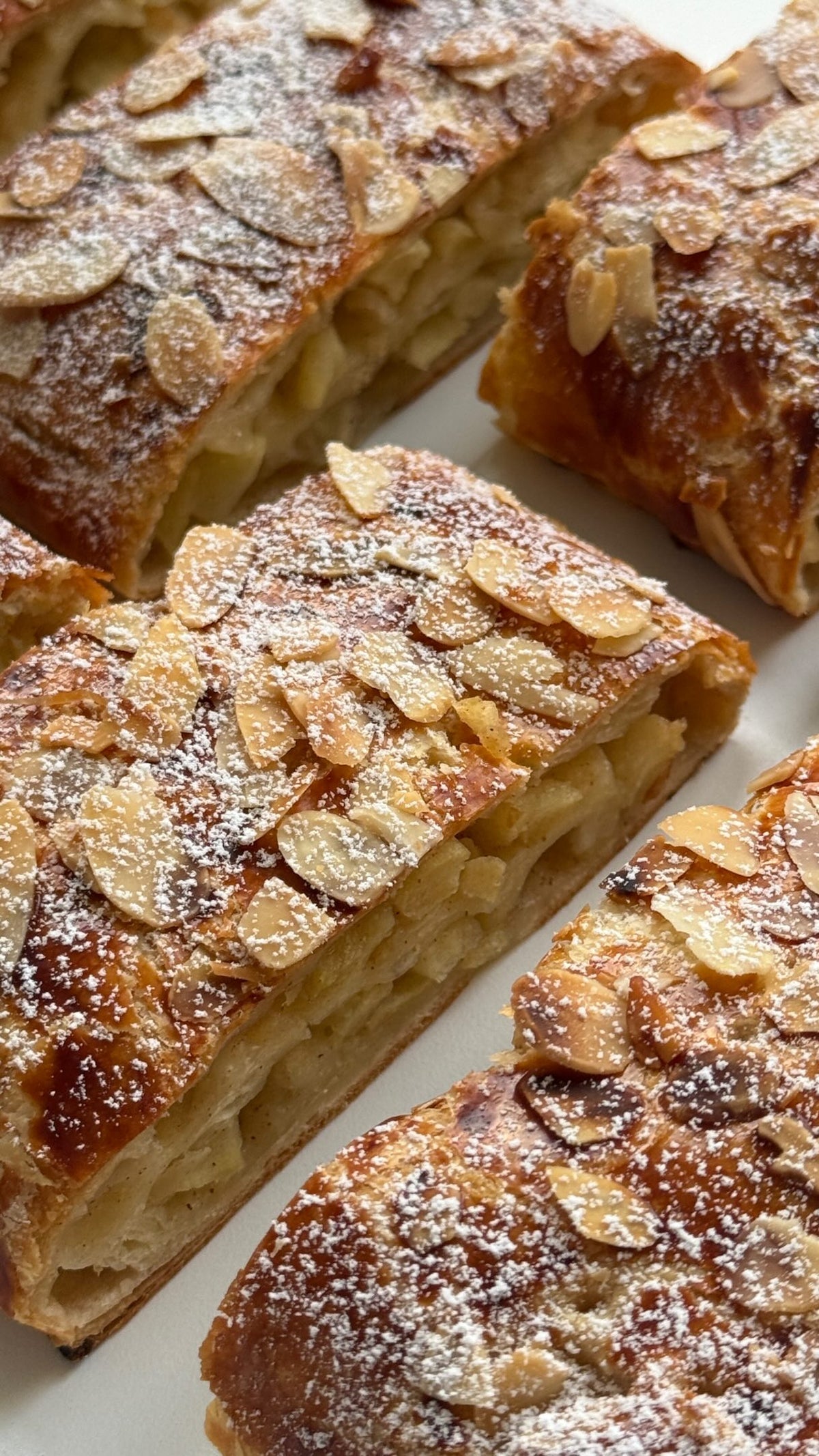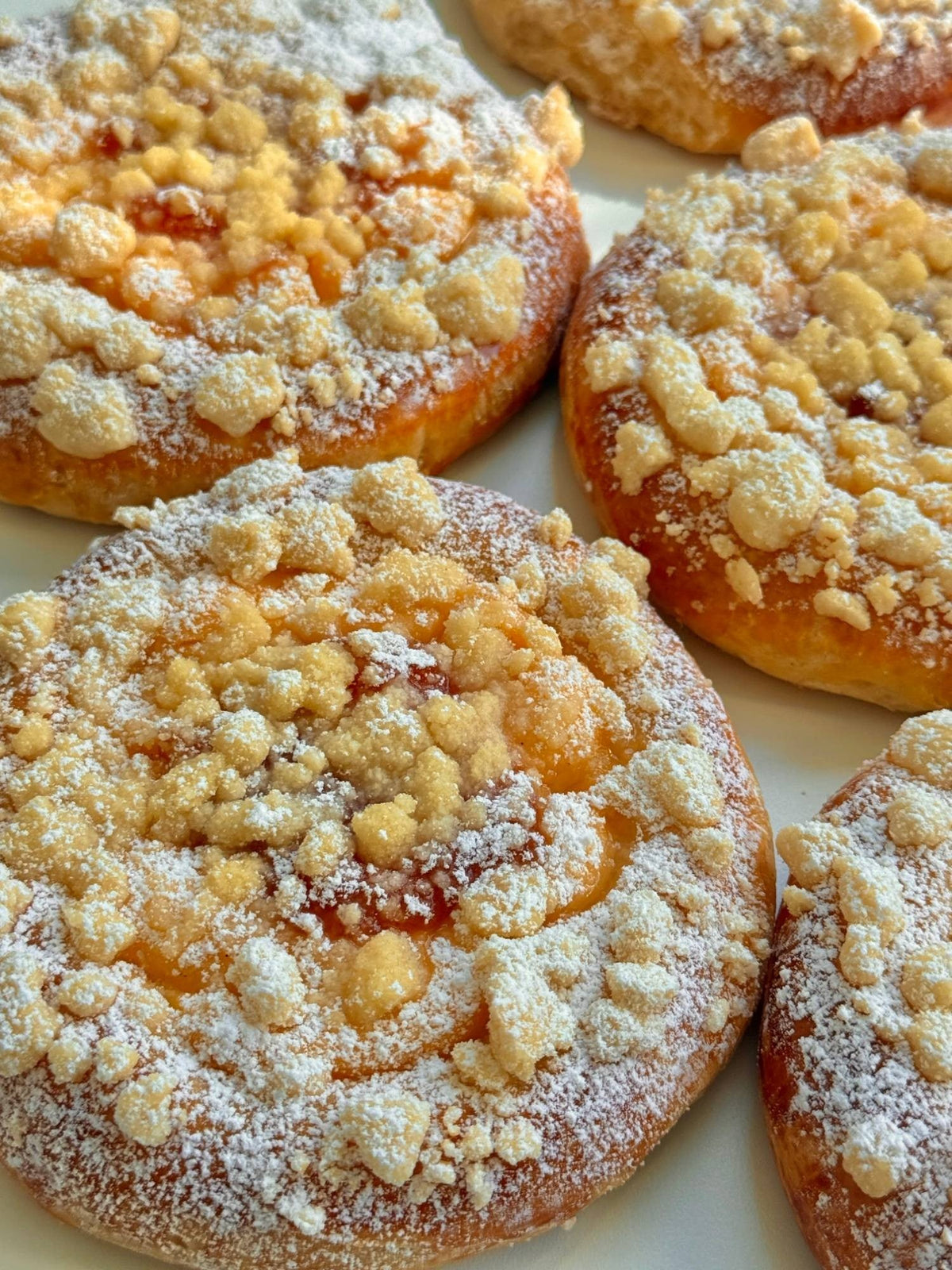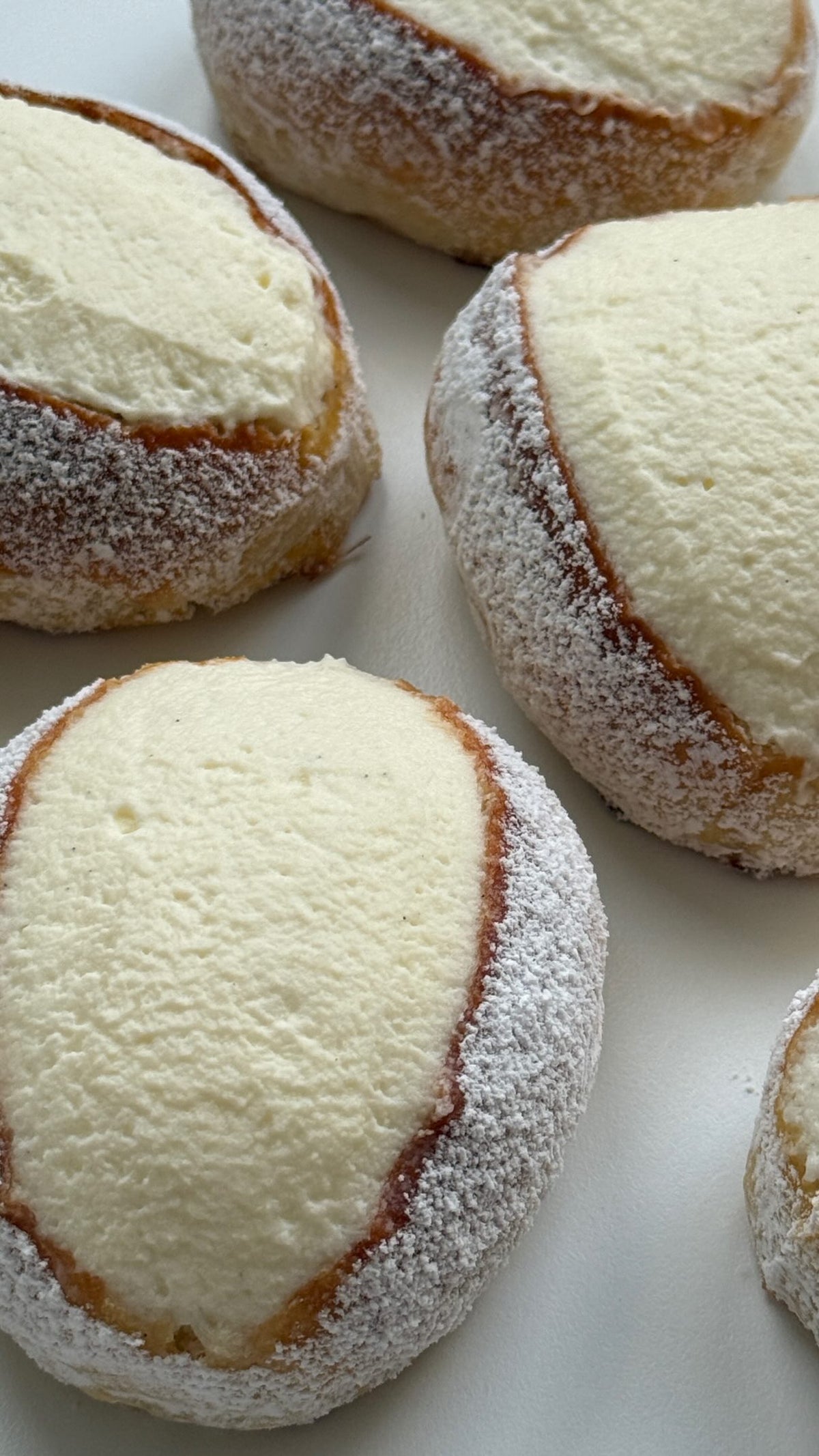

Vanilla Sugar Knots von Food with Style, fertig angerichtet
Brioche

Vaniljknutar

Dessa fluffiga vaniljknutar är perfekta till en mysig eftermiddag eller som ett sött avbrott när som helst på dagen. Perfekt för alla vaniljälskare!

Dela
Förberedelse 1 timme
Tillagning 15 minuter

Ingredienser

  • Till vaniljfyllningen
  • Till pensling
  • Till garnering

Gör så här

  1. 1
    Häll mjölet i en bunke och gör en grop i mitten. Tillsätt torrjästen, 1 tsp strösocker och 2-3 tbsp av den ljumna mjölken i gropen. Rör om lätt och låt stå i cirka 10 minuter tills det börjar bubbla.
  2. 2
    Tillsätt resten av mjölken, sockret, saltet, det mjuka smöret och ägget. Arbeta ihop till en smidig deg som släpper från bunkens kanter. Täck över och låt jäsa på varm plats i cirka 1 timme eller tills degen har dubblat i storlek.
  3. 3
    Rör ihop det mjuka smöret med vaniljextrakt och strösocker till en slät fyllning.
  4. 4
    När degen har jäst färdigt, kavla ut den till en stor rektangel på mjölat bakbord. Bred ut vaniljfyllningen jämnt över degen.
  5. 5
    Vik degen: ta en sida in mot mitten och vik sedan den andra sidan över. Skär i jämnbreda remsor.
  6. 6
    Skär varje remsa på längden i tre delar utan att skära hela vägen igenom. Fläta dem och snurra ihop till knutar.
  7. 7
    Lägg knutarna i en smord muffinsform eller på en plåt med bakplåtspapper. Låt jäsa igen i 20-30 minuter. Sätt under tiden ugnen på 180°C (350°F).
  8. 8
    Strö över pärlsocker.
  9. 9
    Grädda i 15-18 minuter tills de fått lite färg. Pensla knutarna med smält smör och låt svalna något innan servering.

Video

Vanilla Sugar Knots Questions

The most common cause is milk that was too hot, which kills the yeast, so keep it lukewarm rather than steaming. A cold kitchen is the other culprit: this dough needs a genuinely warm spot to rise, and a cold egg straight from the fridge slows things down further, which is why the recipe calls for a room-temperature egg. If the pre-ferment in the well doesn't get foamy after resting, start over with fresh yeast rather than kneading on.

Yes - swap the 3.5 g of dry yeast for about 10 g of fresh yeast, crumbled into the well with the sugar and lukewarm milk the same way. Plant-based milk works too; just warm it to lukewarm as you would dairy milk. You can also replace the vanilla extract in the filling with the seeds of a vanilla bean or vanilla sugar, though with vanilla sugar you may want to cut back the 30 g of sugar slightly.

These are at their best the day they're baked, since the butter filling and soft crumb dry out quickly. Keep leftovers in an airtight container at room temperature for a day or two - not the fridge, which makes yeast pastries stale faster. To revive them, warm them briefly in a 180°C (350°F) oven; freezing the baked knots and reheating from frozen also works well.

Yes - after kneading, let the dough rise slowly in the fridge overnight instead of in a warm place, then bring it back to room temperature before rolling it out. You can also mix the vanilla butter filling a day ahead, but let it soften again so it spreads evenly over the dough. Shaped knots can go into the muffin tin and do their second 20-30 minute rise while the oven preheats to 180°C (350°F).

Filling escapes when the butter mixture is too soft or spread too thickly right up to the edges - leave a small border bare so the folded dough can seal. Rolling the rectangle too thin is the other issue: the strips then tear as you braid and twist them, and the filling runs out. Baking in a greased muffin tin, as the recipe suggests, contains any leakage and keeps the knots tall rather than spreading flat.

läckra, testade och redo att inspirera
Utforska 400+ Smakfulla Idéer