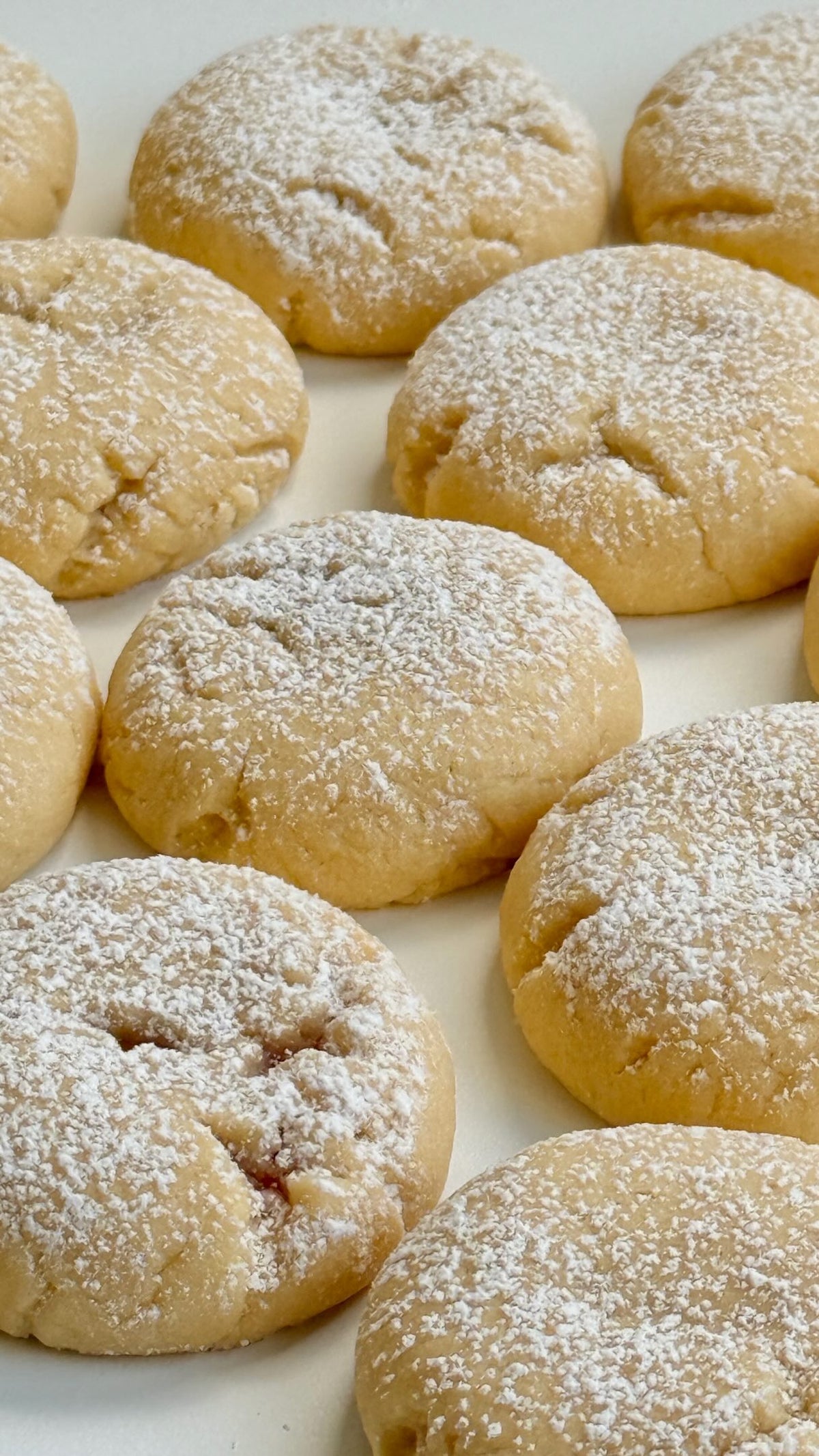
Happy & blessed Ramadan! In honor of this special month, today’s recipe is a Turkish classic: Hira Tatlisi - golden and lightly grainy on the outside, soft and syrup-soaked on the inside von Food with Style, fertig angerichtet
Pastry

Hira Tatlisi

Hira Tatlisi to turecki deser z kaszy manny – z zewnątrz złocisty i lekko chrupiąco-ziarnisty, w środku miękki i nasączony syropem.

Udostępnij
Porcje
20 pieces
Pieczenie 25 minutes

Składniki

  • Ciasto
  • Do obtoczenia
  • Syrop
  • Do posypania

Przygotowanie

  1. 1
    Cukier wymieszaj z wodą, aż cukier całkowicie się rozpuści. Nie gotuj. Odstaw i pozostaw do całkowitego wystudzenia.
  2. 2
    W misce wymieszaj jogurt, olej i jajko na gładką masę. Dodaj cukier wanilinowy, proszek do pieczenia, kaszę mannę, mąkę i skórkę z cytrusów, a następnie zagnieć miękkie, lekko klejące ciasto.
  3. 3
    Odrywaj porcje wielkości orzecha włoskiego (około 30 g) i formuj z nich gładkie kulki.
  4. 4
    Kulki ciasta obtocz w kaszy mannie i ułóż w odstępach na blasze wyłożonej papierem do pieczenia.
  5. 5
    Piecz w piekarniku nagrzanym do 170 °C / 340 °F (grzanie góra/dół) przez około 25 minut, aż się zezłocą.
  6. 6
    Gorące ciasteczka przełóż do głębokiego naczynia i powoli polej je zimnym syropem.
  7. 7
    Odstaw na chwilę, a następnie ewentualnie posyp środki wiórkami kokosowymi, pistacjami lub orzechami.
  8. 8
    Odstaw, aż syrop niemal całkowicie się wchłonie. Wilgotne, aromatyczne, można je przygotować z wyprzedzeniem – a następnego dnia smakują jeszcze lepiej

Video

Happy & blessed Ramadan! In honor of this special month, today’s recipe is a Turkish classic: Hira Tatlisi - golden and lightly grainy on the outside, soft and syrup-soaked on the inside Questions
The temperature contrast is what makes the syrup soak in properly while the crust stays intact. The recipe has you dissolve the sugar and water without boiling and let it cool completely, then pour it slowly over the cookies straight out of the oven. If both are hot, the cookies tend to go soggy and collapse rather than staying soft inside with a lightly grainy outside.

Yes, but watch the dough consistency, since the 100 g of yogurt is what brings the moisture. Greek or strained yogurt is thicker, so you may need a splash more to reach the soft, slightly sticky dough the recipe calls for. A neutral unsweetened plant yogurt works the same way, since the oil is already neutral vegetable oil rather than butter.

Cracking usually means the dough was too dry or the balls were not rolled smooth, so roll each 30 g portion firmly between your palms until the surface is even before coating it in semolina. Spreading points the other way: too much moisture, or the dough was overworked after the 10 g of baking powder went in. Also keep them spaced apart, since they rise and puff during the 25 minutes at 170 °C / 340 °F.

They are made for baking ahead - the recipe notes they are even better the next day, once the syrup has been fully absorbed. Keep them in the deep dish or a covered container at room temperature so they stay moist; the syrup itself acts as the preservative. Refrigerating tends to firm up the syrup and dull the citrus zest, so only chill them if your kitchen is very warm.

The 50-70 g coating is what gives the outside its lightly grainy texture, so skipping it leaves you with a smoother, plainer cookie. Inside the dough, the 160 g of fine semolina works together with the 180 g of flour, so swapping it entirely for more flour changes the bite and how the cookie drinks up the syrup. Use fine rather than coarse semolina in both places, since coarse grains stay hard even after soaking.

pyszne, sprawdzone i gotowe do inspiracji

Odkryj 400+ Smacznych Przepisów