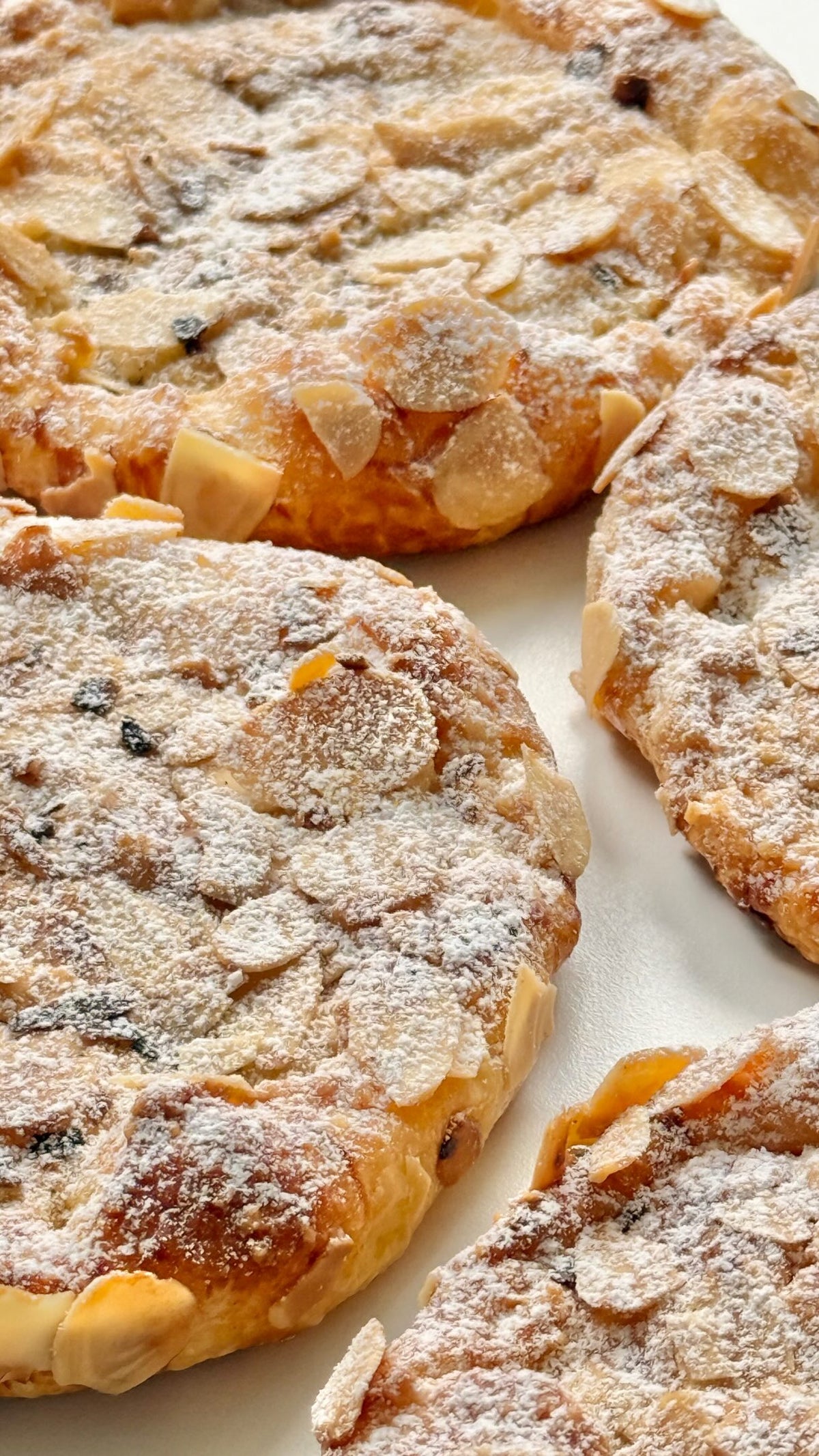
Blueberry Rings von Food with Style, fertig angerichtet
Pastry

Bosbessenkransjes

Deze gistdeegkransjes zijn niet alleen een echte blikvanger, maar ook een absolute traktatie. Een gebakje waar iedereen gegarandeerd blij van wordt - heerlijk bij...

Delen
Porties
8 stuks
Voorbereiding 1 uur 20 minuten
Baktijd 20 minuten

Ingrediënten

Bereiding

  1. 1
    Zeef de bloem in een kom, maak een kuiltje en doe daar de gist, een beetje suiker en wat melk in. Laat 5-10 min staan tot het gaat schuimen. Voeg de rest van de melk, de suiker, het zout en het halve ei toe en kneed het deeg. Kneed tot slot de boter erdoor tot een soepel deeg (8-10 min). Dek af en laat 1 u rijzen tot het volume verdubbeld is.
  2. 2
    Klop voor de banketbakkersroom de melk, suiker, maïzena, dooiers en vanille in een steelpan door elkaar. Breng al roerend aan de kook tot de room indikt. Haal van het vuur, dek af met vershoudfolie, laat afkoelen en doe de room in een spuitzak.
  3. 3
    Verdeel het deeg in 8 bolletjes en rol elk bolletje uit tot een rechthoek. Spuit een streep banketbakkersroom langs de lange kant en leg er 4-5 bosbessen op. Vouw dicht en druk de rand goed aan. Snijd 5-6 inkepingen in de andere kant, rol op en vorm er een krans van door de uiteinden op elkaar te drukken.
  4. 4
    Leg de kransjes op een bakplaat, dek ze af en laat ze 15-20 min rusten. Bestrijk met eierdooier en bak ze op 180 °C / 350 °F (boven- en onderwarmte) in 20-25 min goudbruin. Laat afkoelen op een rooster en bestuif met poedersuiker. Van de overgebleven banketbakkersroom maak je een lekker toetje in een glaasje met vers fruit. Je bosbessenkransjes met banketbakkersroom zijn klaar: goudbruin vanbuiten, romig vanbinnen, met een fruitige verrassing.

Video

Blueberry Rings Questions
The most common cause is milk that was too hot: the 125 ml should be lukewarm, not warm to the touch, or it will kill the yeast. Check the foam test at the start - if the yeast, sugar and milk in the well don't bubble within 5-10 minutes, the yeast is dead or expired and it's worth starting over rather than continuing. A cool kitchen also slows things down, so give the dough a warm, draft-free spot.

Yes, but don't thaw them - add the 4-5 berries per ring straight from the freezer, otherwise they release juice that soaks the dough and makes the seam pop open during baking. Frozen berries hold more moisture, so seal the folded edge especially firmly. Expect a slightly longer bake within the 20-25 minute window since the cold fruit cools the pastry.

The custard is the ideal make-ahead component: cook it, press the plastic wrap directly onto the surface so no skin forms, and refrigerate it overnight. Whisk it smooth before piping, as it firms up considerably when chilled. The dough can also rest in the fridge overnight after kneading - just let it come back to room temperature before you divide it into the 8 balls.

Usually the filling line was piped too close to the edge or too generously, leaving nothing to seal against. Keep the custard line along the long side with a clear border of bare dough, then press the folded seam together firmly. It also helps to use the custard fully chilled and thick - warm or runny custard spreads as soon as the dough hits the 180 °C oven.

Because of the milk-and-egg-yolk custard, keep leftovers covered in the fridge rather than at room temperature, and eat them within a couple of days. They are best on baking day, since the yeast dough goes dry faster than the filling does. Freezing is not ideal - the custard tends to separate and turn watery on thawing - so freeze unfilled baked dough only if you must, and reheat briefly to freshen the crumb.

heerlijk, getest en klaar om te inspireren

Ontdek 400+ Heerlijke Gerechten