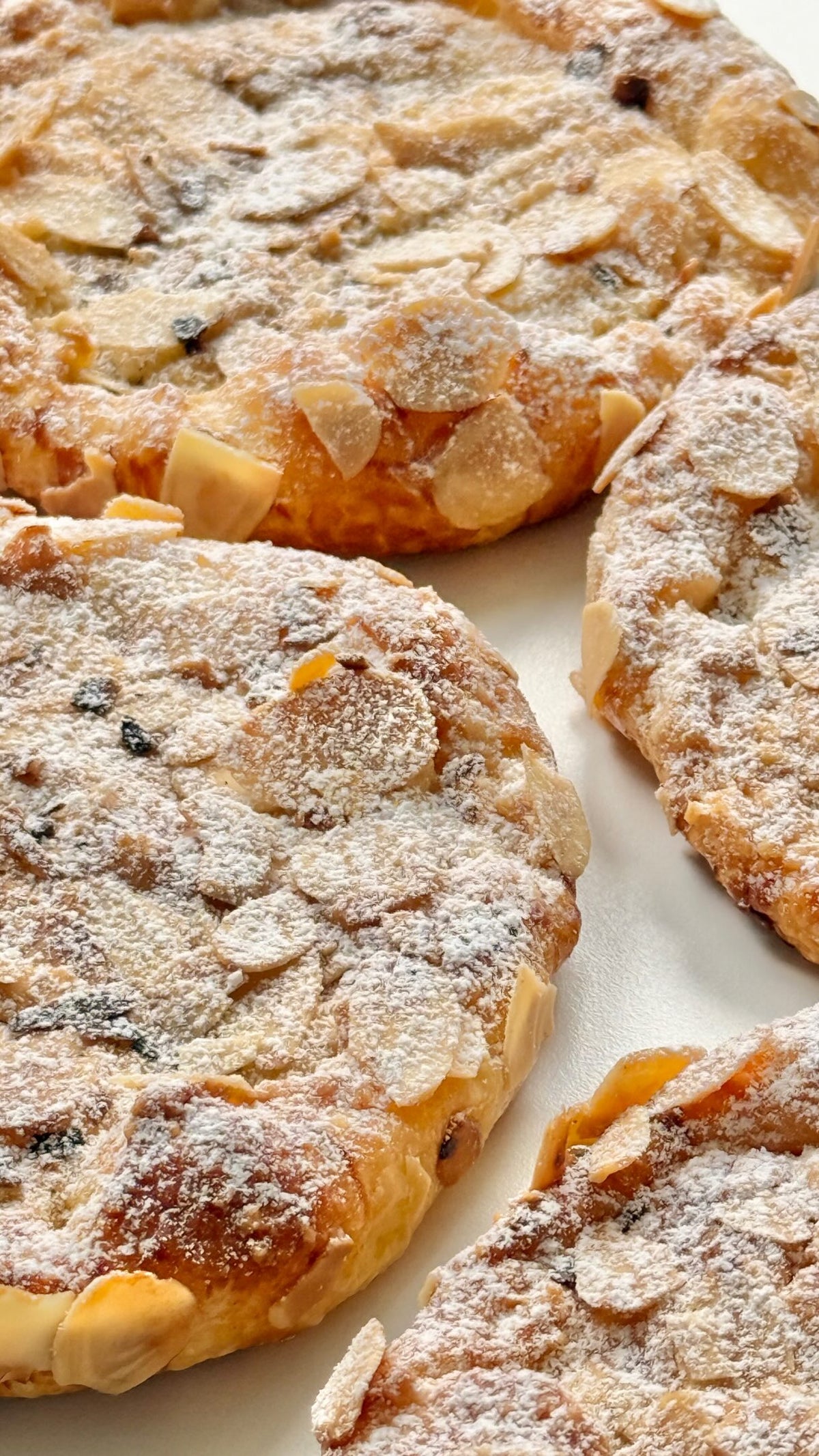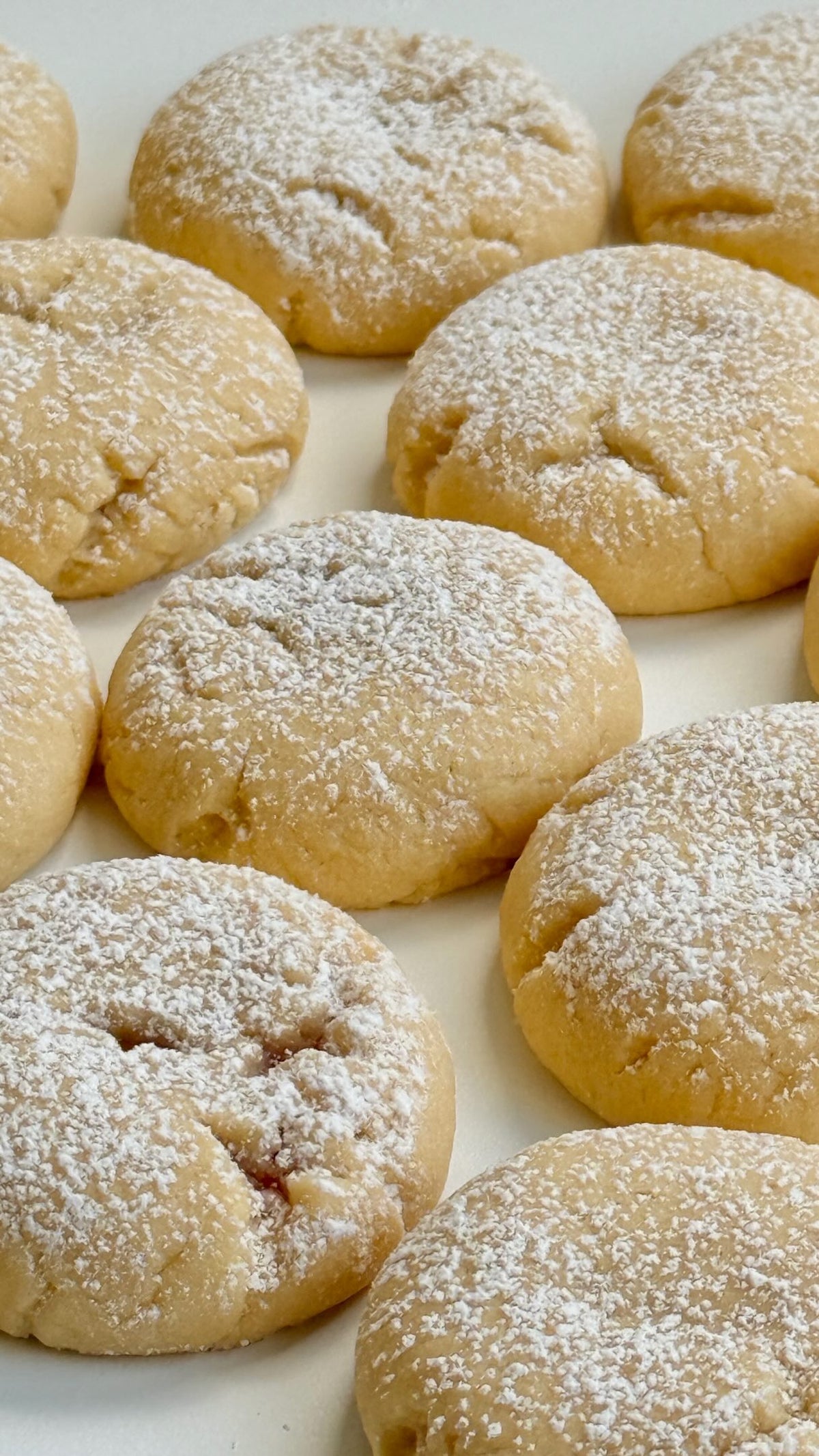
Vanilla Sugar Knots von Food with Style, fertig angerichtet
Brioche

Nœuds à la vanille

Ces nœuds briochés à la vanille, tout moelleux, sont parfaits pour un goûter cocooning ou comme petite douceur à toute heure. Un délice pour...

Partager
Préparation 1 heure
Cuisson 15 minutes

Ingrédients

  • Pour la garniture à la vanille
  • Pour la dorure
  • Pour le décor

Préparation

  1. 1
    Versez la farine dans un saladier et creusez un puits au centre. Déposez-y la levure déshydratée, 1 tsp de sucre et 2-3 tbsp du lait tiède. Mélangez légèrement et laissez reposer environ 10 minutes, jusqu'à ce que le mélange commence à mousser.
  2. 2
    Ajoutez le reste du lait, le sucre, le sel, le beurre mou et l'œuf. Pétrissez jusqu'à obtenir une pâte lisse qui se décolle des parois du saladier. Couvrez et laissez lever dans un endroit tiède pendant environ 1 heure, jusqu'à ce qu'elle double de volume.
  3. 3
    Pour la garniture, travaillez le beurre mou avec l'extrait de vanille et le sucre jusqu'à obtenir un mélange lisse.
  4. 4
    Une fois la pâte levée, étalez-la en un grand rectangle sur un plan de travail fariné. Répartissez uniformément la garniture au beurre vanillé sur la pâte.
  5. 5
    Pliez la pâte : rabattez un côté vers le centre, puis repliez l'autre côté par-dessus. Découpez des bandes régulières.
  6. 6
    Fendez chaque bande dans la longueur en trois brins, sans aller jusqu'au bout. Tressez-les, puis torsadez-les en nœuds.
  7. 7
    Déposez les nœuds dans un moule à muffins beurré ou sur une plaque recouverte de papier cuisson. Laissez lever à nouveau 20-30 minutes. Pendant ce temps, préchauffez le four à 180°C (350°F).
  8. 8
    Parsemez de sucre perlé.
  9. 9
    Enfournez 15-18 minutes, jusqu'à ce que les nœuds soient légèrement dorés. Badigeonnez-les de beurre fondu et laissez tiédir un peu avant de servir.

Video

Vanilla Sugar Knots Questions
The most common cause is milk that was too hot, which kills the yeast, so keep it lukewarm rather than steaming. A cold kitchen is the other culprit: this dough needs a genuinely warm spot to rise, and a cold egg straight from the fridge slows things down further, which is why the recipe calls for a room-temperature egg. If the pre-ferment in the well doesn't get foamy after resting, start over with fresh yeast rather than kneading on.

Yes - swap the 3.5 g of dry yeast for about 10 g of fresh yeast, crumbled into the well with the sugar and lukewarm milk the same way. Plant-based milk works too; just warm it to lukewarm as you would dairy milk. You can also replace the vanilla extract in the filling with the seeds of a vanilla bean or vanilla sugar, though with vanilla sugar you may want to cut back the 30 g of sugar slightly.

These are at their best the day they're baked, since the butter filling and soft crumb dry out quickly. Keep leftovers in an airtight container at room temperature for a day or two - not the fridge, which makes yeast pastries stale faster. To revive them, warm them briefly in a 180°C (350°F) oven; freezing the baked knots and reheating from frozen also works well.

Yes - after kneading, let the dough rise slowly in the fridge overnight instead of in a warm place, then bring it back to room temperature before rolling it out. You can also mix the vanilla butter filling a day ahead, but let it soften again so it spreads evenly over the dough. Shaped knots can go into the muffin tin and do their second 20-30 minute rise while the oven preheats to 180°C (350°F).

Filling escapes when the butter mixture is too soft or spread too thickly right up to the edges - leave a small border bare so the folded dough can seal. Rolling the rectangle too thin is the other issue: the strips then tear as you braid and twist them, and the filling runs out. Baking in a greased muffin tin, as the recipe suggests, contains any leakage and keeps the knots tall rather than spreading flat.

délicieux, testé et prêt à inspirer

Explorez plus de 400 Recettes Savoureuses