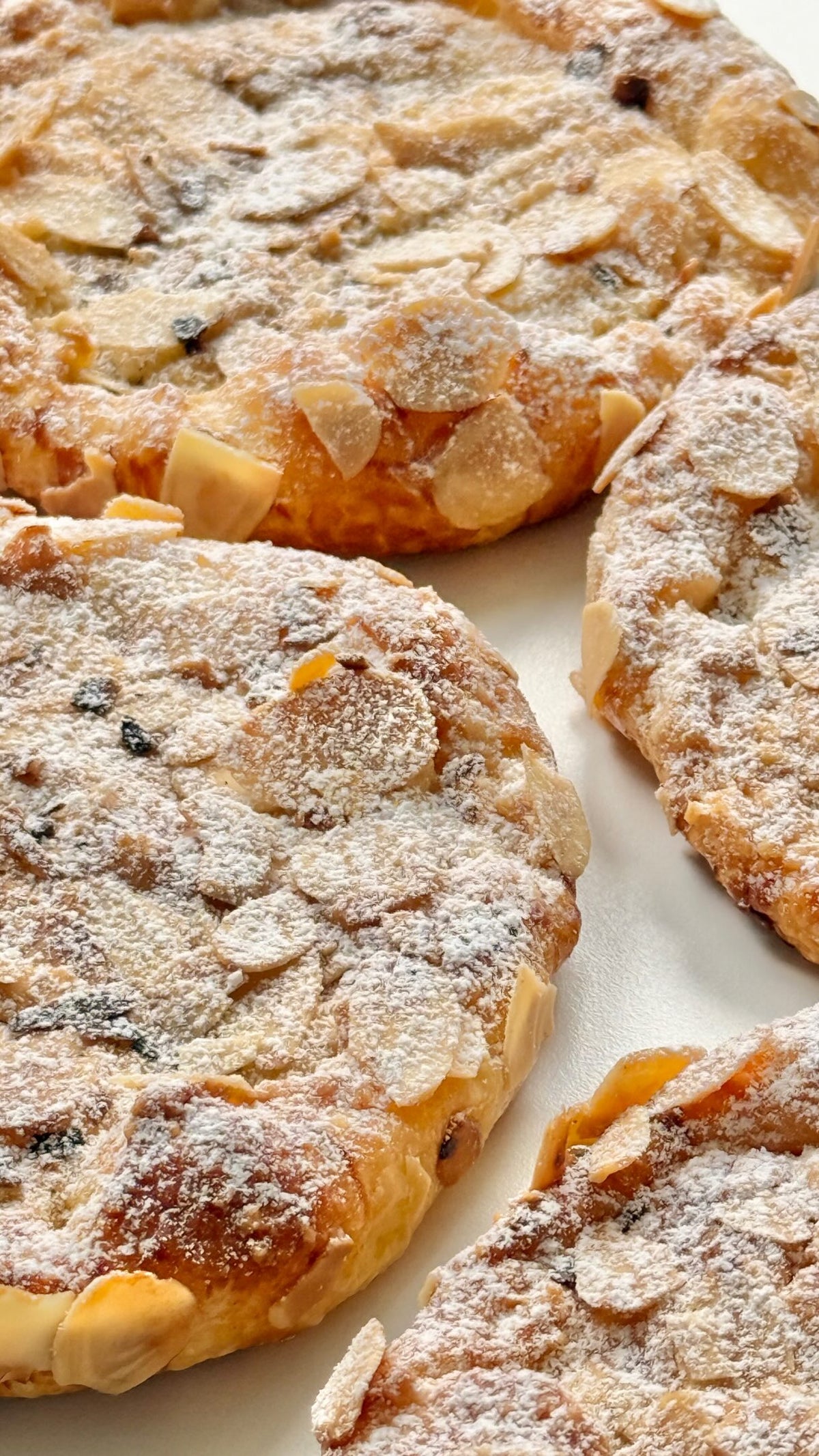
Blueberry Rings von Food with Style, fertig angerichtet
Pastry

Couronnes aux myrtilles

Ces couronnes en pâte levée sont non seulement de véritables petites merveilles à regarder, mais aussi un vrai régal. Une viennoiserie qui fait l'unanimité...

Partager
Portions
8 pièces
Préparation 1 heure 20 minutes
Cuisson 20 minutes

Ingrédients

Préparation

  1. 1
    Tamisez la farine dans un saladier, creusez un puits, ajoutez-y la levure, un peu de sucre et un peu de lait. Laissez reposer 5-10 min, jusqu'à ce que le mélange mousse. Ajoutez le reste du lait, le sucre, le sel et la moitié de l'œuf, puis pétrissez. Incorporez enfin le beurre en pétrissant jusqu'à obtenir une pâte lisse (8-10 min). Couvrez et laissez pousser 1 h, jusqu'à ce que la pâte double de volume.
  2. 2
    Pour la crème pâtissière, fouettez dans une casserole le lait, le sucre, la maïzena, les jaunes d'œufs et la vanille. Portez à ébullition sans cesser de remuer, jusqu'à épaississement. Retirez du feu, filmez au contact, laissez refroidir, puis garnissez-en une poche à douille.
  3. 3
    Divisez la pâte en 8 pâtons et étalez chacun en rectangle. Pochez un boudin de crème le long du grand côté et déposez 4-5 myrtilles. Rabattez la pâte et soudez bien le bord. Incisez l'autre côté de 5-6 entailles, roulez le rectangle, puis formez une couronne en soudant les deux extrémités.
  4. 4
    Déposez les couronnes sur une plaque, couvrez et laissez reposer 15-20 min. Dorez au jaune d'œuf et enfournez à 180 °C / 350 °F (chaleur traditionnelle) pendant 20-25 min, jusqu'à ce qu'elles soient bien dorées. Laissez refroidir sur une grille et saupoudrez de sucre glace. Le reste de crème pâtissière fera un joli dessert en verrine avec des fruits frais. Vos couronnes aux myrtilles et à la crème pâtissière sont prêtes : dorées à l'extérieur, crémeuses à l'intérieur, avec une surprise fruitée.

Video

Blueberry Rings Questions
The most common cause is milk that was too hot: the 125 ml should be lukewarm, not warm to the touch, or it will kill the yeast. Check the foam test at the start - if the yeast, sugar and milk in the well don't bubble within 5-10 minutes, the yeast is dead or expired and it's worth starting over rather than continuing. A cool kitchen also slows things down, so give the dough a warm, draft-free spot.

Yes, but don't thaw them - add the 4-5 berries per ring straight from the freezer, otherwise they release juice that soaks the dough and makes the seam pop open during baking. Frozen berries hold more moisture, so seal the folded edge especially firmly. Expect a slightly longer bake within the 20-25 minute window since the cold fruit cools the pastry.

The custard is the ideal make-ahead component: cook it, press the plastic wrap directly onto the surface so no skin forms, and refrigerate it overnight. Whisk it smooth before piping, as it firms up considerably when chilled. The dough can also rest in the fridge overnight after kneading - just let it come back to room temperature before you divide it into the 8 balls.

Usually the filling line was piped too close to the edge or too generously, leaving nothing to seal against. Keep the custard line along the long side with a clear border of bare dough, then press the folded seam together firmly. It also helps to use the custard fully chilled and thick - warm or runny custard spreads as soon as the dough hits the 180 °C oven.

Because of the milk-and-egg-yolk custard, keep leftovers covered in the fridge rather than at room temperature, and eat them within a couple of days. They are best on baking day, since the yeast dough goes dry faster than the filling does. Freezing is not ideal - the custard tends to separate and turn watery on thawing - so freeze unfilled baked dough only if you must, and reheat briefly to freshen the crumb.

délicieux, testé et prêt à inspirer

Explorez plus de 400 Recettes Savoureuses