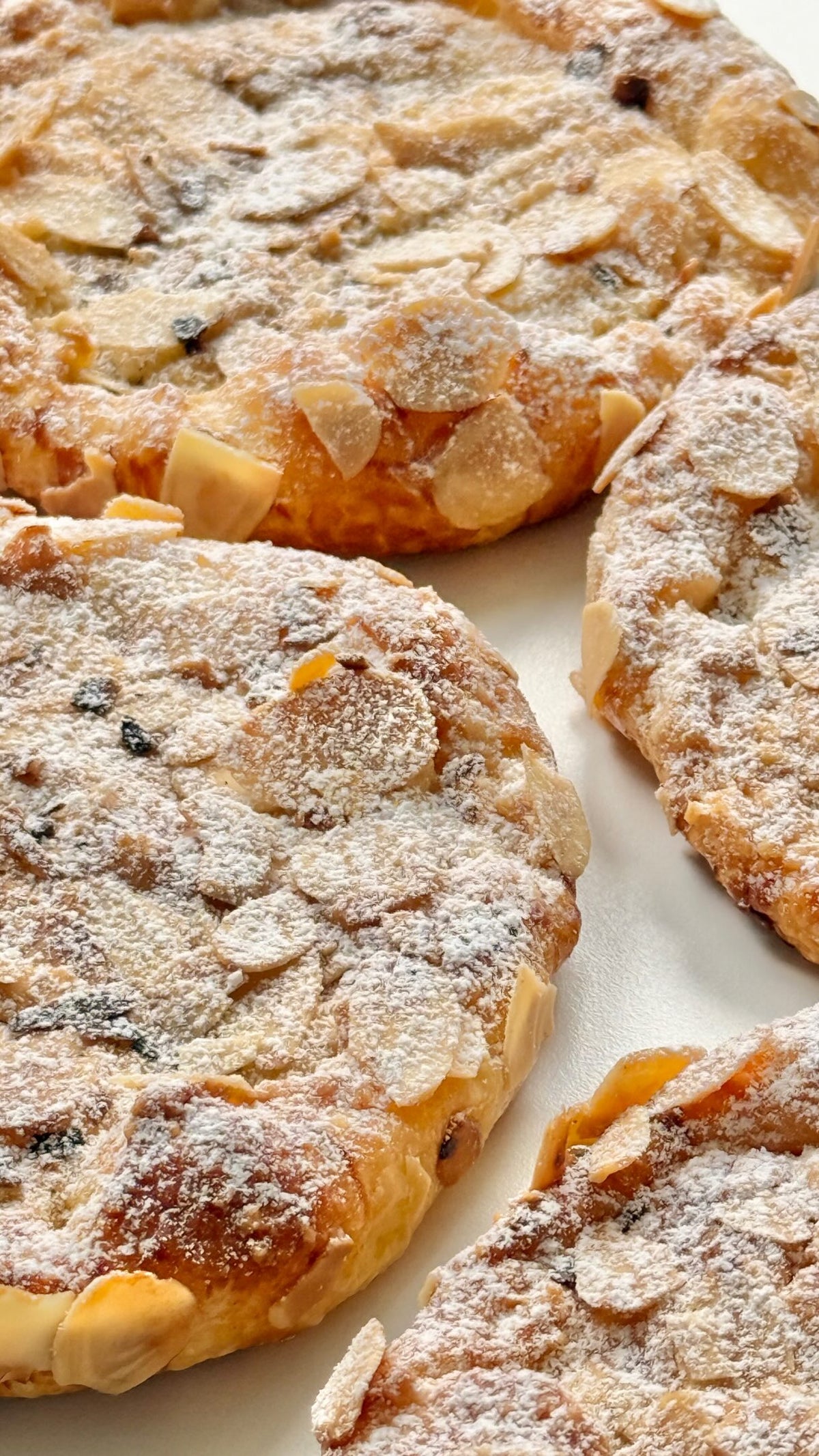
Blueberry Rings von Food with Style, fertig angerichtet
Pastry

Blaubeer-Kringel

Diese Hefeteig-Kringel sind nicht nur ein echter Hingucker, sondern auch ein absoluter Genuss. Ein Gebäck, das garantiert alle begeistert - perfekt zum Kaffee, zum...

Teilen
Portionen
8 Stück
Vorbereitung 1 Stunde 20 Minuten
Backzeit 20 Minuten

Zutaten

Zubereitung

  1. 1
    Mehl in eine Schüssel sieben, eine Mulde eindrücken, Hefe, etwas Zucker und etwas Milch hineingeben. 5-10 Min. stehen lassen, bis sich Bläschen bilden. Restliche Milch, Zucker, Salz und das halbe Ei zugeben und kneten. Zum Schluss die Butter einkneten, bis der Teig glatt ist (8-10 Min.). Abgedeckt 1 Std. gehen lassen, bis sich das Volumen verdoppelt hat.
  2. 2
    Für den Pudding Milch, Zucker, Speisestärke, Eigelb und Vanille in einem Topf verrühren. Unter Rühren aufkochen, bis die Masse andickt. Vom Herd nehmen, mit Frischhaltefolie abdecken, abkühlen lassen und in einen Spritzbeutel füllen.
  3. 3
    Den Teig in 8 Kugeln teilen und jede zu einem Rechteck ausrollen. Entlang der langen Seite einen Streifen Pudding aufspritzen und 4-5 Blaubeeren daraufsetzen. Zusammenklappen und die Kante gut verschließen. In die andere Seite 5-6 Einschnitte machen, aufrollen und zu einem Kringel formen, dabei die Enden zusammendrücken.
  4. 4
    Die Kringel auf ein Blech setzen, abdecken und 15-20 Min. ruhen lassen. Mit Eigelb bestreichen und bei 180 °C / 350 °F (Ober-/Unterhitze) 20-25 Min. goldbraun backen. Auf einem Gitter abkühlen lassen und mit Puderzucker bestäuben. Übrig gebliebener Pudding ergibt mit frischen Früchten ein schönes Dessert im Glas. Fertig sind die Blaubeer-Pudding-Kringel: außen goldbraun, innen cremig, mit fruchtiger Überraschung.

Video

Blueberry Rings Questions
The most common cause is milk that was too hot: the 125 ml should be lukewarm, not warm to the touch, or it will kill the yeast. Check the foam test at the start - if the yeast, sugar and milk in the well don't bubble within 5-10 minutes, the yeast is dead or expired and it's worth starting over rather than continuing. A cool kitchen also slows things down, so give the dough a warm, draft-free spot.

Yes, but don't thaw them - add the 4-5 berries per ring straight from the freezer, otherwise they release juice that soaks the dough and makes the seam pop open during baking. Frozen berries hold more moisture, so seal the folded edge especially firmly. Expect a slightly longer bake within the 20-25 minute window since the cold fruit cools the pastry.

The custard is the ideal make-ahead component: cook it, press the plastic wrap directly onto the surface so no skin forms, and refrigerate it overnight. Whisk it smooth before piping, as it firms up considerably when chilled. The dough can also rest in the fridge overnight after kneading - just let it come back to room temperature before you divide it into the 8 balls.

Usually the filling line was piped too close to the edge or too generously, leaving nothing to seal against. Keep the custard line along the long side with a clear border of bare dough, then press the folded seam together firmly. It also helps to use the custard fully chilled and thick - warm or runny custard spreads as soon as the dough hits the 180 °C oven.

Because of the milk-and-egg-yolk custard, keep leftovers covered in the fridge rather than at room temperature, and eat them within a couple of days. They are best on baking day, since the yeast dough goes dry faster than the filling does. Freezing is not ideal - the custard tends to separate and turn watery on thawing - so freeze unfilled baked dough only if you must, and reheat briefly to freshen the crumb.

köstlich, erprobt und bereit zu inspirieren

Entdecke 400+ leckere Gerichte