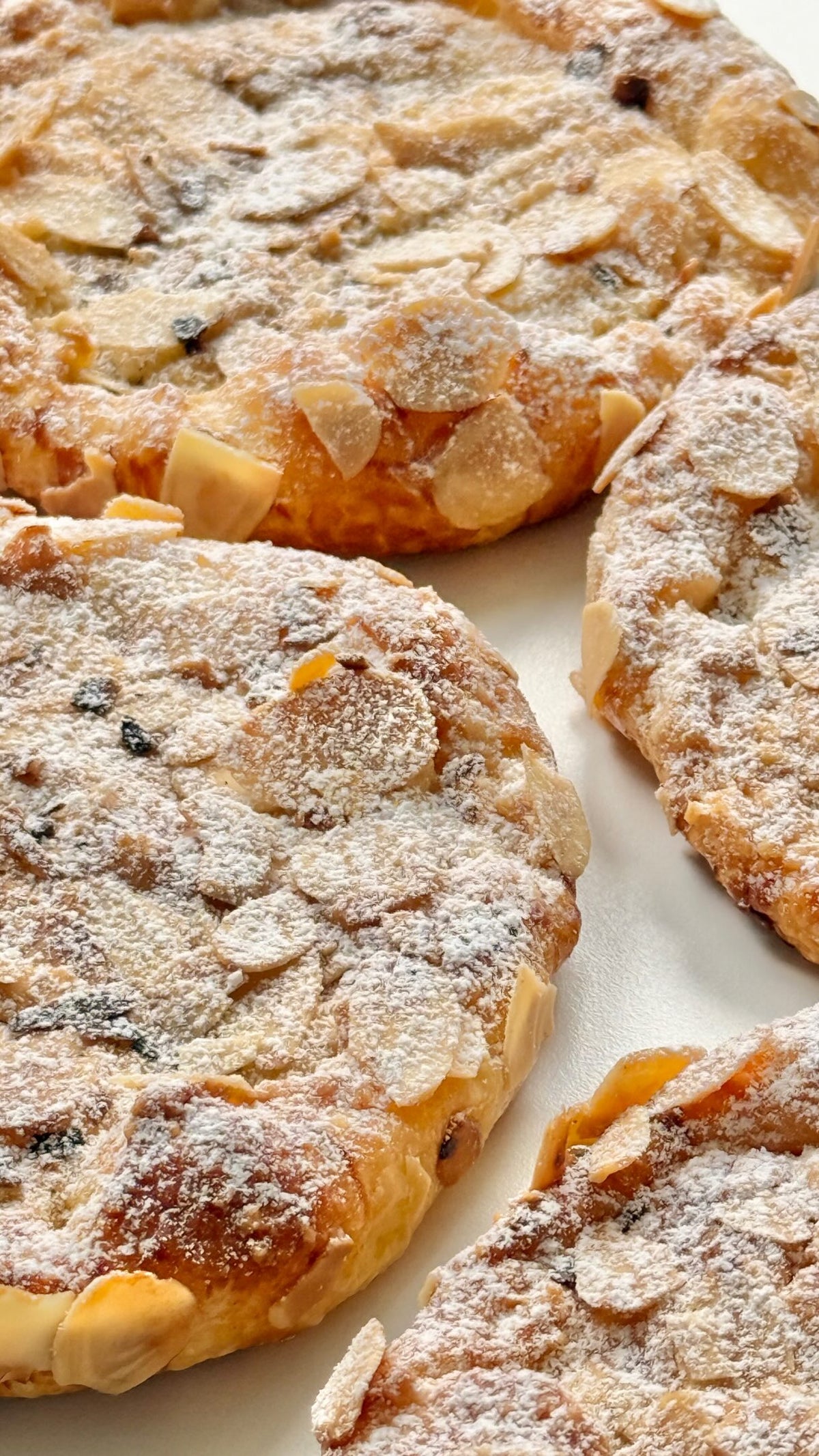
Vanilla Pastry von Food with Style, fertig angerichtet
Pastry

Vanilla Pastry Recipe

Soft, tender yeast pastries filled with a delicate vanilla pastry cream. A beautiful bake that tastes absolutely heavenly, whether warm or cold.

مشاركة
حصص
10 pieces
وقت الخبز 18 minutes

المكونات

  • For Brushing & Finishing

طريقة التحضير

  1. 1
    Sift the flour into a bowl and make a well. Add the yeast, 1 tsp sugar, and a little lukewarm milk. Let stand 8–10 minutes until foamy.
  2. 2
    Add remaining sugar, egg, milk, salt, and vanilla. Knead into a smooth dough, then incorporate the butter and knead 8–10 minutes until soft, elastic, and slightly glossy.
  3. 3
    Cover and let rise for 60–90 minutes, until doubled.
  4. 4
    Heat the milk with vanilla (do not boil). Whisk yolks, sugar, and cornstarch, then whisk in the hot milk and return to the saucepan.
  5. 5
    Cook, stirring constantly, until thick and pudding-like. Transfer to a bowl, cover directly on the surface, and let cool completely.
  6. 6
    Whisk the cold cream smooth and transfer to a piping bag with a round tip.
  7. 7
    Divide the dough into about 10 portions (50 g), shape into balls, roll each into a round, and lightly mark the center with a small cutter.
  8. 8
    Cut the outer area into fine strips, leaving the center intact.
  9. 9
    Pipe a low ring of vanilla cream into the center, then gently fold the strips toward the middle, slightly overlapping.
  10. 10
    Place a blueberry in the center, cover, and let rest 20–30 minutes.
  11. 11
    Whisk egg yolk and milk, brush the pastries, and bake at 180 °C / 350 °F for 18–22 minutes until golden. Cool briefly and dust with powdered sugar. Soft, delicate yeast pastries with a fine vanilla filling airy, elegant, and simply irresistible.

Video

Vanilla Pastry Questions
The vanilla cream is ideal for making ahead, since it has to cool completely anyway before it can be whisked smooth and piped. Cook it a day in advance, cover it directly on the surface so no skin forms, and chill it. The yeast dough is best shaped and baked the same day, but you can slow the 60-90 minute rise by letting it proof in the fridge and bringing it back to room temperature before dividing.

No, if nothing happens within the 8-10 minutes the yeast is either dead or the milk was too hot. The milk should be lukewarm, not hot, because heat above body temperature kills active dry yeast. Start that step again with fresh yeast and properly lukewarm milk, otherwise the dough will never double.

Yes, the 60 g soft butter can be swapped for a firm plant-based block butter, and both the 110 ml dough milk and the 250 ml milk for the cream can be replaced with a neutral, full-fat plant milk such as oat or soy. Keep the substitute butter genuinely soft, since it has to be kneaded into the already-smooth dough. The pastry cream still sets, because the thickening comes from the 25 g cornstarch and the 2 egg yolks, not the milk fat.

Lumps usually mean the hot milk went into the yolk mixture too fast, or the cream was not stirred constantly while cooking - pour the hot milk in gradually while whisking, and keep stirring the whole time in the saucepan. A runny cream means it did not cook long enough; the cornstarch needs to come up to a boil to thicken fully into a pudding-like consistency. If lumps appear anyway, pass the finished cream through a sieve before covering and cooling it.

Because they contain an egg-yolk-based cream, store them covered in the fridge rather than at room temperature. They taste best on the day they are baked, when the yeast dough is still soft. Let them sit out briefly before serving so the dough loses its chill, and dust with the powdered sugar only just before serving so it does not dissolve.

لذيذة، مجربة، وجاهزة للإلهام

استكشف أكثر من 400 وصفة لذيذة